
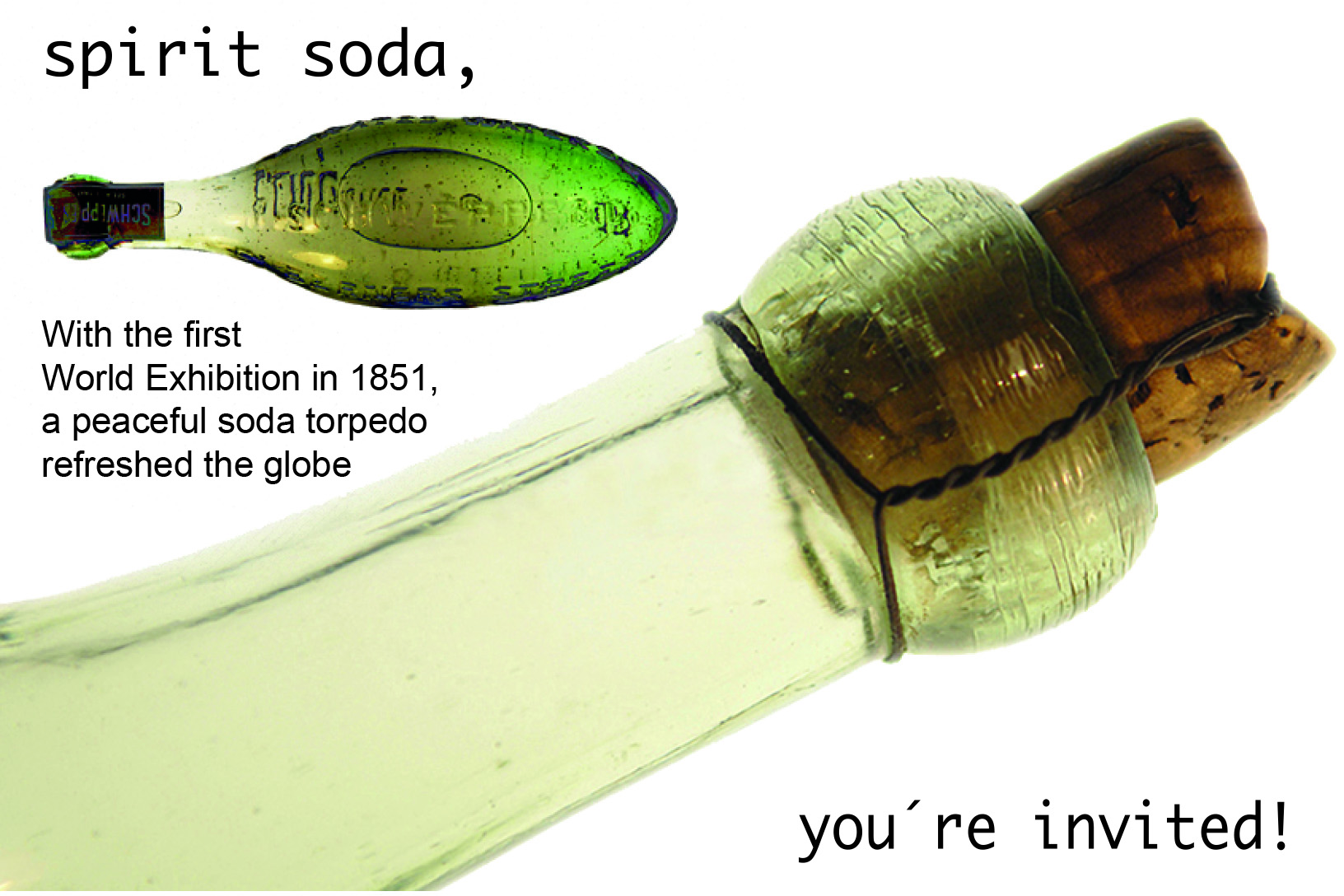
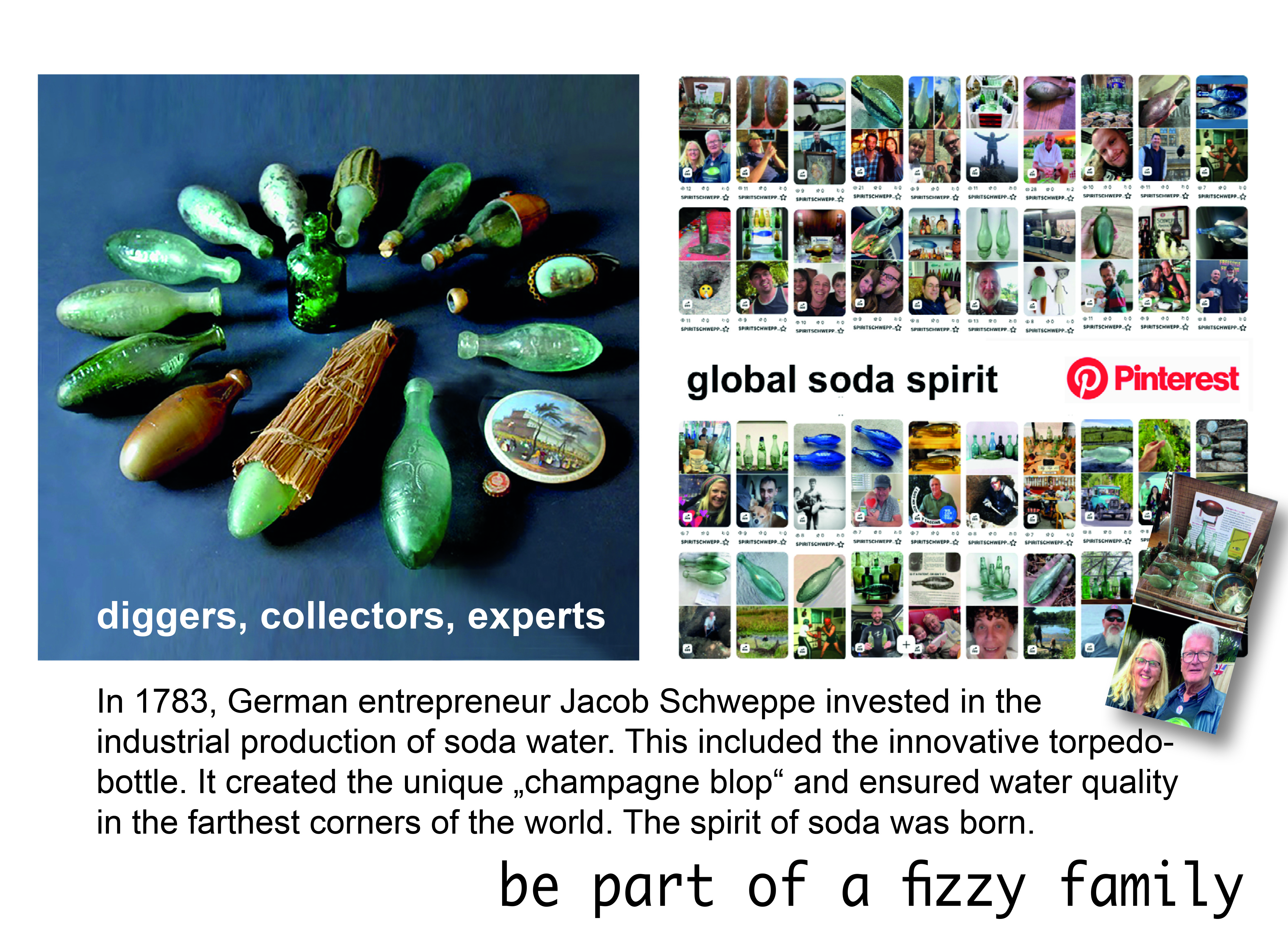
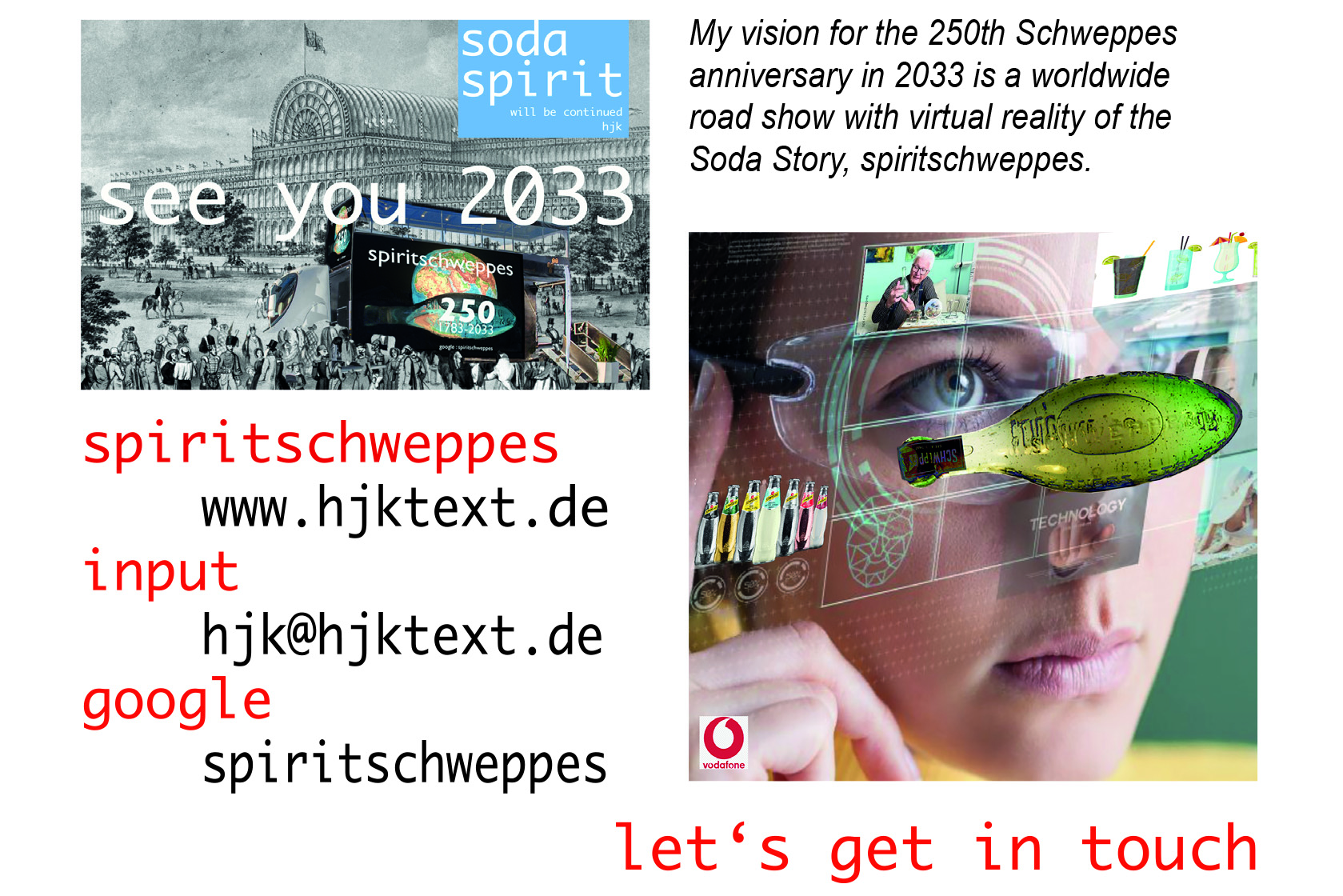
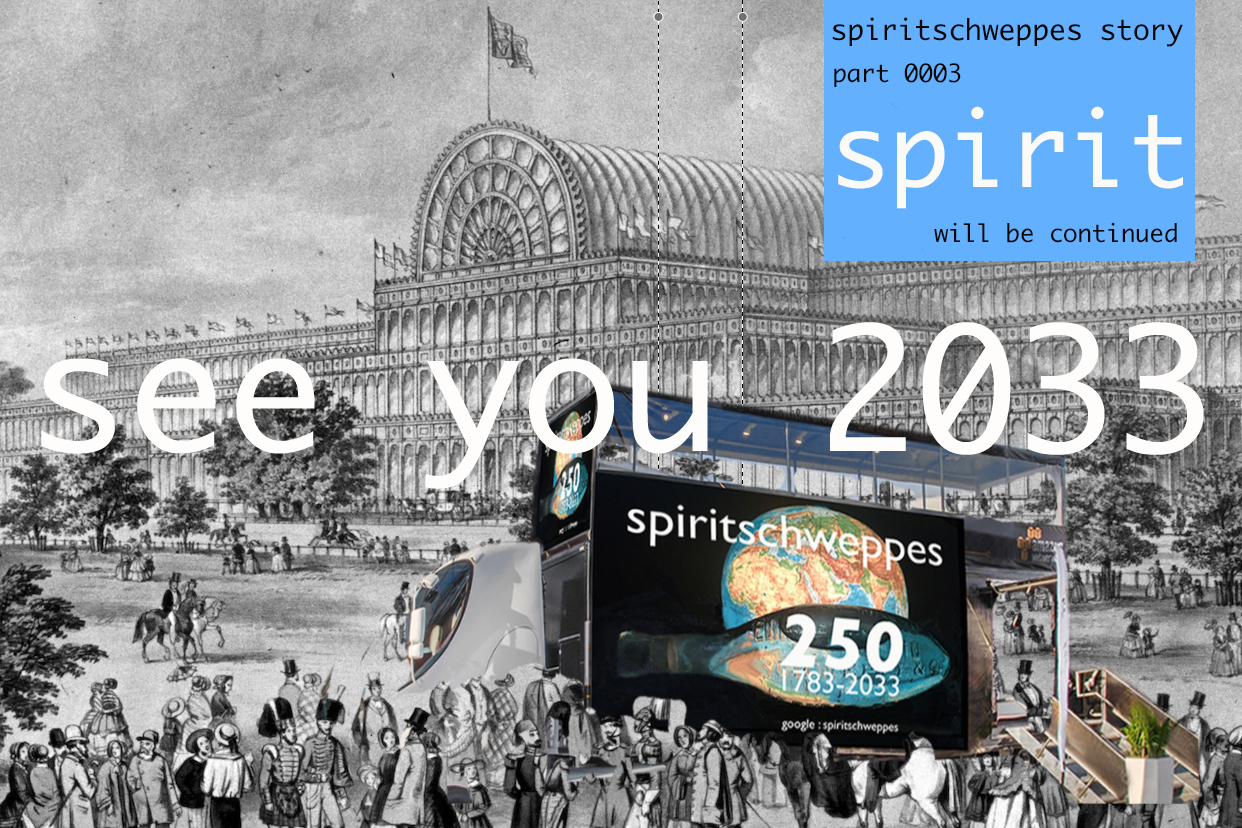
Today, at Easter 2025, the countdown to SPIRITSCHWEPPES 250 begins. Under the motto “see you in 2033,” private collector Hans-Jürgen Krackher (www.hjktext.de) is organizing a global campaign to celebrate the 250th anniversary of the first global brand. You are refreshing – The spirit of the oldest global brand is creativity and entrepreneurial spirit. In 1783, Jacob Schweppe patented the industrial production of soda water, making the “champagne mood” affordable worldwide. At the first World’s Fair in 1851, the peaceful torpedo bottles from J. Schweppe Ltd. refreshed a global audience. Excavators, researchers, and collectors of the torpedo bottles now form a global Fizzy Family. “SEE YOU IN 2033” – you are all invited to participate in the 250th anniversary of the world’s fizzyest brand.
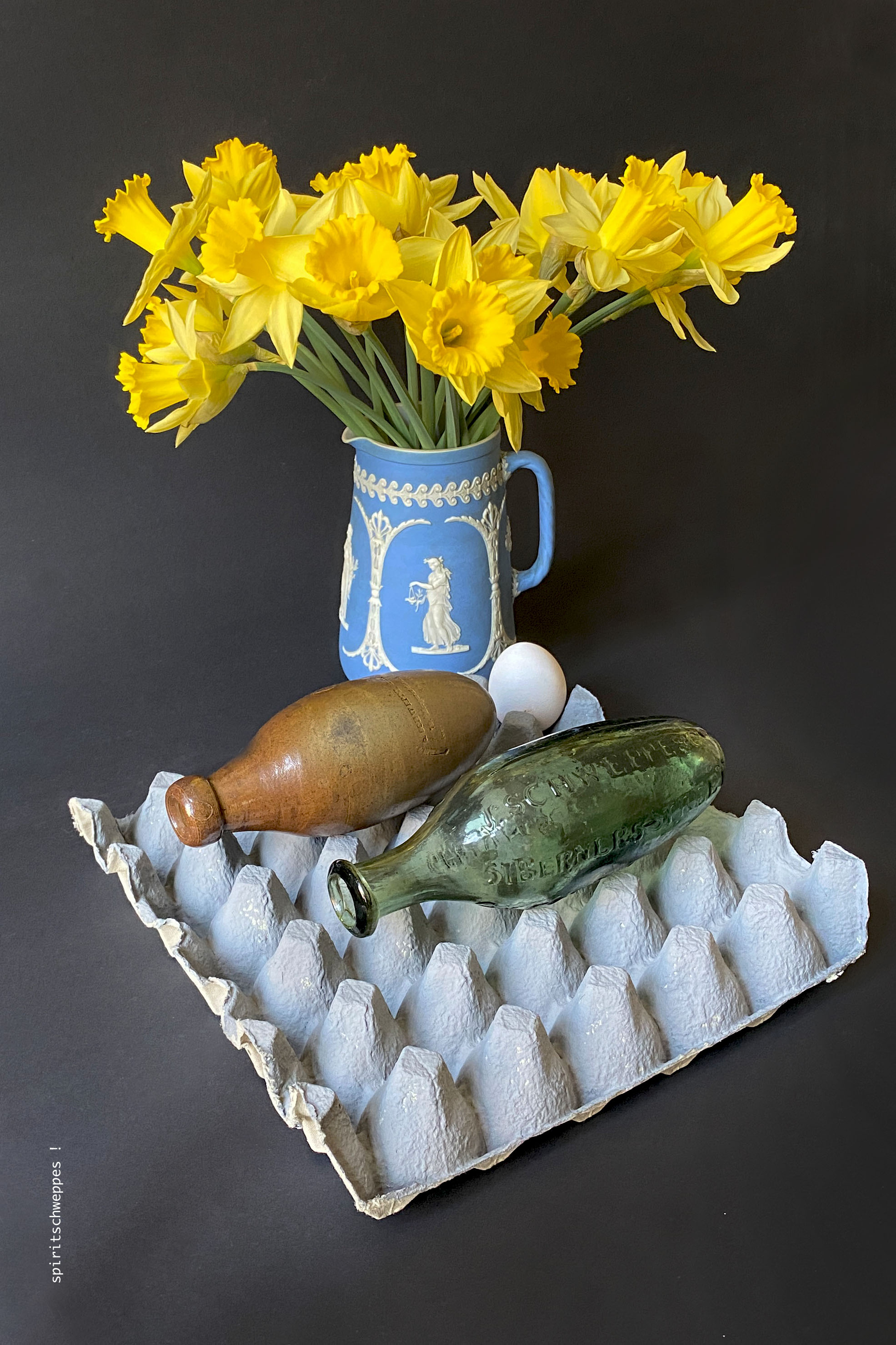
Happy Easter 25. Creativity and entrepreneurial spirit are the spirit of the oldest global brand. In 1783, Jacob Schweppe patented the industrial production of soda water, making the “champagne mood” affordable worldwide. At the first World’s Fair in 1851, the peaceful torpedo bottles from J. Schweppe Ltd. refreshed a global audience. Today, excavators, researchers, and collectors of torpedo bottles form a global Fizzy Family. “SEE YOU IN 2033” – for the 250th anniversary of the world’s most sparkling brand. https://uk.pinterest.com/spirit…/the-spirit-of-eggbottles/
In 2025, after my Wunderkammer (google: spiritschweppes), the Potsdam City Museum https://wirtragen.org/ will be my favorite home. That’s where the atlas usually carries the universe. The Potsdam artist Rainer Sperl has given it a well-deserved rest https://www.potsdam-museum.de/…/atlas-im-ruhemodus…
2024 wasn’t always easy on earth. So here’s to a new year with mental freshness. In the spirit of the peaceful torpedo, that has refreshed people all over the world since the first World’s Fair in 1851. CHEERZZ www.hjktext.de


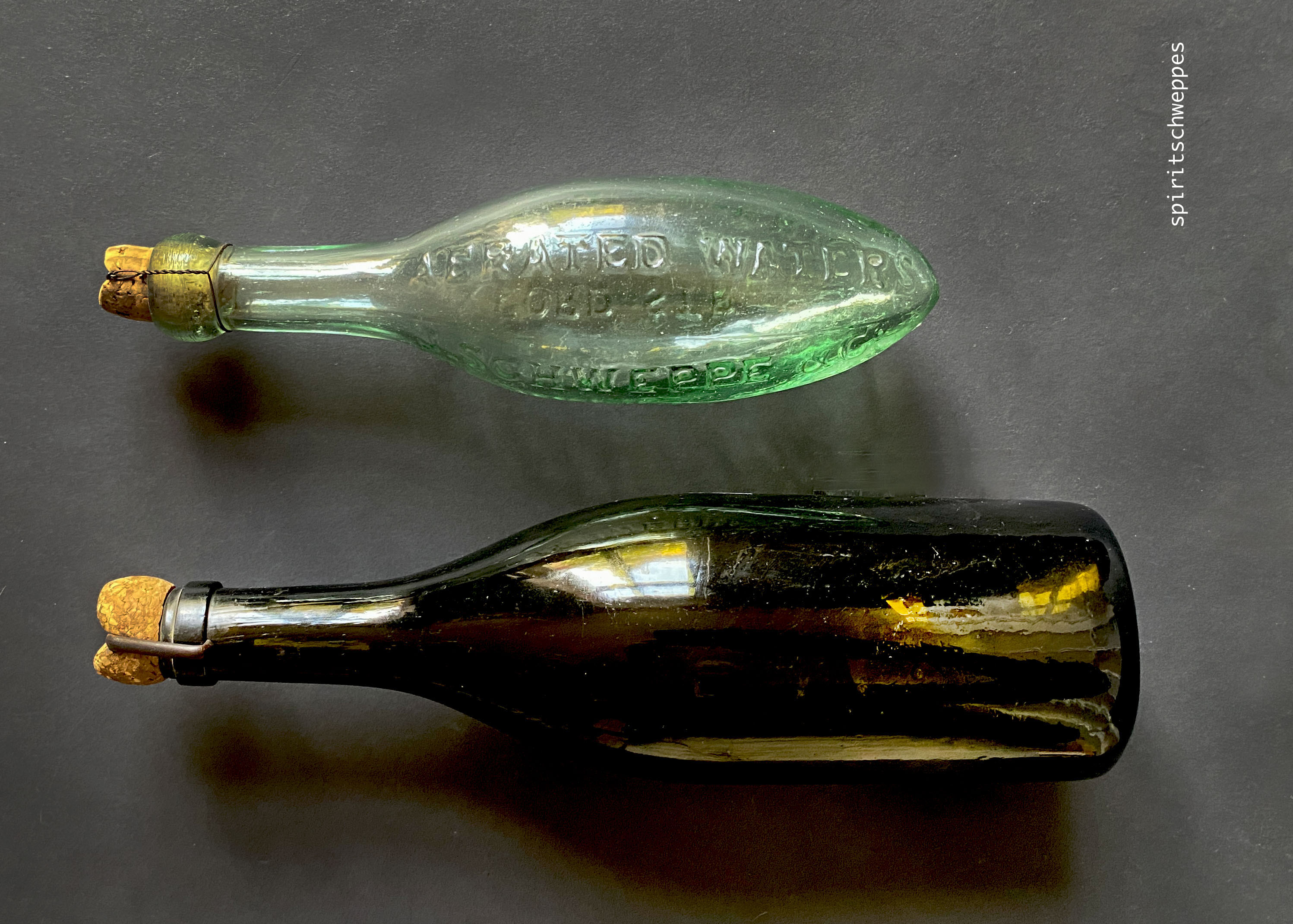


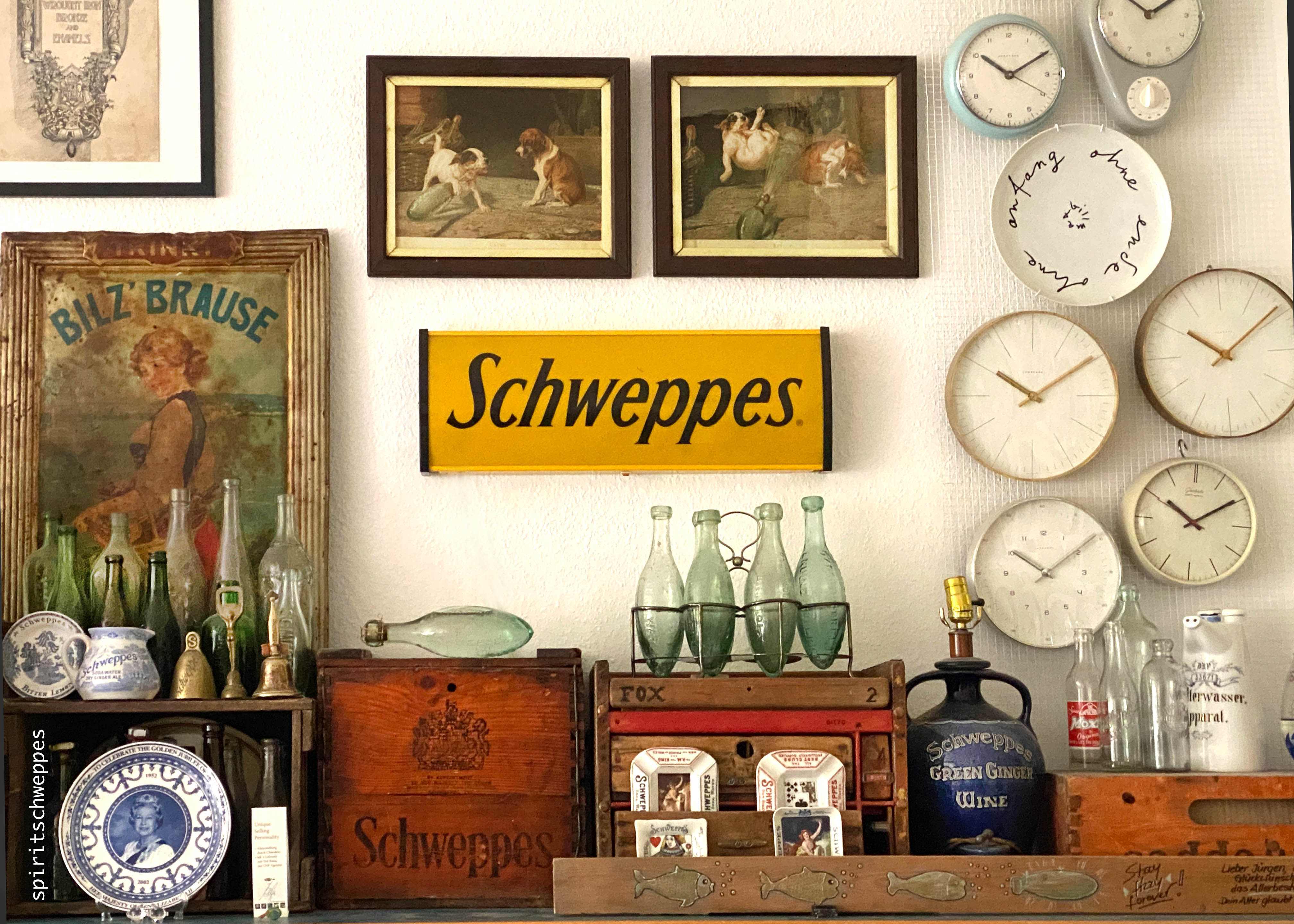 The spiritschweppes mood arose in the monastery life of Dom Perignon from the bottle fermentation of fine grape juice. When the natural cork, freed from iron, shot out of its thick-walled pressure-bottom bottle with a mighty BLOP, then a fabulously spirited magic potion soon provided highly intellectual ideas.
The drink became affordable for the masses with the research into carbon dioxide and its industrial compression into an ingenious water bottle with a pressure-resistant pointed bottom and a constantly moist cork. J. Schweppe & Co. sent its wonderfully refreshing soda torpedo from London to the worldwide empire with the first World Exhibition in 1851. A happy CHEERZZ from the FIZZY FAMILY. google: #spiritschweppes
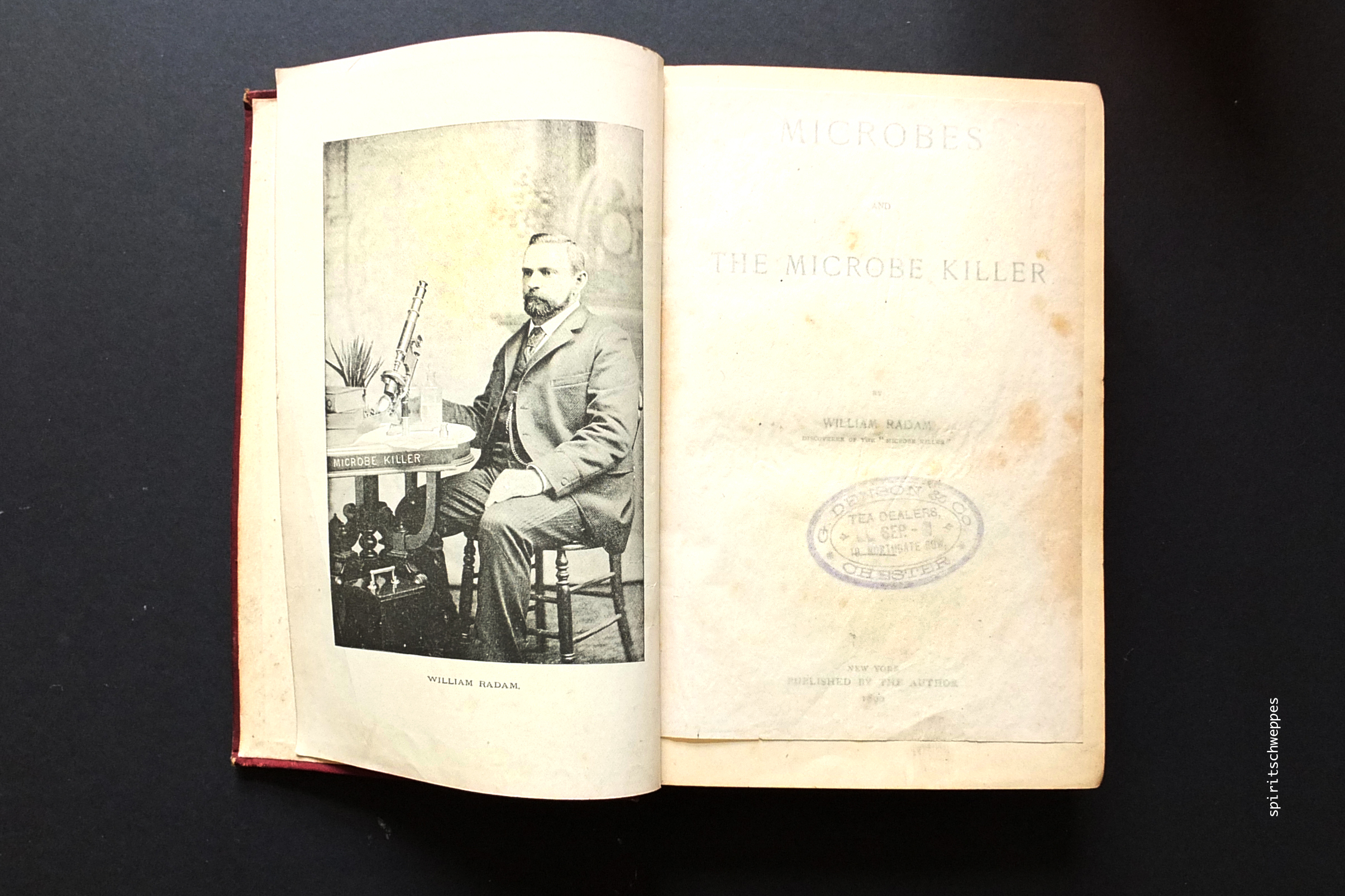
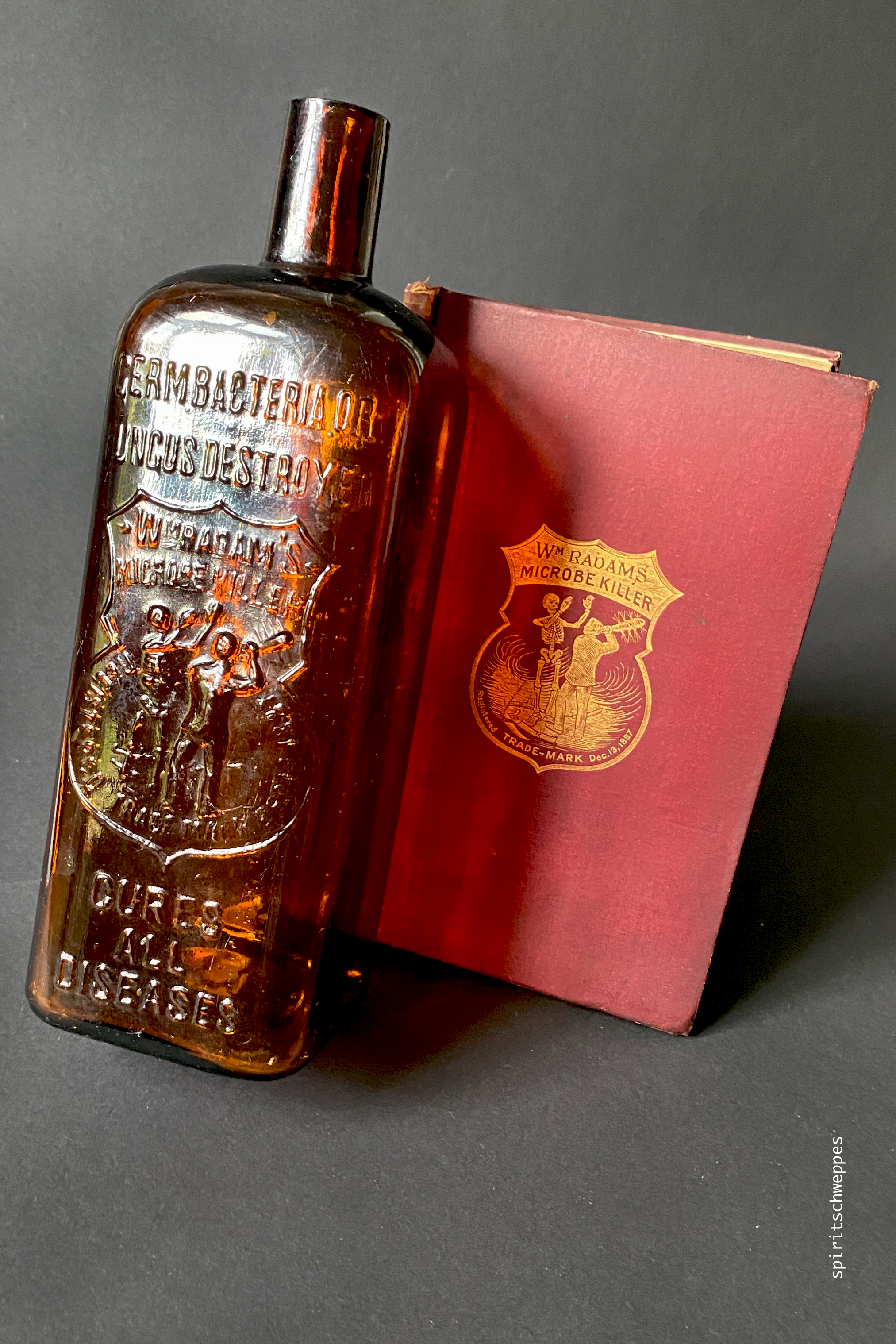
In the 19th century, microscopy developed rapidly. The world of bacteria and microbes was discovered as pathogens, not least in water. On the basis of the new findings, the malaria-stricken Prussian immigrant William Radam patented an ultimate miracle water in Austin, Texas in 1887. His MICROBE KILLER promised help against all diseases, and the logo depicted man slaying death with a bottle club! With this, W. Radam’s marketing topped the SAFECURE – Safe for Health by the New York safe billionaire H.H.Warner from 1879. It was only with Dr. Wiley’s Pure Food and Drug Act of 1906 that serious food and pharmaceutical legislation began. Today, in Corona times, Micro-Killer T-shirts are celebrating their resurrection not only in the USA.
The embossing on the bottle says: GERMBACTERIA OR FUNGUS DESTROYER • WM.RADAM´S MICROBE KILLER • CURES ALL DESEASES • REGISTERED TRADE MARK DEC. 13.1887
The 370-page first edition of the book from 1890 with microscope images can be carefully browsed through in my “spiritschweppes” marketing cabinet. http://www.hjktext.de




On “my own behalf”: Article in ATLAS, magazine of the Potsdam Museum Support Association.
Expert summits talk about digital transformation in the Turning point. What can a private collector do with this? Learning challenge? http://www.grussauspotsdam.de/ is considered a pioneer. Today the ATLAS looks over the shoulder of a “visual storyteller”.
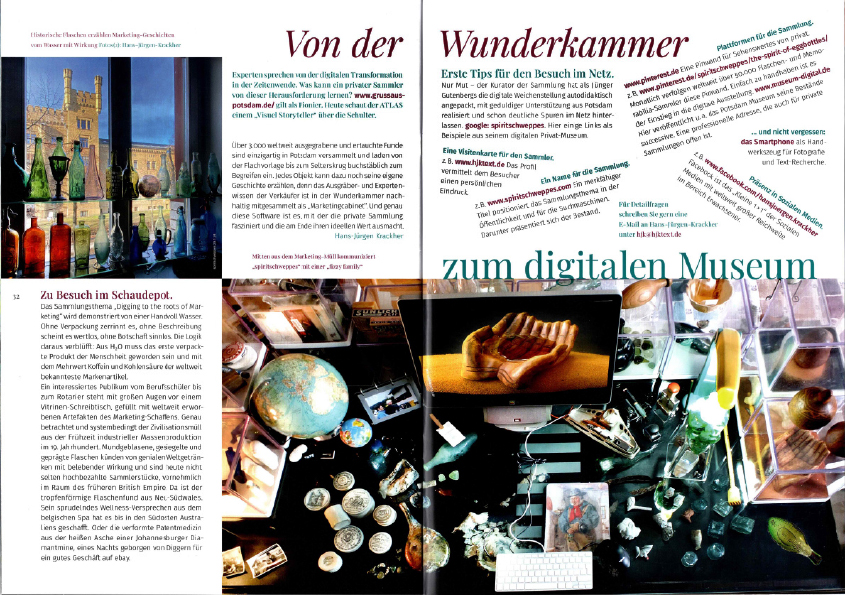
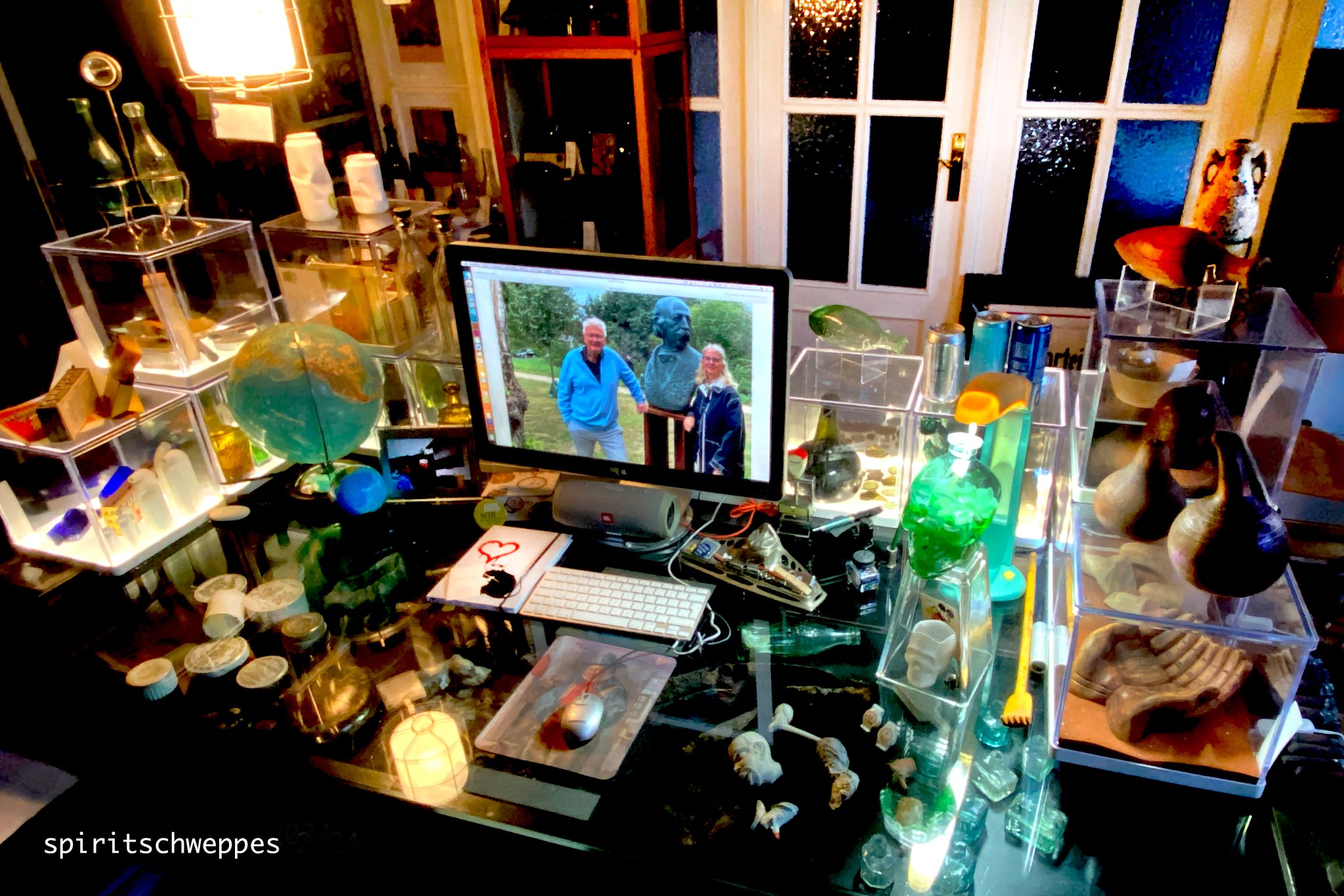
Visiting the display depot. The collection theme “Digging to the roots of Marketing” is demonstrated by a handful of water. Without packaging it melts away, without a description it seems worthless, without Message pointless. The logic of this is astonishing: H2O has to be the first packaged product of humanity and with added value caffeine and carbon dioxide are the world’s best-known branded products.
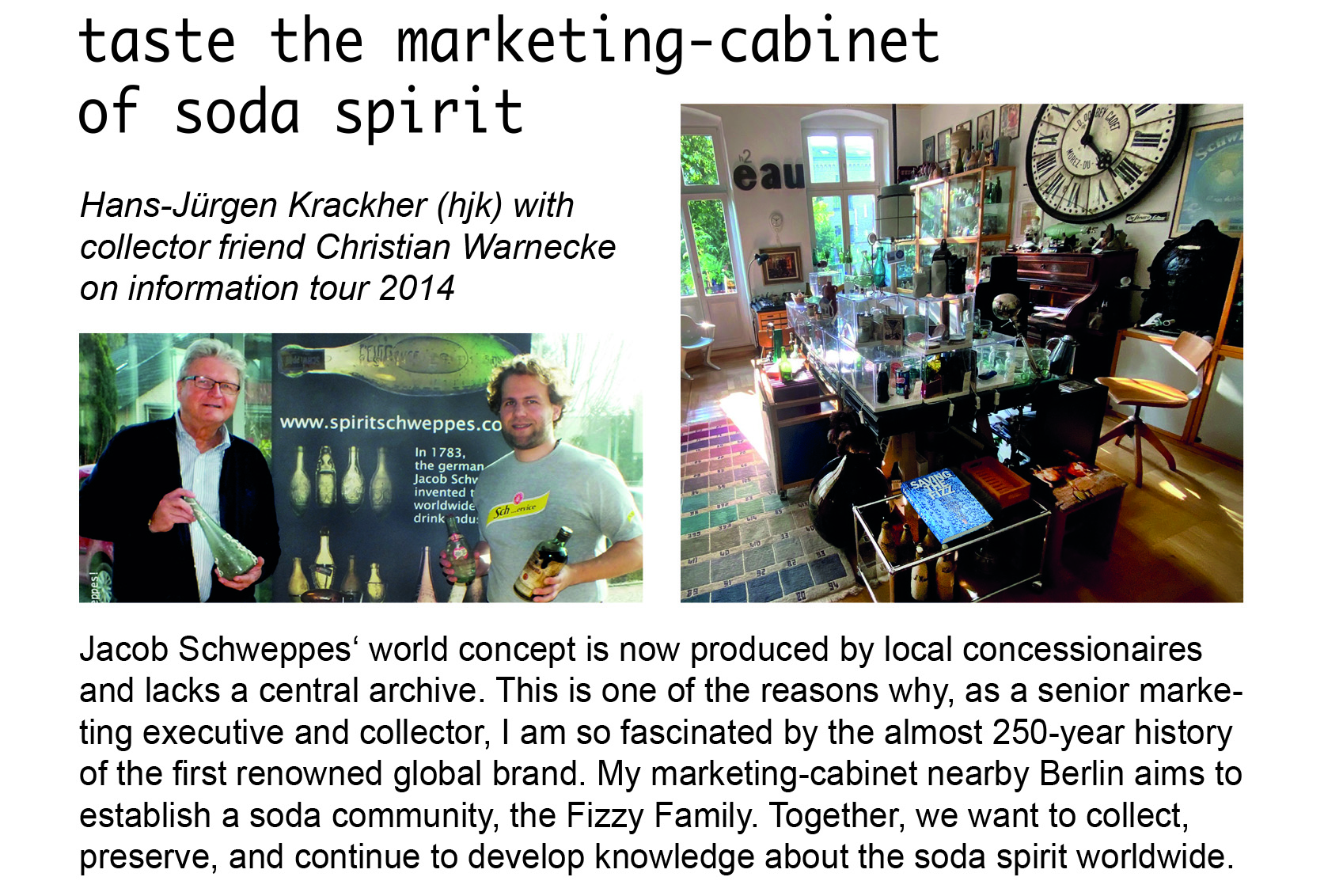
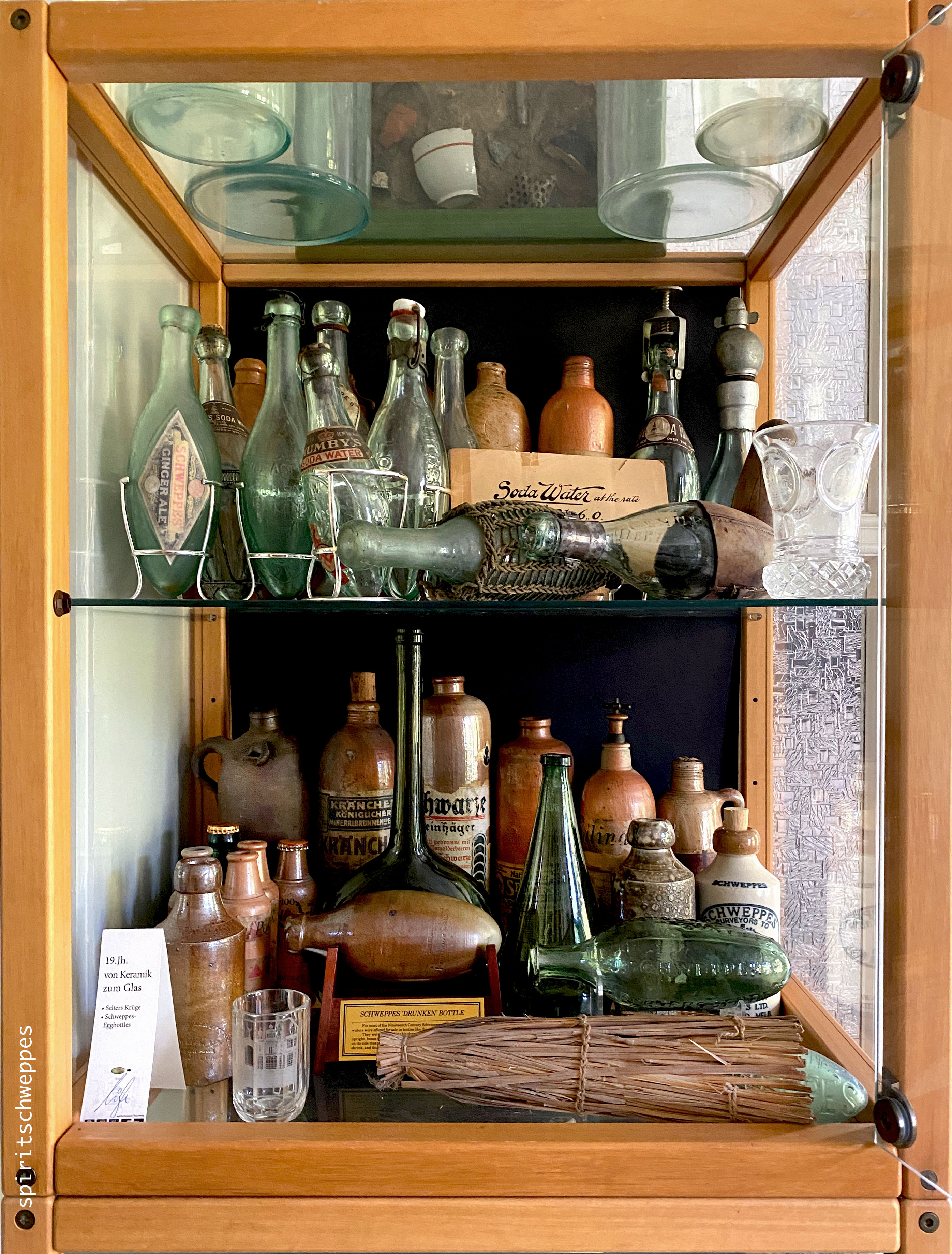
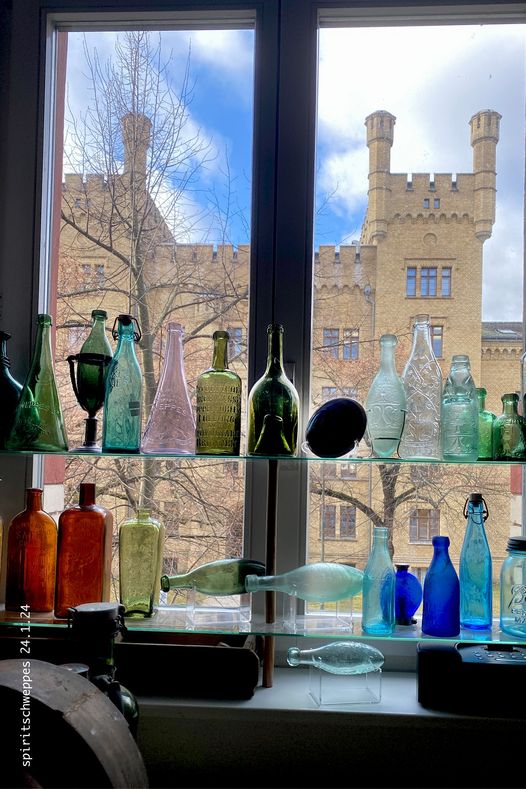
An interested audience, from vocational students to Rotarians, is there wide-eyed in front of a showcase desk filled with world-wide images acquired artifacts of marketing creation. Look closely and systemically, the waste of civilization from the early days of industry mass production in the 19th century. Hand-blown, sealed and embossed bottles announce ingenious world drinks with invigorating effect and are now often highly paid collector’s items, primarily in the area of the former British Empire. There is the teardrop-shaped bottle find from New South Wales. The promise of wellness from the Belgian spa is up to the point
Australian east coast made it. Or the deformed patent medicine from the hot ash from a Johannesburg diamond mine, recovered one night from diggers for a good deal on eBay. Over 3,000 finds excavated and discovered worldwide are unique Potsdam gathers and loads from the flat template to the seltzer jug literally to be understood. Each object can also have its own Tell the story, because the excavators and expert knowledge of the seller is included in the Wunderkammer sustainably collected as “Marketing Cabinet”.
And it is precisely this software with which the private Collection fascinates and which ultimately determines its ideal value. First tips for visiting the internet. Have courage – the curator of the collection as a disciple of Gutenberg, he autodidactically set the digital course tackled, implemented with patient support from Potsdam and that’s it leave clear traces on the internet. google: spiritschweppes.
Here some links as examples for his digital private museum.
A business card for the collector. e.g. http://www.hjktext.de The profilegives the visitor a personal impression.
A name for the collection. e.g. http://www.spiritschweppes.com A memorable title positions the collection topic in the public eye and for the search engines. The inventory is presented below.
Collection platforms. http://www.pinterest.de A pin board for Worth seeing from private. e.g. https://www.pinterest.de/spiritschweppes/the-spirit-of-eggbottles/ Track over 50,000 bottles worldwide every month. Memorabilia collectors this pin board. It’s easy to handle
Entry into the digital exhibition. http://www.museum-digital.de Here the Potsdam Museum, among others, publishes its holdings successively. One professional address that is also open to private collections.
174 years ago today, the royal gardener Paxton was still building the sensational glass Crystal Palace for the first World’s Fair in London’s Hyde Park in 1851. Instead of alcohol, Schweppe’s Malvern Water was supposed to mentally refresh 6 million visitors in 6 months . And Schweppe’s 8 meter high, glass bubbling fountain became the meeting point of the first global meeting of modernism. Many visitors around the world took home a refreshing Schweppes Torpedo. In memory of this and with the support of countless bottlediggers, collectors and experts from all over the world, “spiritschweppes” today commemorates the great times of inventors, founders and entrepreneurs.

 SPIRITSCHWEPPES MARKETING-CABINET