I am digging to the roots of Coca Cola, inspired by the skills of Jacob Schweppe. be soda, “spiritschweppes!” http://www.hjktext.de
I am digging to the roots of Coca Cola, inspired by the skills of Jacob Schweppe. be soda, “spiritschweppes!” http://www.hjktext.de


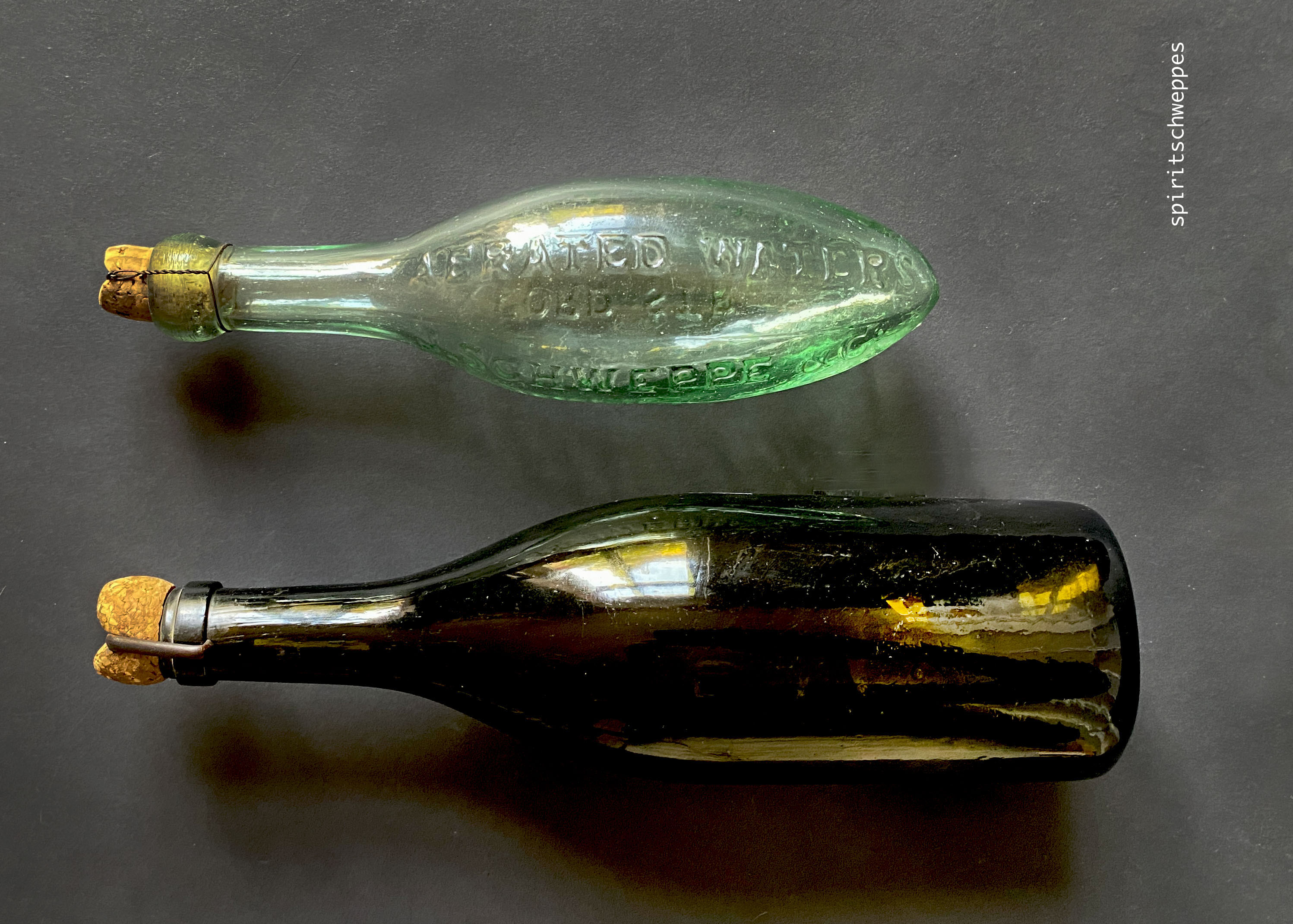


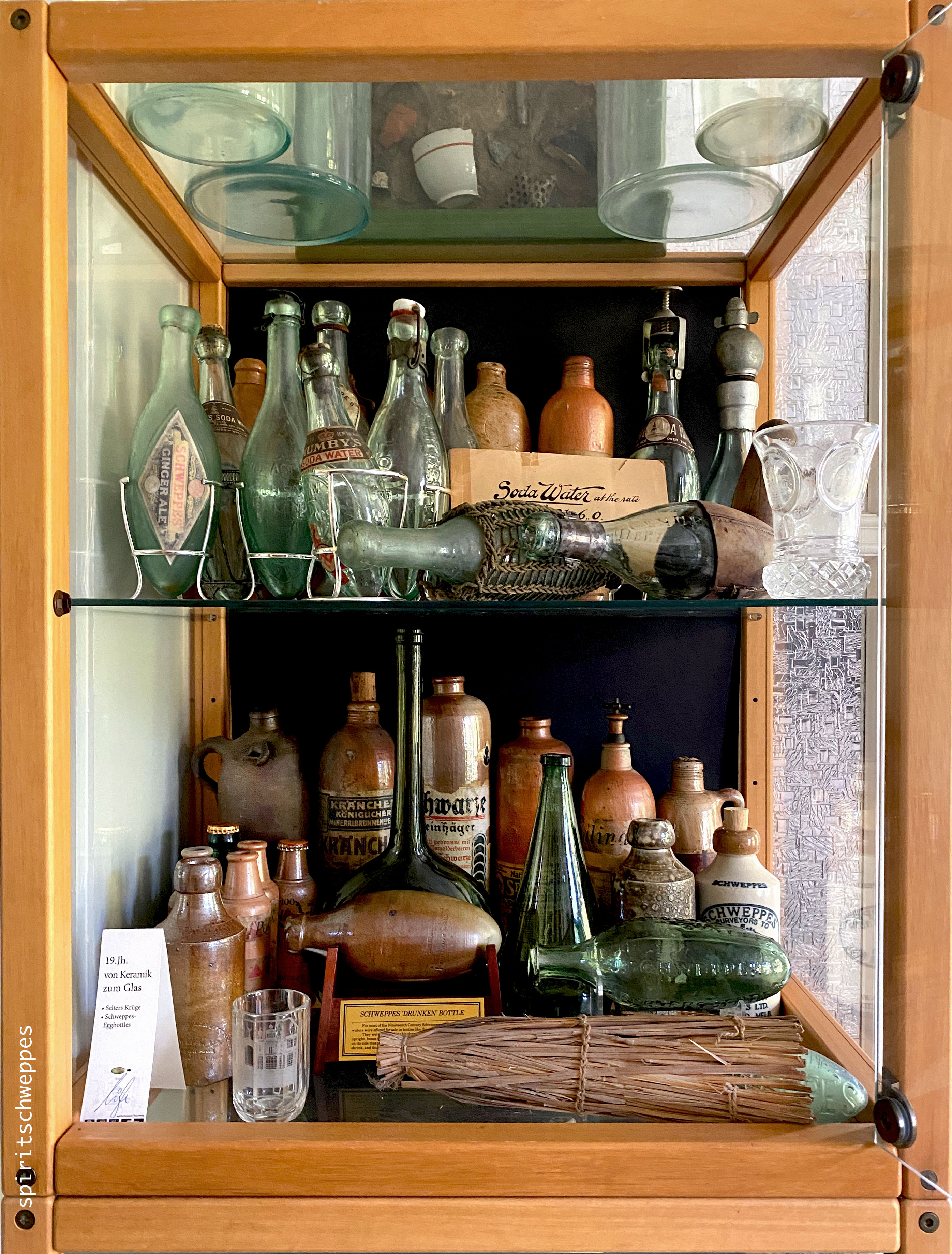
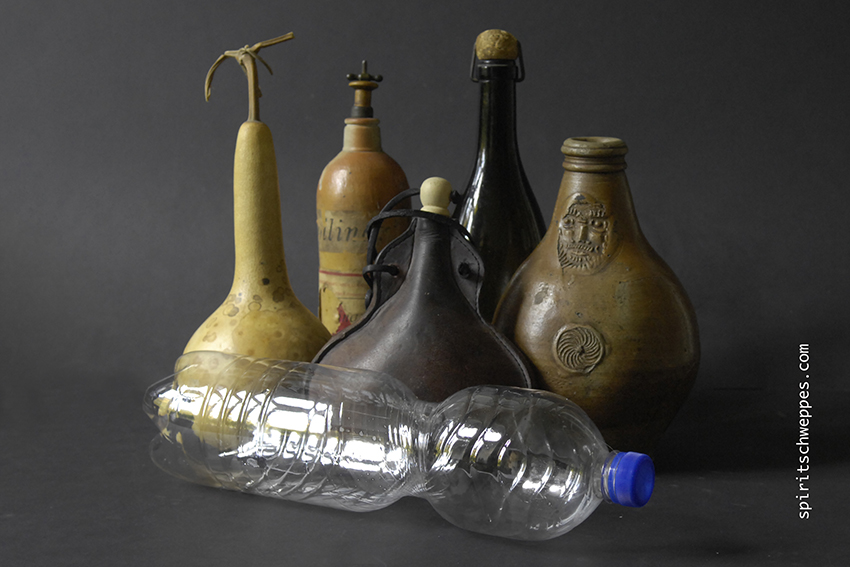
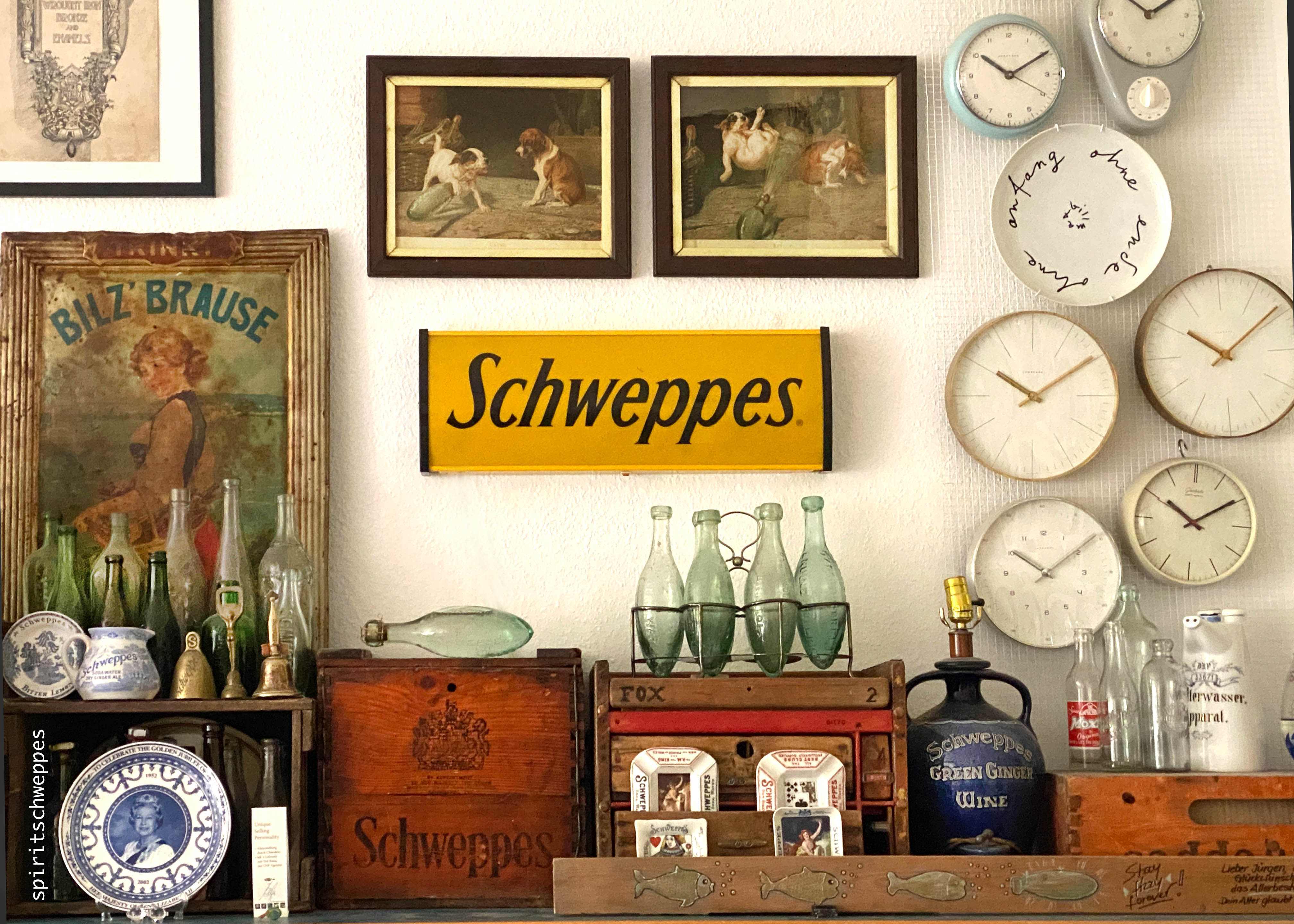 The spiritschweppes mood arose in the monastery life of Dom Perignon from the bottle fermentation of fine grape juice. When the natural cork, freed from iron, shot out of its thick-walled pressure-bottom bottle with a mighty BLOP, then a fabulously spirited magic potion soon provided highly intellectual ideas.
The drink became affordable for the masses with the research into carbon dioxide and its industrial compression into an ingenious water bottle with a pressure-resistant pointed bottom and a constantly moist cork. J. Schweppe & Co. sent its wonderfully refreshing soda torpedo from London to the worldwide empire with the first World Exhibition in 1851. A happy CHEERZZ from the FIZZY FAMILY. google: #spiritschweppes


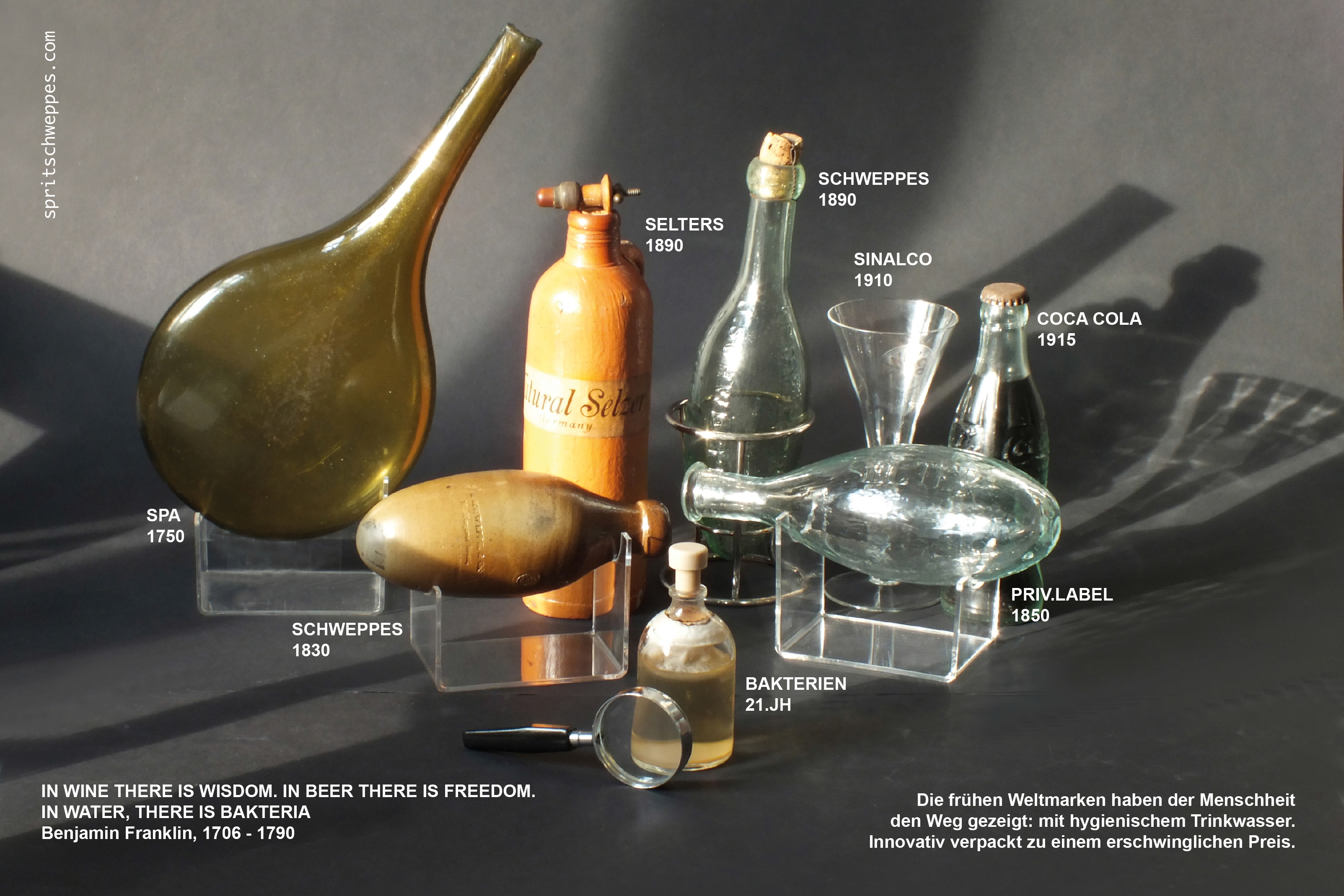
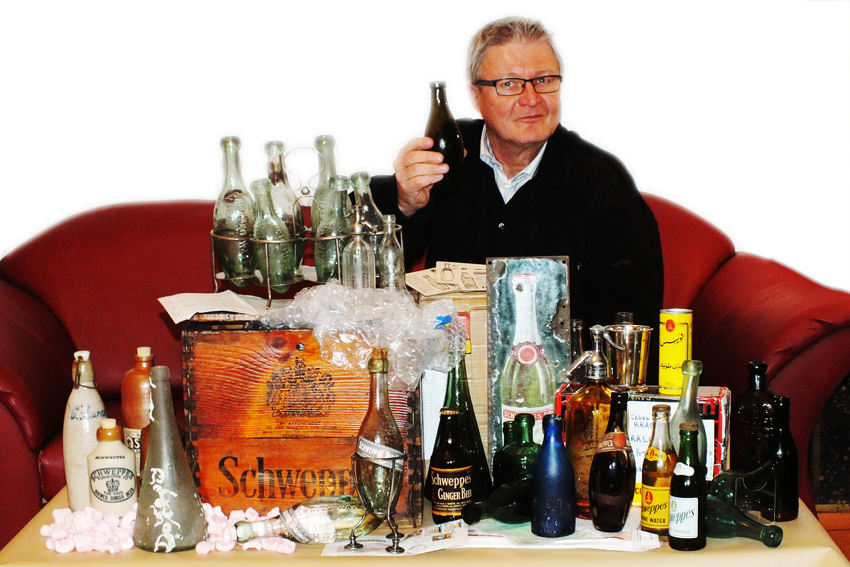
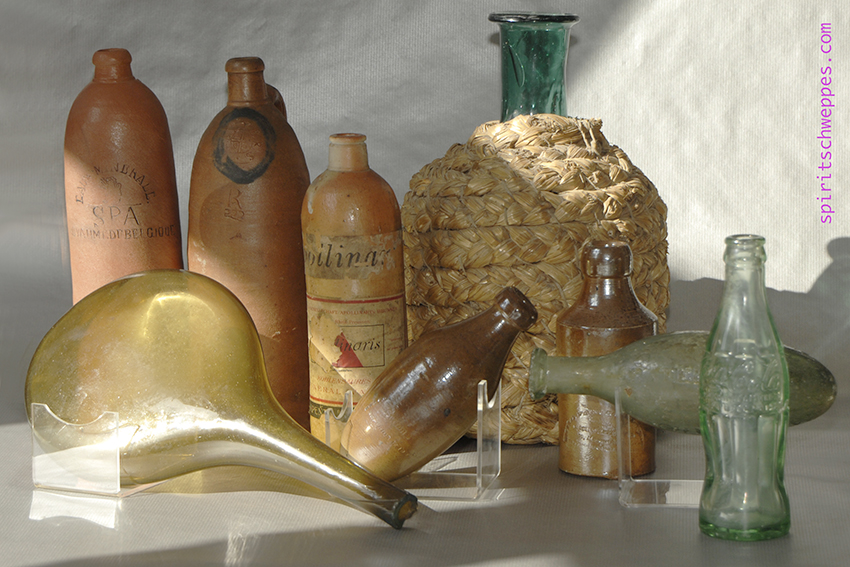
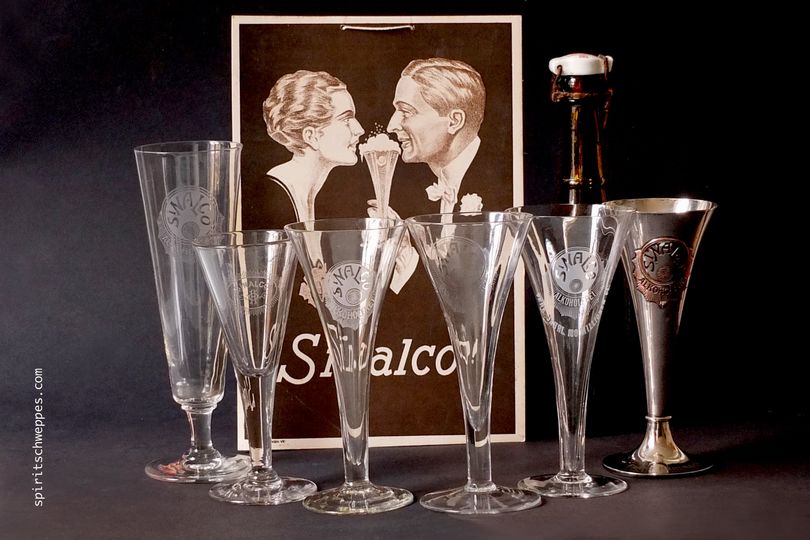
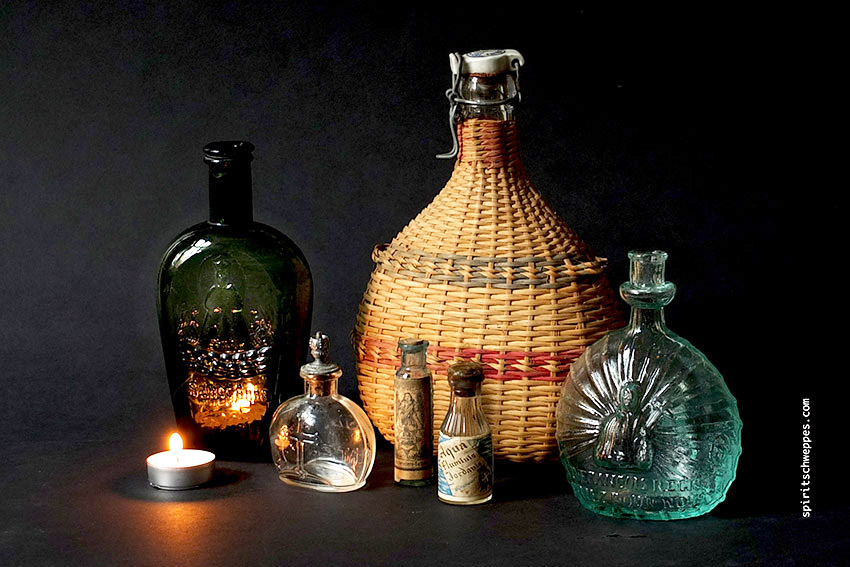
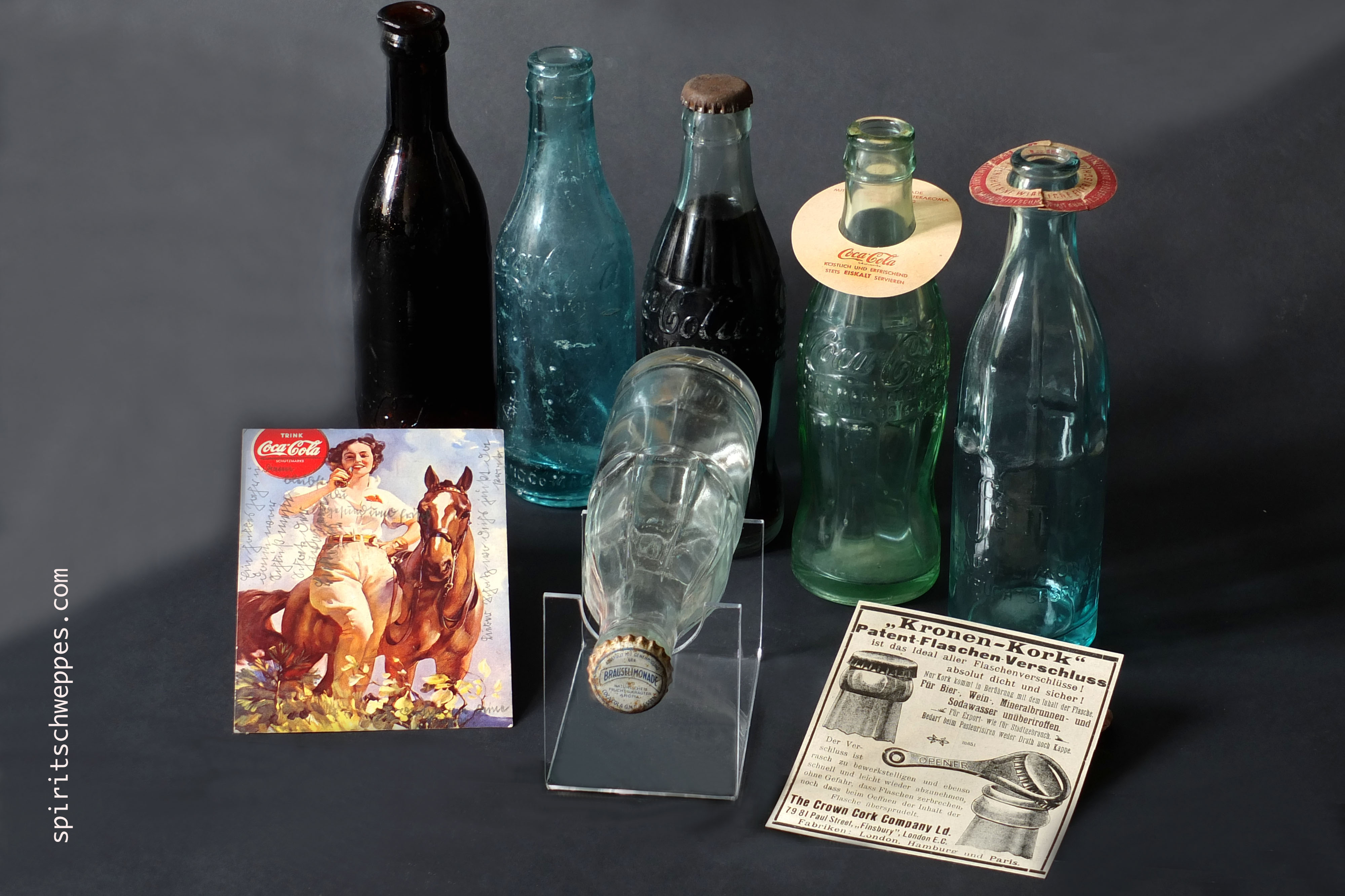
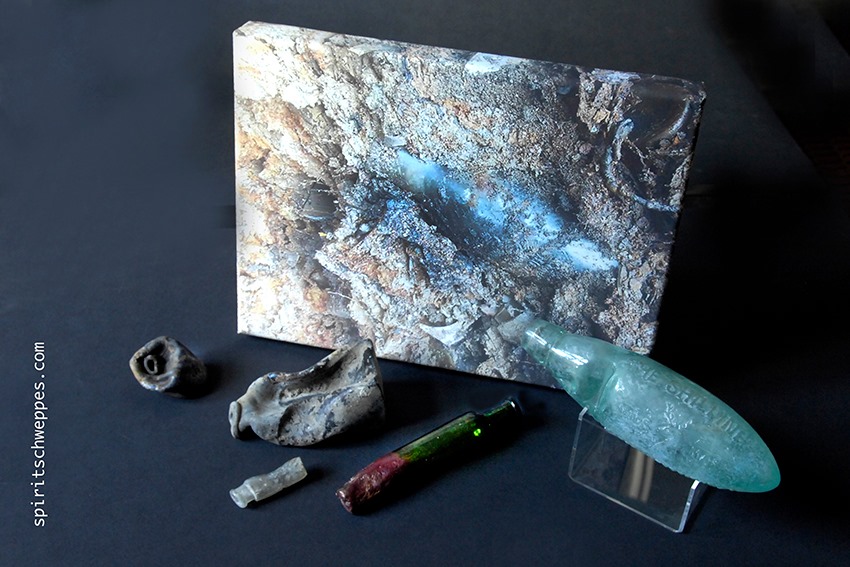
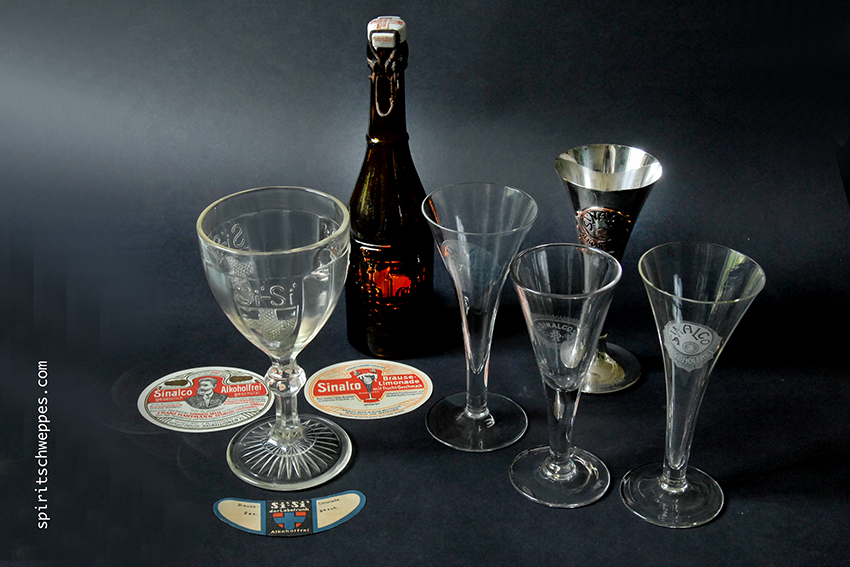
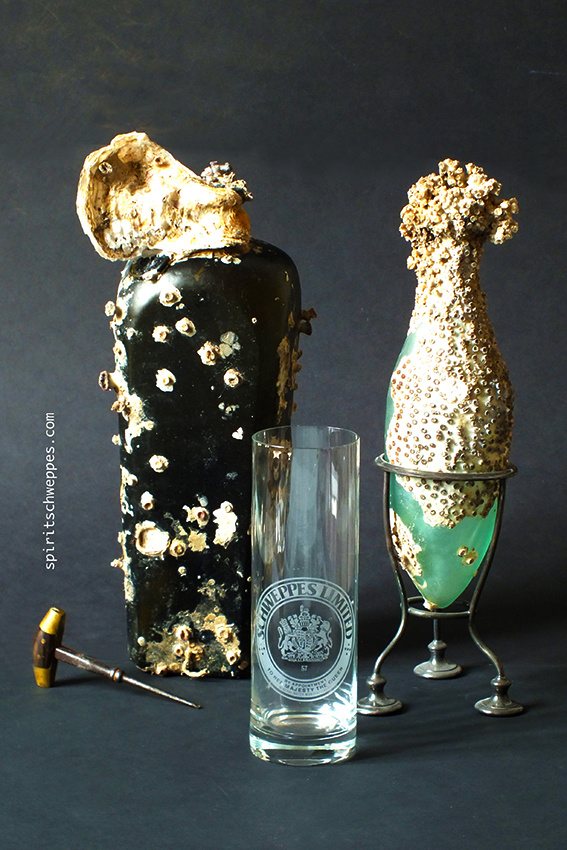
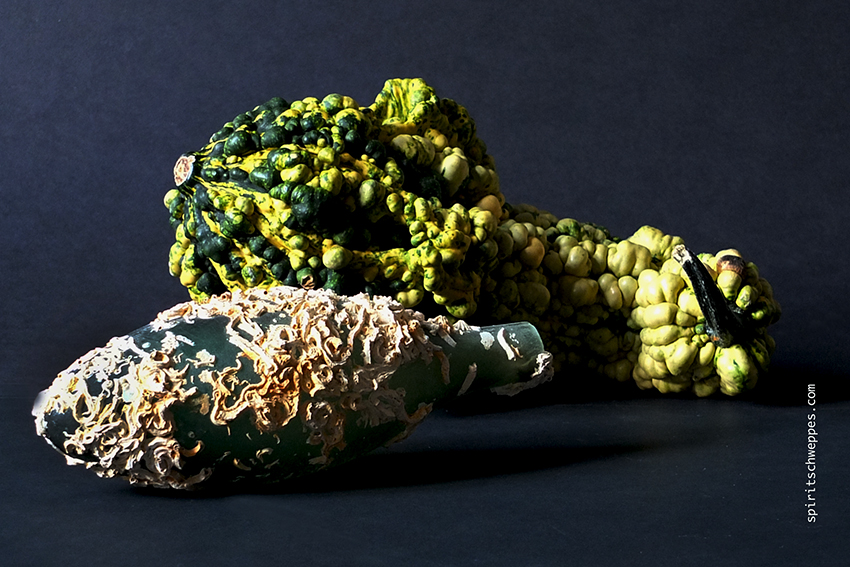
Yesterday on the 22nd of March the international WORLD DAY OF WATER has passed almost unnoticed. He had the guiding theme “leaving no one behind – water and sanitation for all”. As late as the 18th century, Benjamin Franklin, the American scholar, publicist and politician said: IN WINE, THERE IS WISDOM. IN BEER, THERE IS FREEDOM. IN WATER, THERE IS BAKTERIA. The photo from my marketingcabinet spiritschweppes.com should pay tribute to the historic drinking water pioneers. SPA 17 / 18C, SELTERS / SCHWEPPES 18 / 19c, SINALCO / COCA COLA 20c. These first global players in carbonated, hygienic drinking water have taken humanity a long way to the development of water and sewer systems (end19C). With safe drinking water at an affordable price – innovatively packaged in the world’s first bottles. In the foreground: water bacteria, made visible.

Surprising and interesting anecdotes every minute. On the History of Culture and Culinary, Senses and Feelings, Beer and Wine, Tea and Coffee, Spirits and Softdrinks, Tobacco and Fragrances, Alcohol and Drugs. For Pleasure and Added Value entertainingly. Presented by Hans-Jürgen Krackher, brand-maker, antique-collector and marketing-narrator. Tasting included. Cheers to Christian Warnecke, Guinness Schweppes Collector No.1, Hamburg Continue reading
Mein Beruf und Thema: Marketing. Das ist Forschung, Innovation und Unternehmergeist. Prickelnd beschrieben mit: spiritschweppes –digging to the roots of marketing. Die Marke Coca Cola steht dafür als Inbegriff. Meine Forschungen haben ergeben: Schweppes von 1783 ist die Mutter der Weltmarke, Selters und Spa sind die nächsten Verwandten. Ich bin dabei, die spannende Geschichte des erfrischenden Wassers zu schreiben – Wasserträger, Medikusse, Bakteriologen und Glasmacher gehören dazu wie die Erfindung der Flasche und der Wasserleitung.Als seniorer Markenmacher, http://www.hjktext.de Forscher und Sammler, investiere ich seit 2014 in ein privates Marketing-Cabinet. Es zeigt die historische Entwicklung des Markenartikels, dargestellt am Beispiel der Erfrischungsgetränke. Denn seit Menschengedenken verkörpert sprudelndes Wasser, aufwändig verpackt, den klassischen Mehrwert.Nicht zuletzt war der Deutsche Jacob Schweppe, geboren 1740 in Witzenhausen, der Begründer der globalen Softdrink-Industrie. Schweppe´s Eggbottle, die Crystal-Fountain zur ersten Weltausstellung 1851 – sie gehören zu den Meilensteinen des Industriezeitalters und schreiben Marketing-Geschichte: Als Wegbereiter der bekanntesten Konsum-Marke der Welt, Coca Cola.Im Fokus des Marketing-Cabinets stehen die ersten globalen Marken seit dem 17.Jahrhundert wie Spa, Niederelters, Struve, Sinalco, Schweppes, Coca Cola – eingebettet in Zeitgeschichte und Alltagskultur. Gemeinsam mit meinem Hamburger Sammlerfreund Christian Warnecke (Guinness Book of Records), verfügen wir u.a. über die weltweit umfassendste Case-History zur Marke Schweppes. Von der ersten Steingutflasche bis zur Dose, Werbung, Dokumenten und Zeitzeugen vom 18. Jahrhundert bis heute.**Schweppes, seit 1792 aus England positioniert, wurde 1986 an national produzierende Konzessionäre verkauft. Die Marke selbst gehört heute dem japanischen Unternehmen Suntory. Es existiert weder ein öffentliches Archiv noch ein zentraler Erinnerungsort (wie das Coca Cola-Museum in Atlanta). Meine Mission ist es, zum 250. Geburtstag der Weltmarke (2033), die Soda-Story “SPIRITSCHWEPPES©” auf die Räder zu stellen. Als internationale Roadshow, logistisch wie der Coca Cola Weihnachts-Truck.spiritschweppes.com wurde 2014 eigeninitiativ ins Leben gerufen. Als Online-Projekt ist es autonom und open source. Meine private Sammlung, ein Marketing-Cabinet aus allen Kontinenten, ist markenübergreifend und dürfte weltweit einzigartig sein. Von Krombacher (Produzent Schweppes Deutschland) oder anderen Unternehmen, erhält spiritschweppes keinerlei Unterstützung.Und jetzt geht es für den Rest der Welt in Englisch weiter 🙂My cabinet is (hopefully) unique worldwide and became possible with ebay, sales and lively conversations with experts, diggers, divers and collectors in their continents and oceans. Displayed are historical milestones and documents of fizzy marketing. Rare and unique in compilation – a storytelling and experience, dedicated to people with passion in every profession all over the world.
Here is my warmly invitation to visit Potsdam/Berlin. For information please contact hjk@hjktext.de
Dedicated to fizzy people: scroll the story of marketing by digging to the roots of Coca Cola
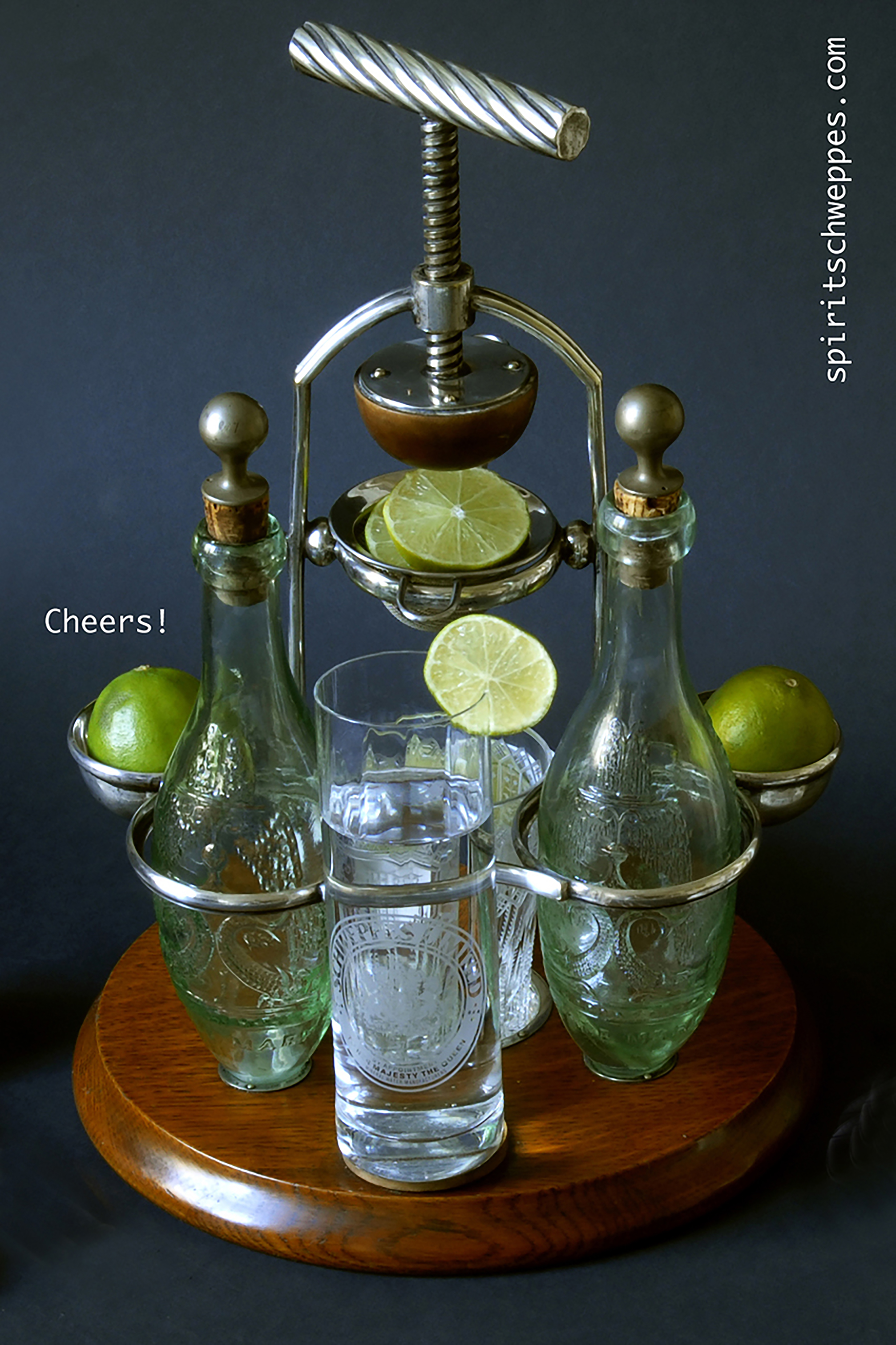
CHEERS! Diving to worlds first Gin Tonic, 1850ies. Early case gin pig snout, Indonesia. Early aerated water eggbottle, Caribbean.
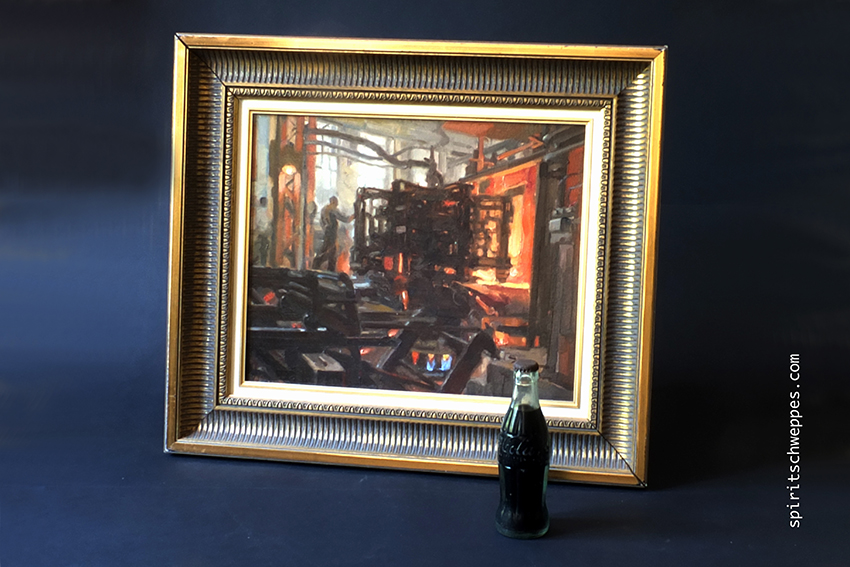
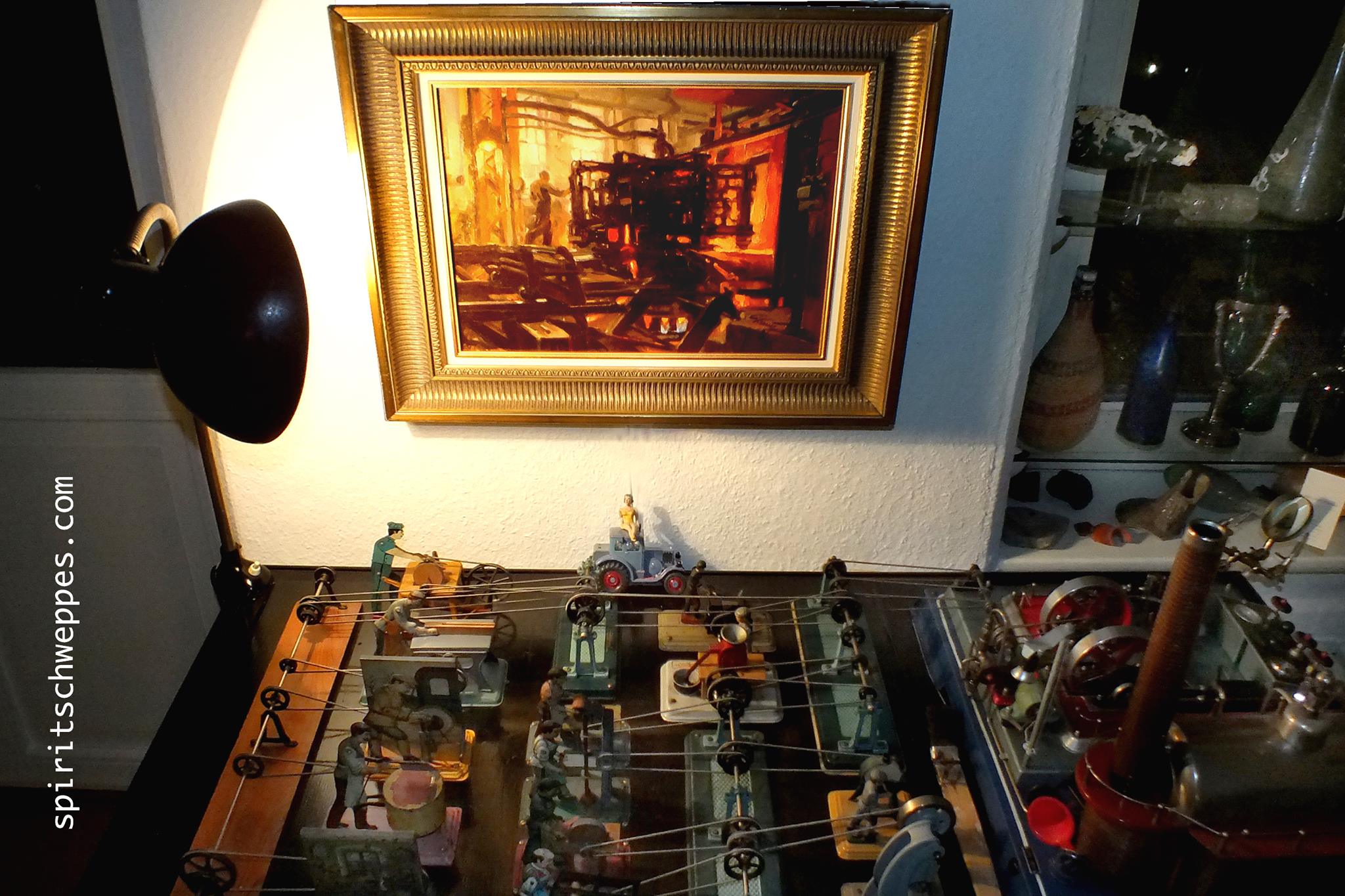
GLASBLOWERS HELL. Owens Bottle Machine 1903 could produce glass bottles at a rate of 240 per minute and reduce labor costs by 80%.
(only?) existing oil painting by the bohemian Artist Jan Kreutz, 1897 – 1979. Hot stuff into my archive and marketing cabinets – You Are Invited!
Great issue on Collectors Weekly ref. Schweppes, one of the most important forerunners of Coca Cola. https://www.collectorsweekly.com/articles/the-toxic-history-of-soda-pop/
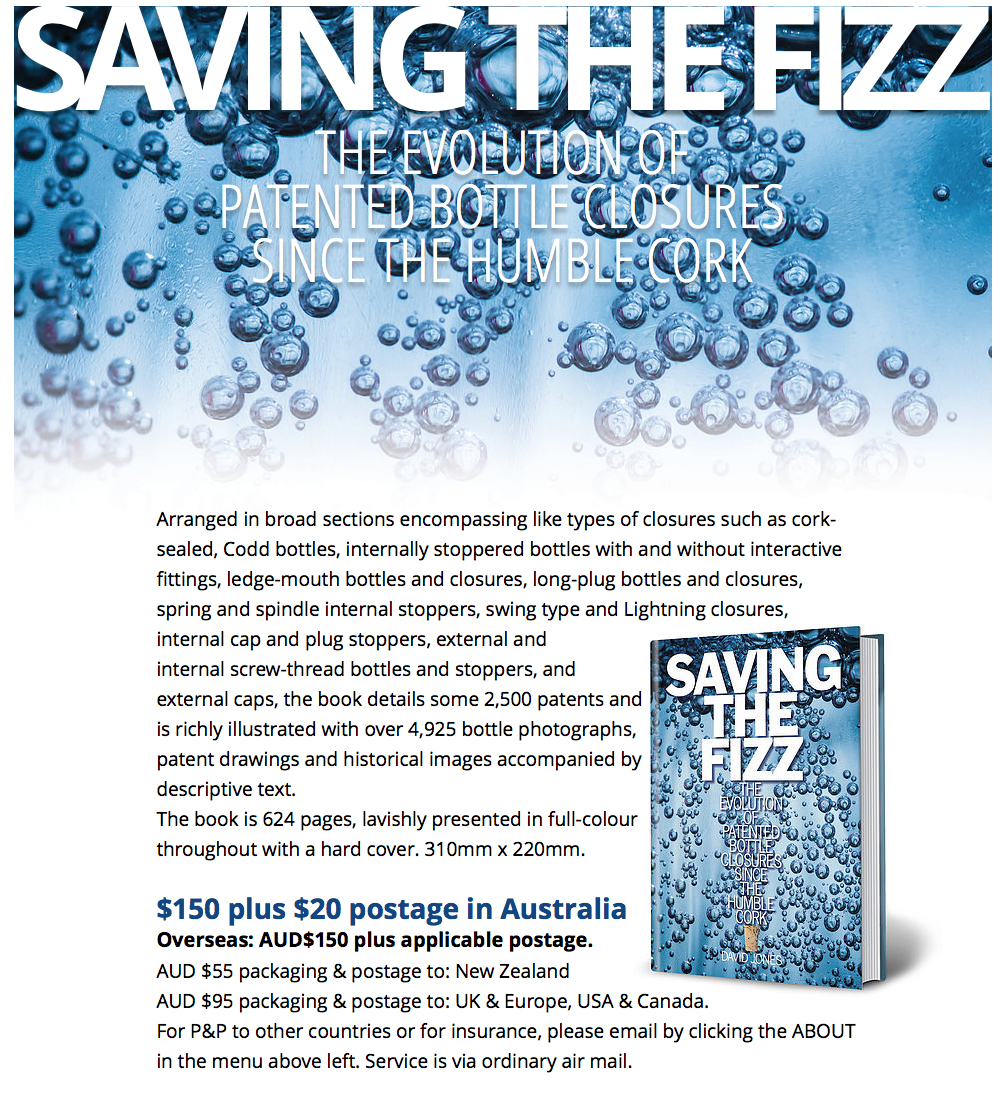
SODA WATER : UNDER PRESSURE. Click the video storytelling to the book SAVING THE FIZZ, David Jones bible of the evolution by patented bottle closures since the humble cork.
Since October 2017, Schweppes marketing Europe/Belgium and Krombacher/Germany remember their unique selling personality of the brand – the softdrink story of mental refreshment, inspired by Jacob Schweppe since 1783. comments in competence:
Schweppes Story “Berlin Babylon”, 1920 ies…
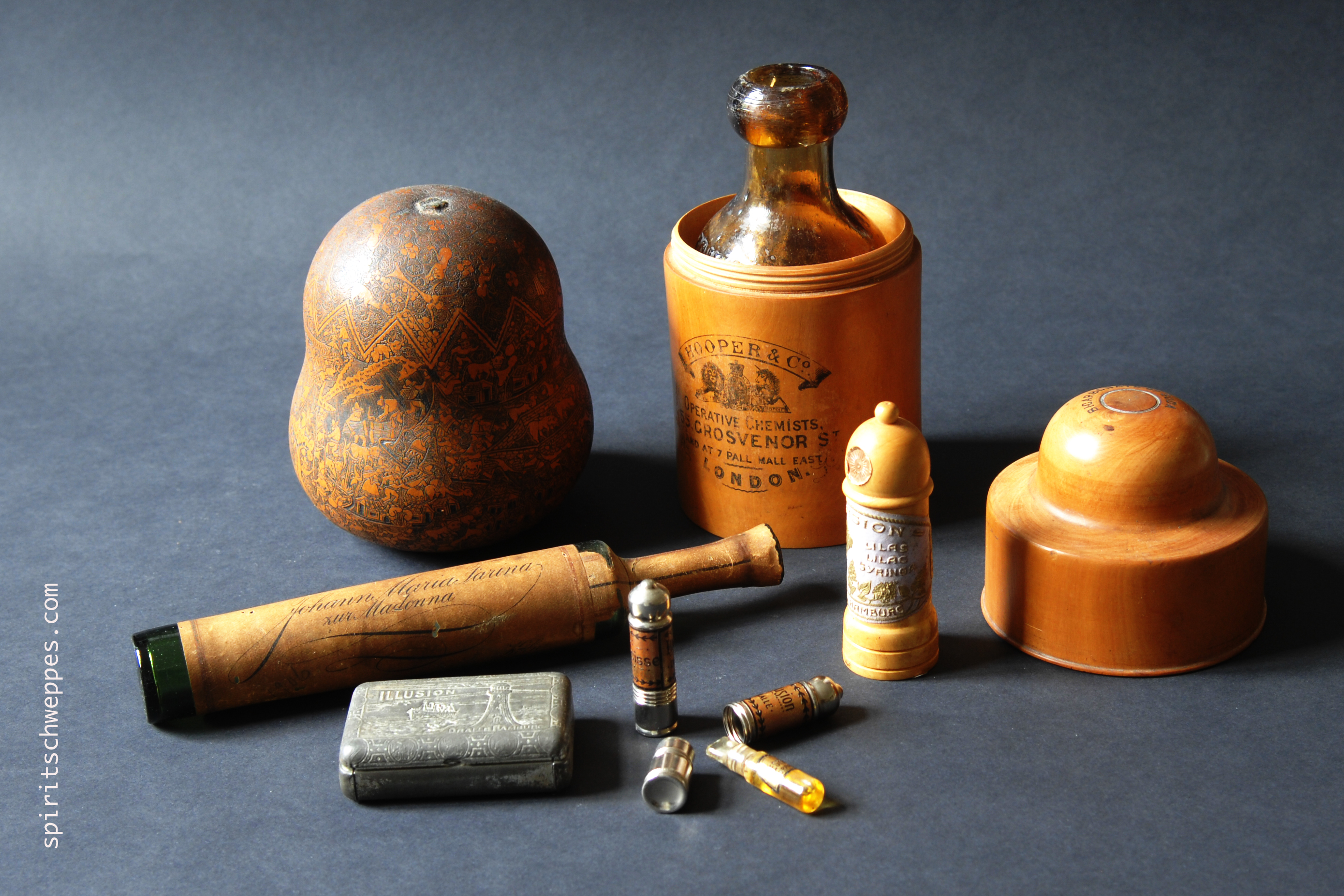
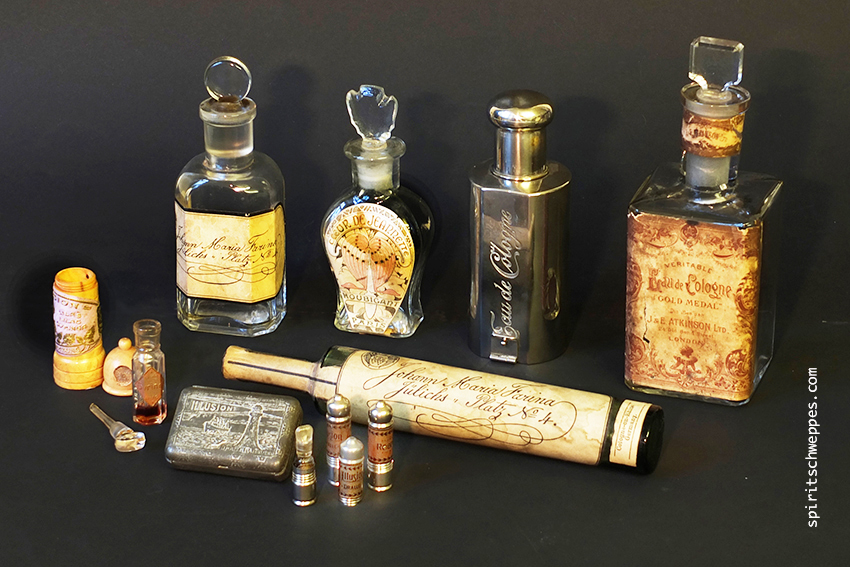
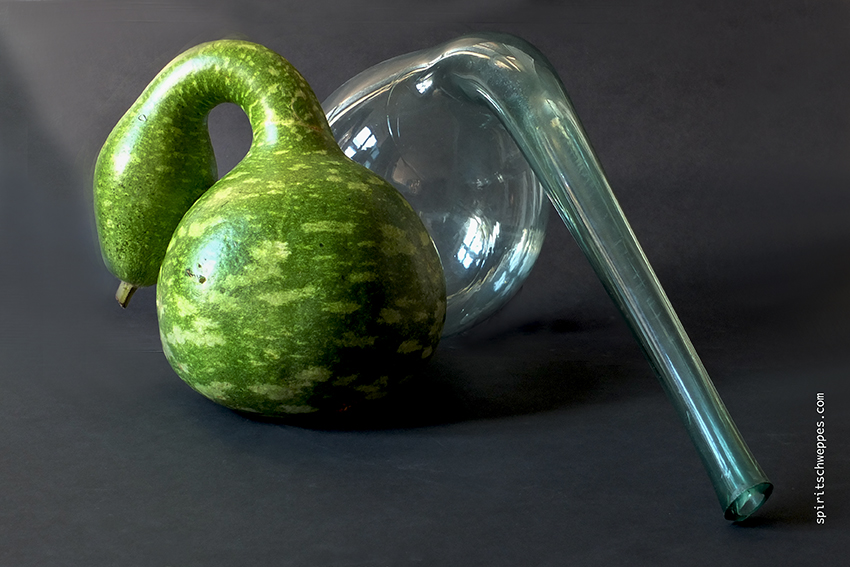
ADVENT RIDDLE: discover the milestones of marketing design. f.l. pumpkin bottle by GOD 0. schneewittchen-sarg by BRAUN 1956. eau de cologne by FARINA 1709. bartman-pitcher FRECHEN 16 C. hobble skirt bottle by ROOT GLASS COMPANY 1915. “soda” discovered by JOSEPH PRIESTLEY in 1772, patented by THWAITES 1799. schweppes fountain trade mark by GREAT EXHIBITION 1851. egg bottle made of glass, first find at the ROYAL GEORGE 1782, yawning cock by HJK 1986.
Nov 9th 2017 brand-new from Canada: the 100th jubilee ashtray. In 1799 Augustine Thwaites founded Thwaites’ Soda Water in Dublin. A London Globe article claims that this company was the first to patent and sell “Soda Water” under that name. (wikipedia)
Nov 8th 2017 Arrived today in Germany from downunder: a high-tech bottlestopper saving the fizz end of 19th century. APOLLINARIS answered the glass torpedoes with a very unusual item to save the fizz in stonie bottles. Due to its perishable nature, it has been lucky to survive. This bottle stopper has 2 wooden parts, separated by a rubber type material that expands upon screwing what looks like a brass handle down. item bought for spiritschweppes from Robert, Keilor,/Victoria, Australia.
Nov 7th 2017 100s of digging pics from New York City! Thanks so much for facebooking Maribelle Costes your great digging documents and storytelling with Scott Jordan. https://www.facebook.com/maribelle.costes Maribelle: “This was definitely a soda pit! There were 12 soda, mineral water and brown stout bottles. 3 ginger beers, 2 Genuine Essence, a french toilet water, a cylinder med, two Dr Porters, an Indian Cholagogue, laundry bluing, a seabury bluing, a free blown food jar, a flint glass flared lip smooth base med, and a pontiled flared lip med that held turpentine. Lots of beautiful shards, a rare painted and glazed marble, stone marbles, dolls and porcelain angels, and two cat skulls etc…
There are criers of course, those broken sodas and ginger beers from them whacking the necks off in the past, iron pontiled meds, a small demijohn, Cathedral pickles ales, and flasks. It’s to be expected. Overall, we classify this dig as KA all the way! A once in a lifetime dig for veteran diggers and a newbie like myself! It was such a fun dig and big thanks to Dan for his tenacity, his Thor like strength and his agreeable nature. And to Scott, my love for the last 5 years and friend for over 20 years! He enriched my life with this great hobby and I’m always learning more from him!”
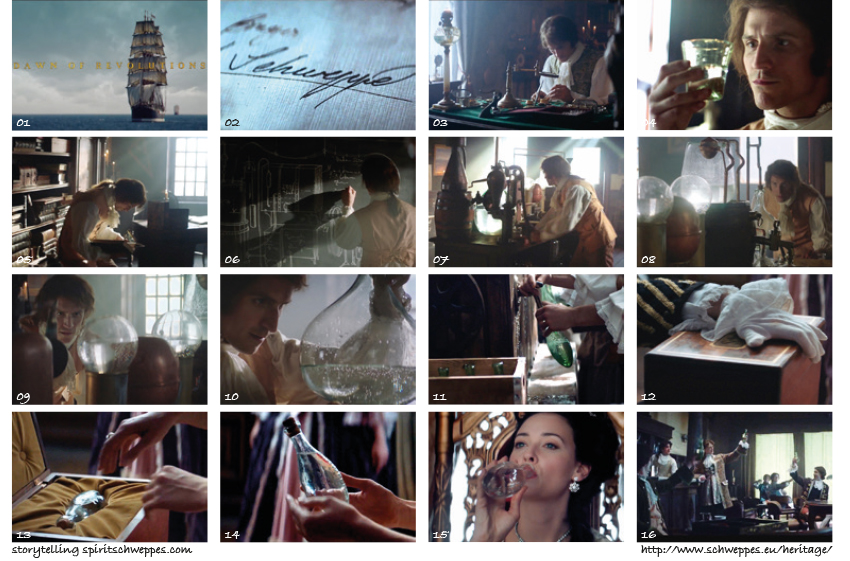
“WATER IS THE ESSENCE OF LIVE – AND I CONTROLL IT” https://www.youtube.com/watch?v=4xT_iDK-hFA&t=18s Jacob Schweppes passion since 1783 for industrial aerated waters. The video is produced in 2017 from Schweppes Belgium, but never released. Artificial aerated waters in tradition of Spa and Selters. A product-innovation, exclusively filled in unique eggbottles, branded worldwide with Schweppes´ fountain since the Great Exhibition London in 1851. Created 100 years before Coca Cola. In my opinion its high time, to use the great source for storytelling the Schweppes Story as o global campaign (see the spot from China 2017 above). A time travel following the mission of Jacob Schweppe, one of the innovators and entrepreneurs of the industrial age. 1740 born in Witzenhausen, Germany.


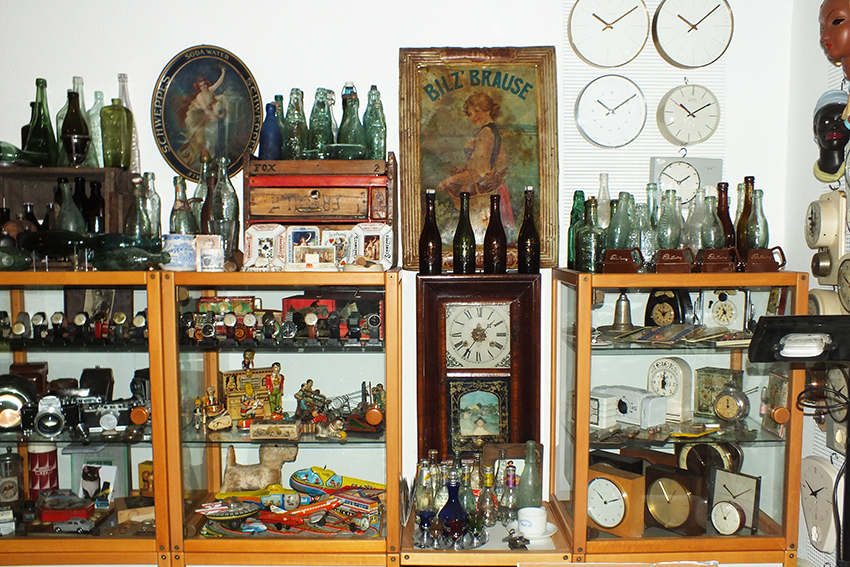
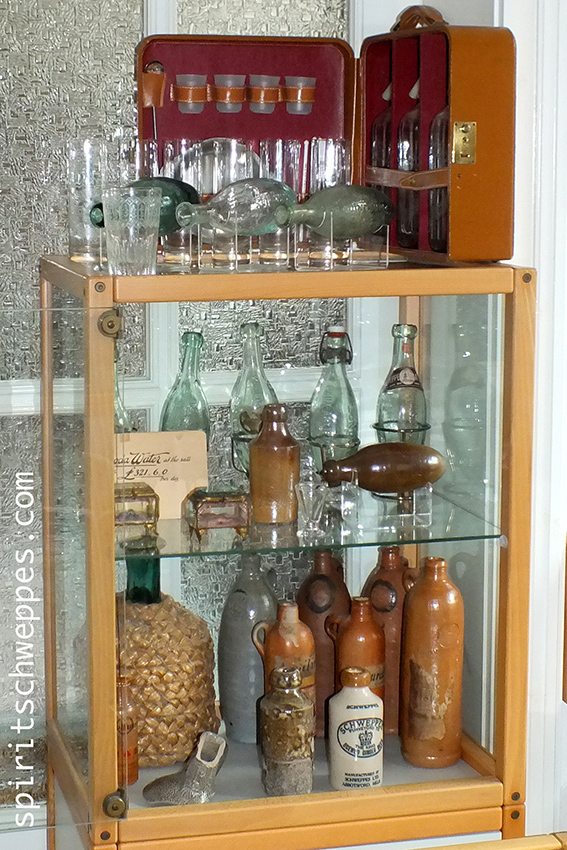

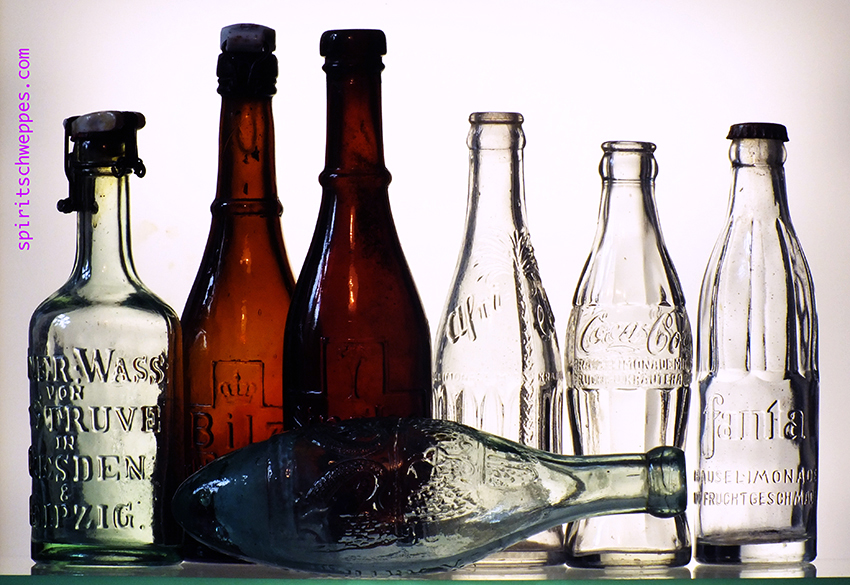
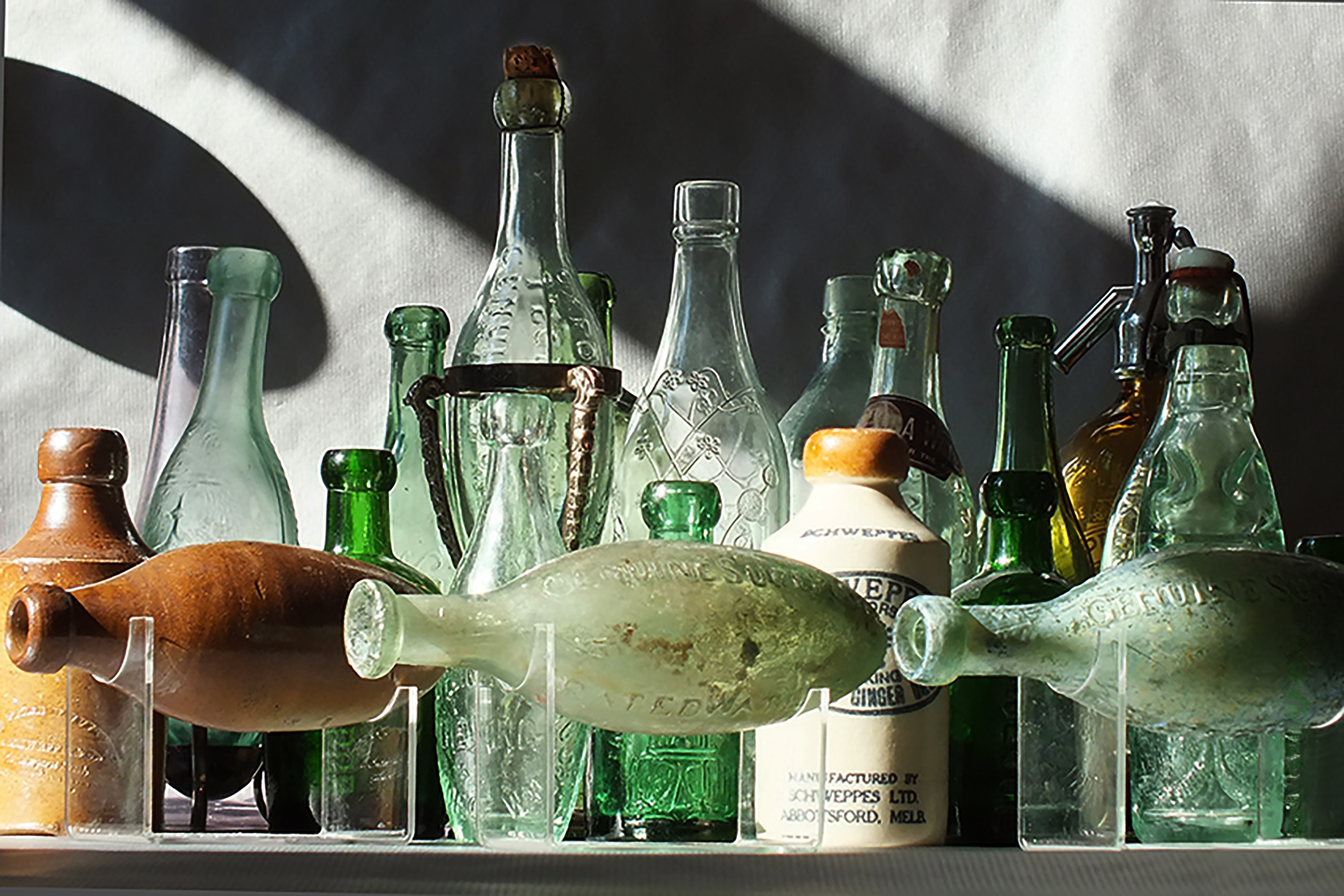


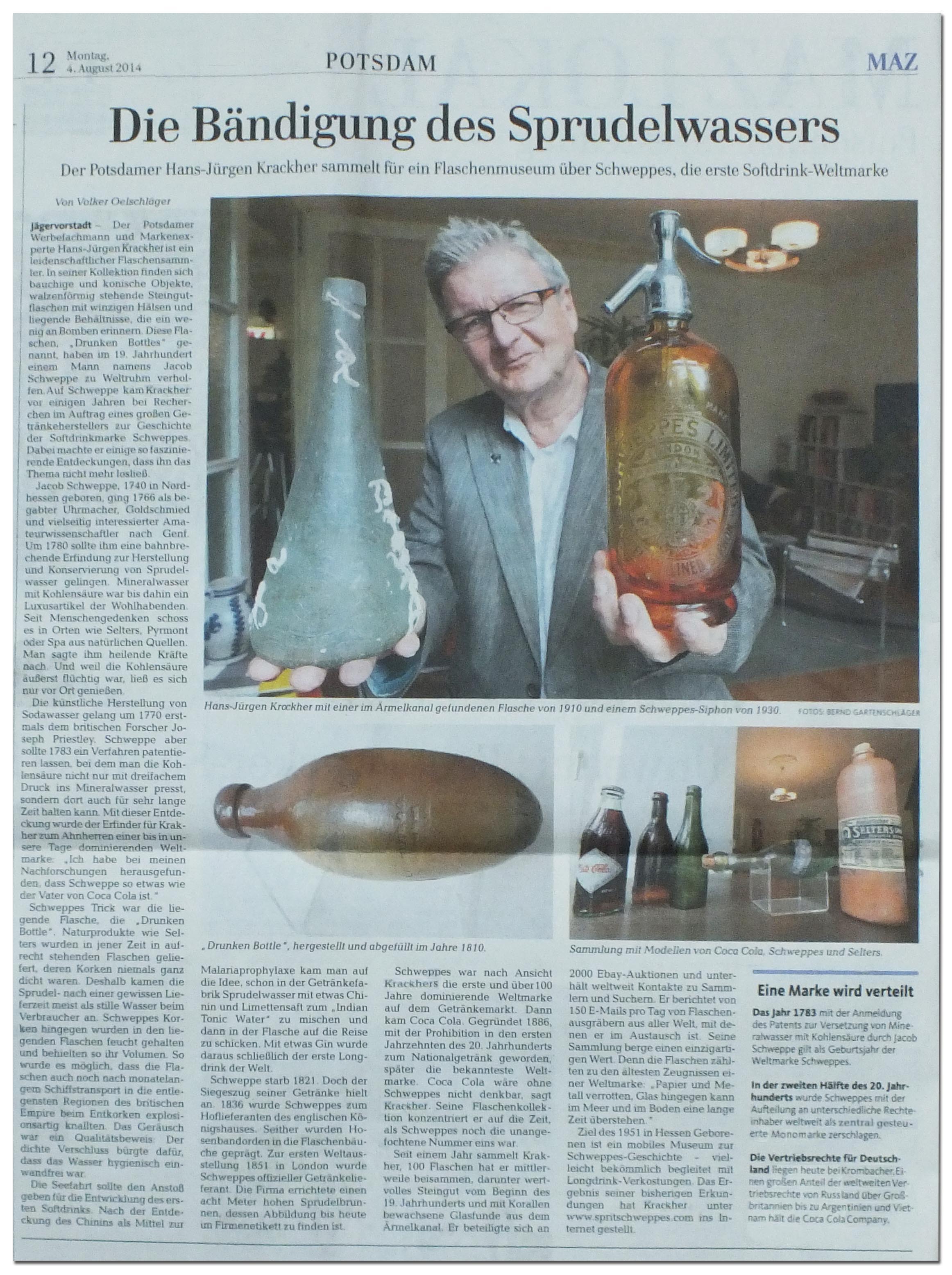


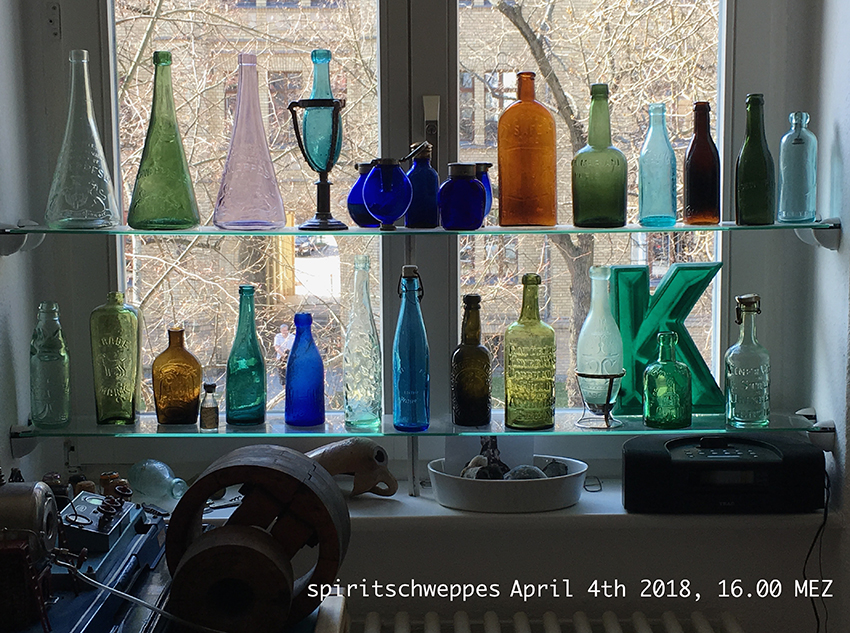
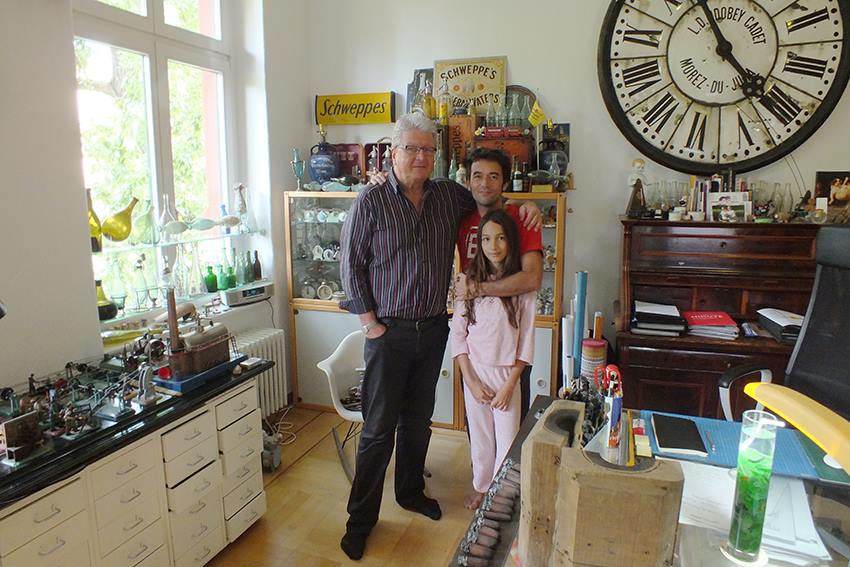
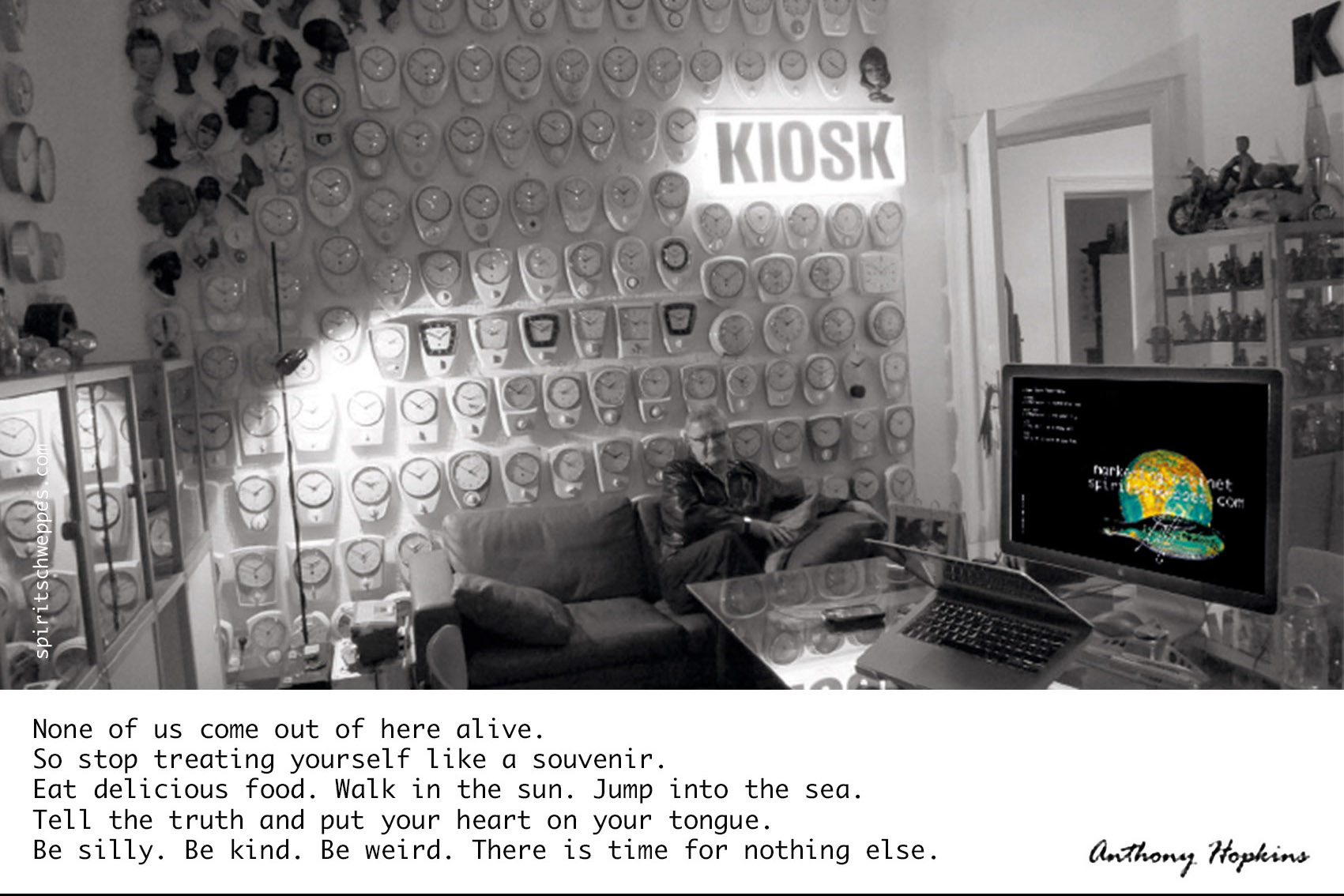
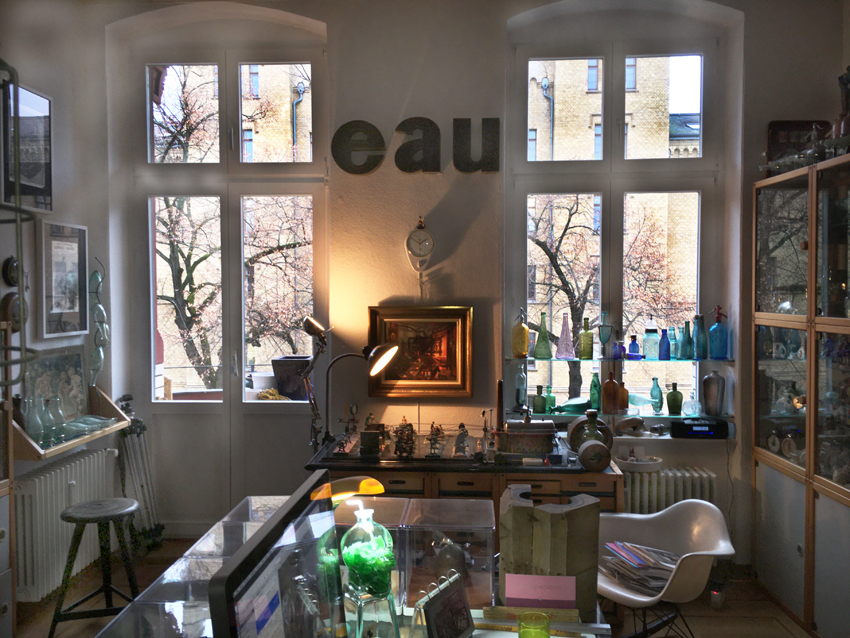
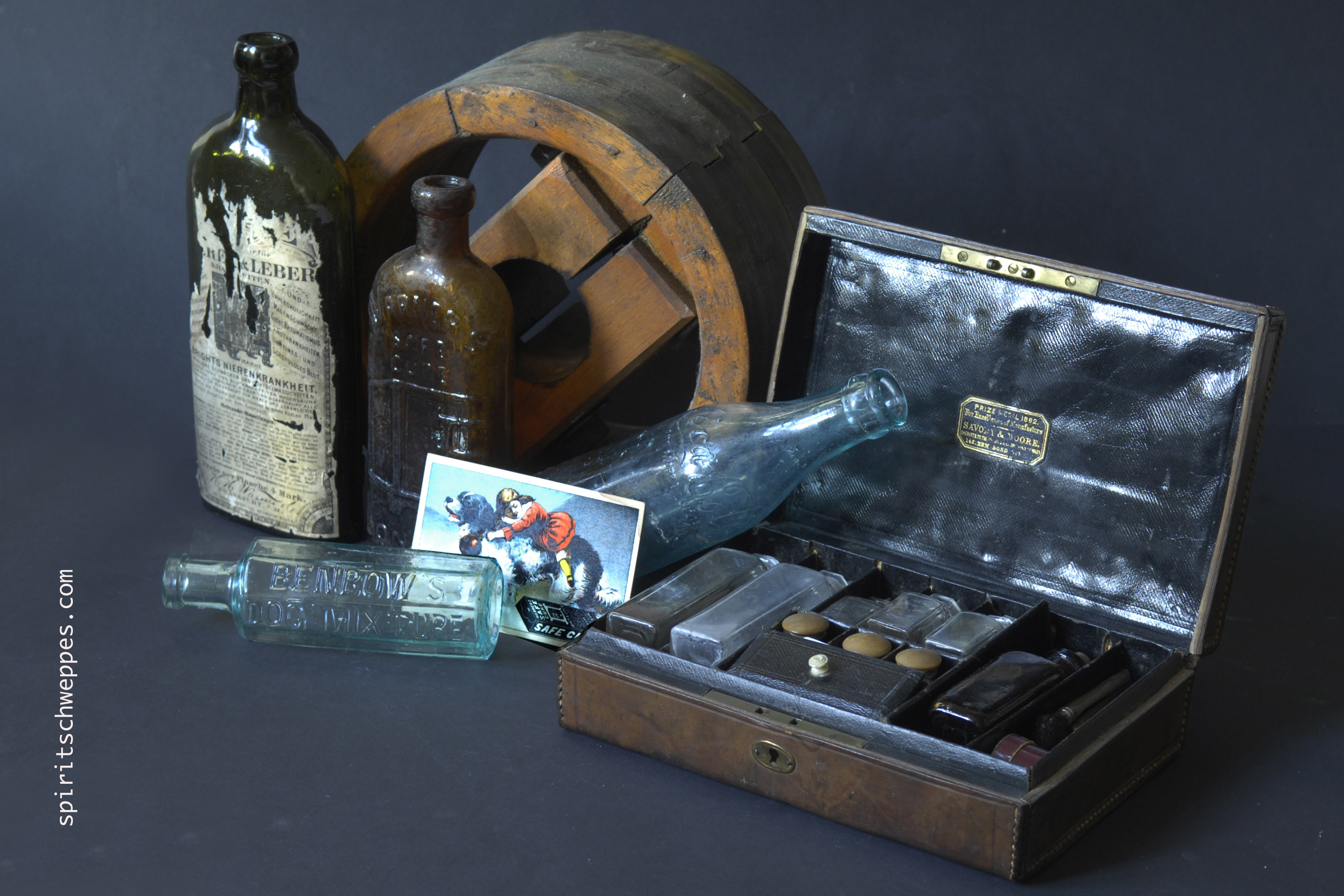
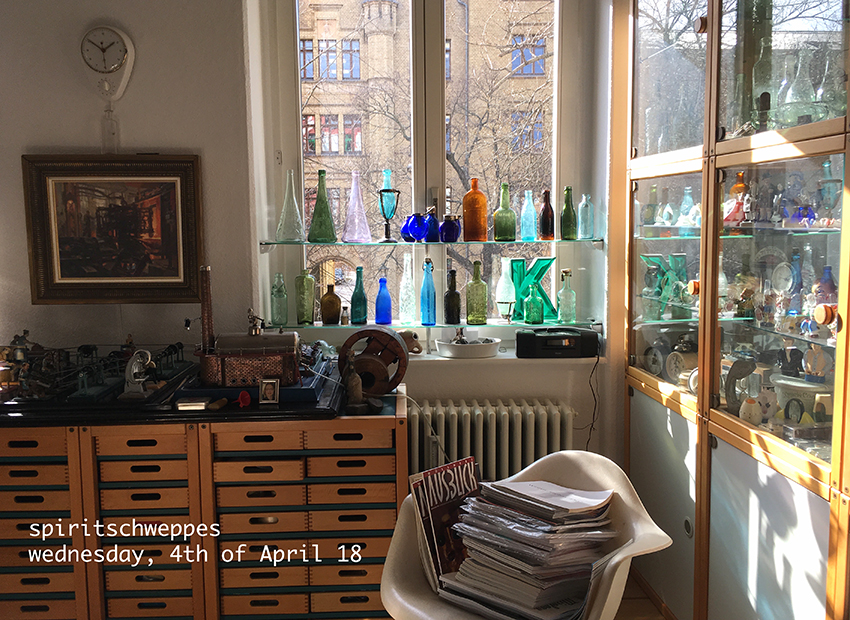
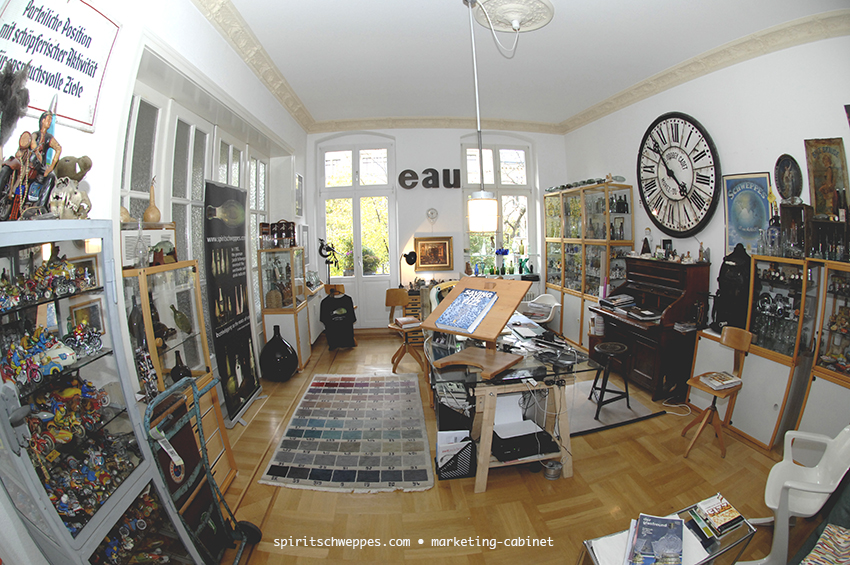
My Marketing-Cabinet “spiritschweppes” seems to be unique and wants to be an inspiring collection of fizzy pioneers . Displayed like a “wunderkammer” of the early practitioners of science in Europe, which formed collections in cabinets of curiosities with bits and pieces of art, natural history and antiquities. So me and my wife are researching and digging to the “roots of Coca Cola” worldwide, collecting the milestones and the knowledge of historical world brands and their spirits.


Cheers to the schweppervescent people, inspired by the spirit of Schweppes. Lets write the endless softdrink-story since 1783. In 2033, the german born Jacob Schweppe will have its 250th anniversary of introducing the modern softdrink. Nowadays, the idea of mental effervescence lost its authentic homelands, the British Empire. With helping hands my blog could start an exciting storytelling from the past into the future. The mission is a a worldwide roadshow for the 250th anniversary of Schweppes in 2033. From romain baths to redbull cans. From quacky apothecarys to magical drinks 🙂 Please contact me with your input, ideas and inspiring flashes. 
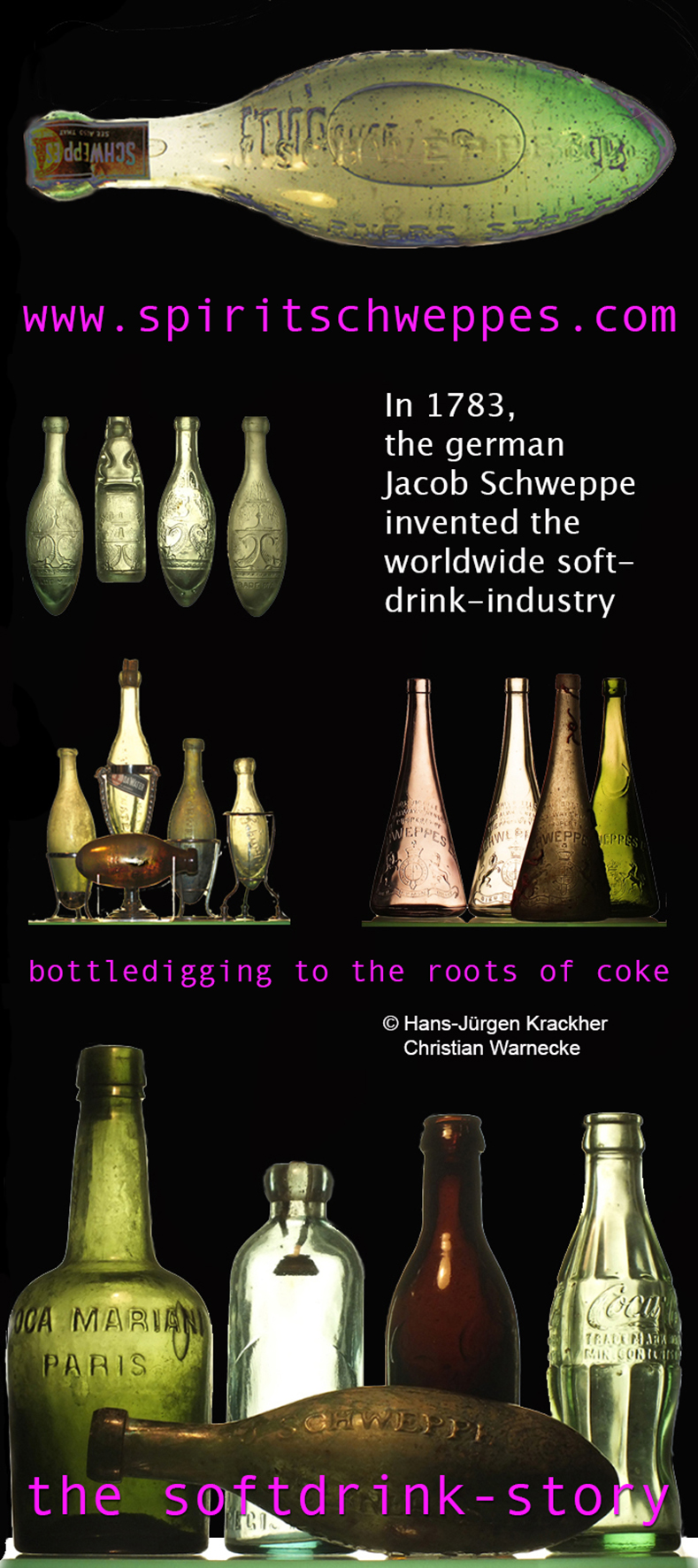

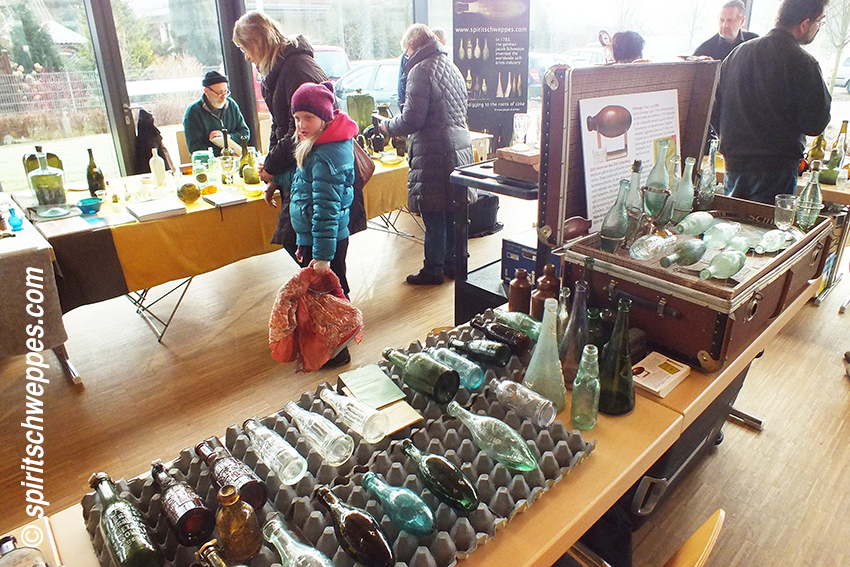

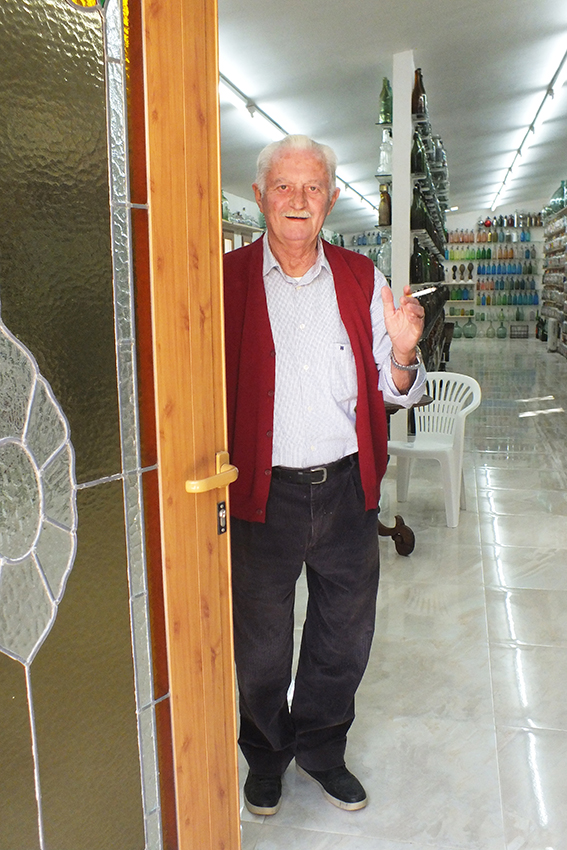
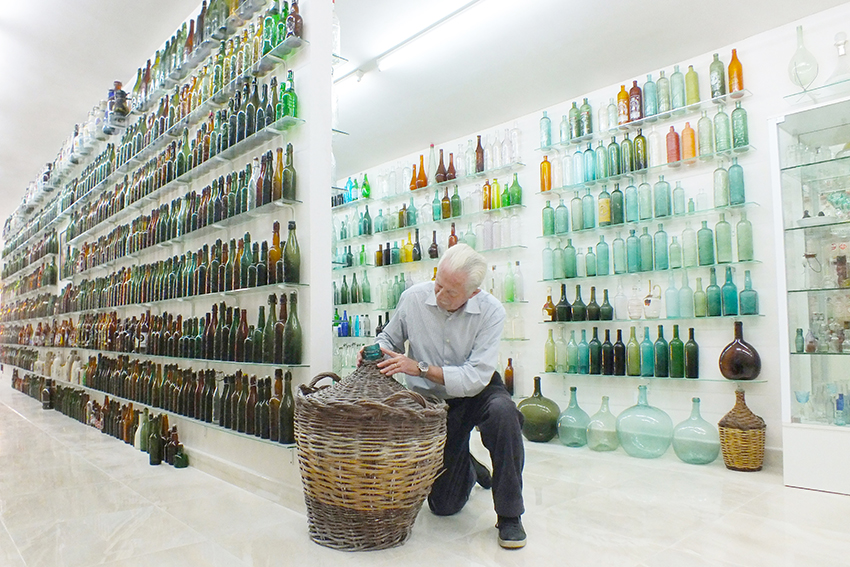
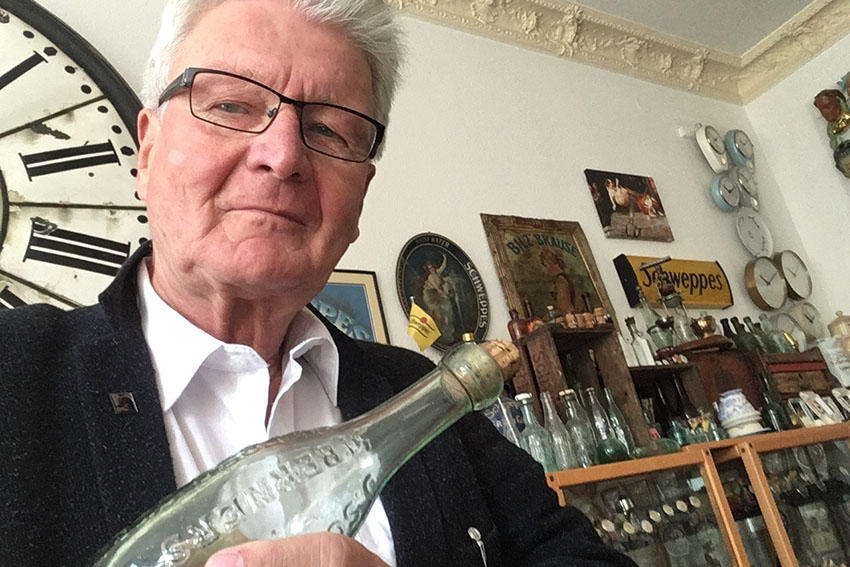
 me and collectors-friend Siegfried of http://www.imgueldenenarm.de/dauerausstellung/
 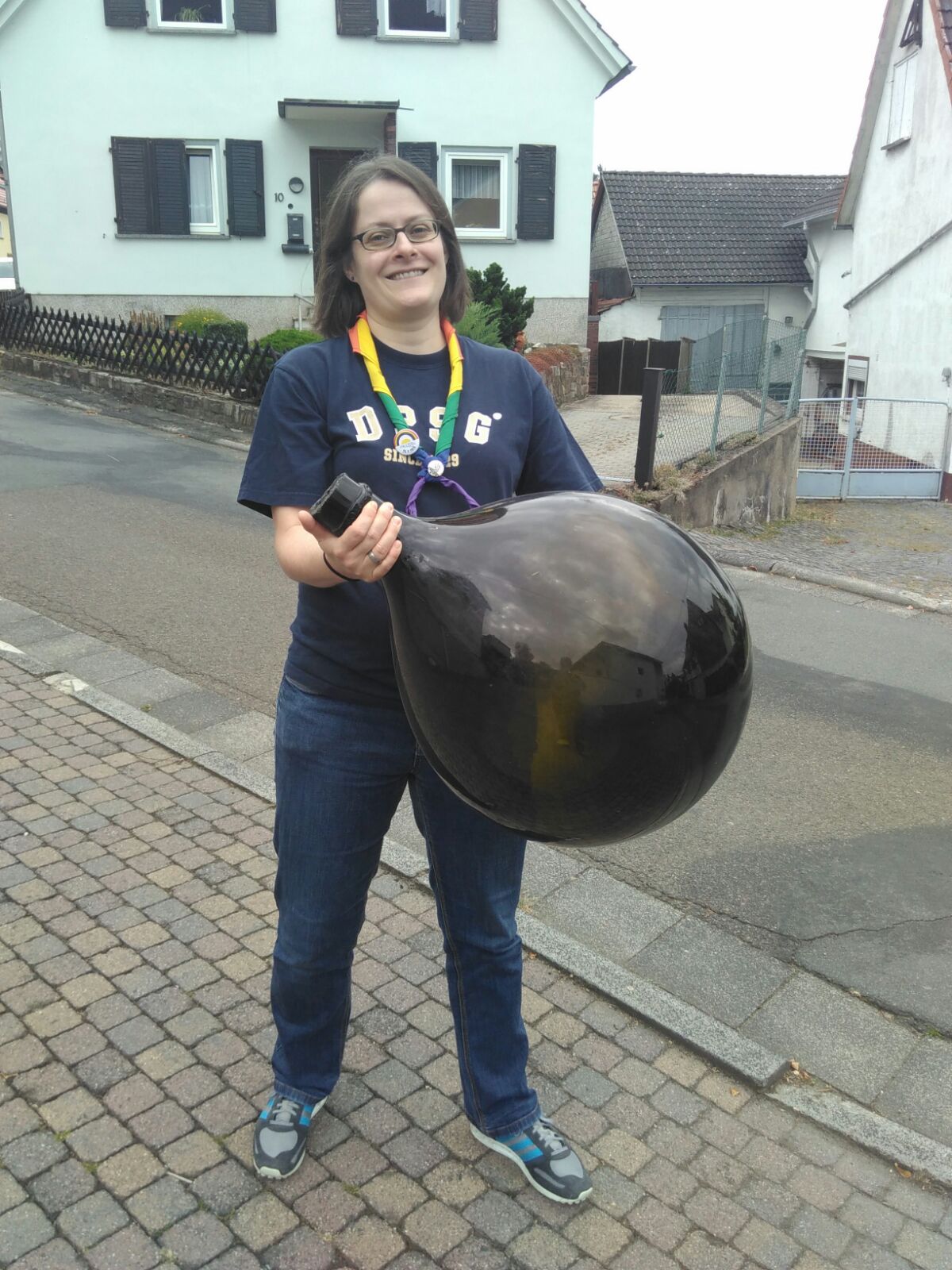 my daughter Mareike
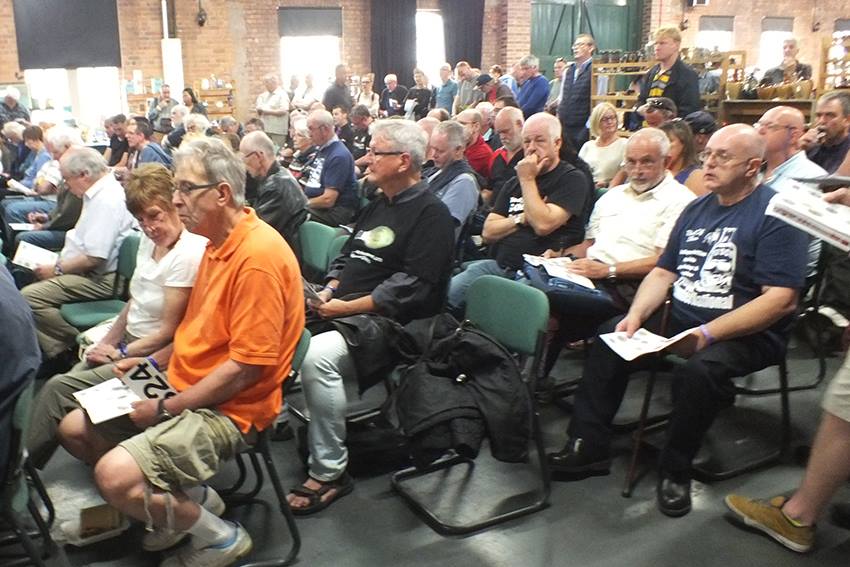
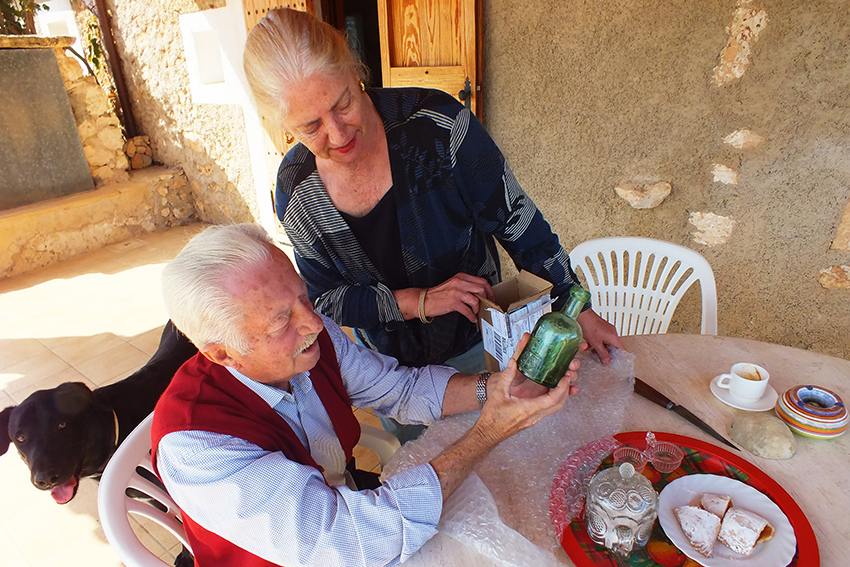
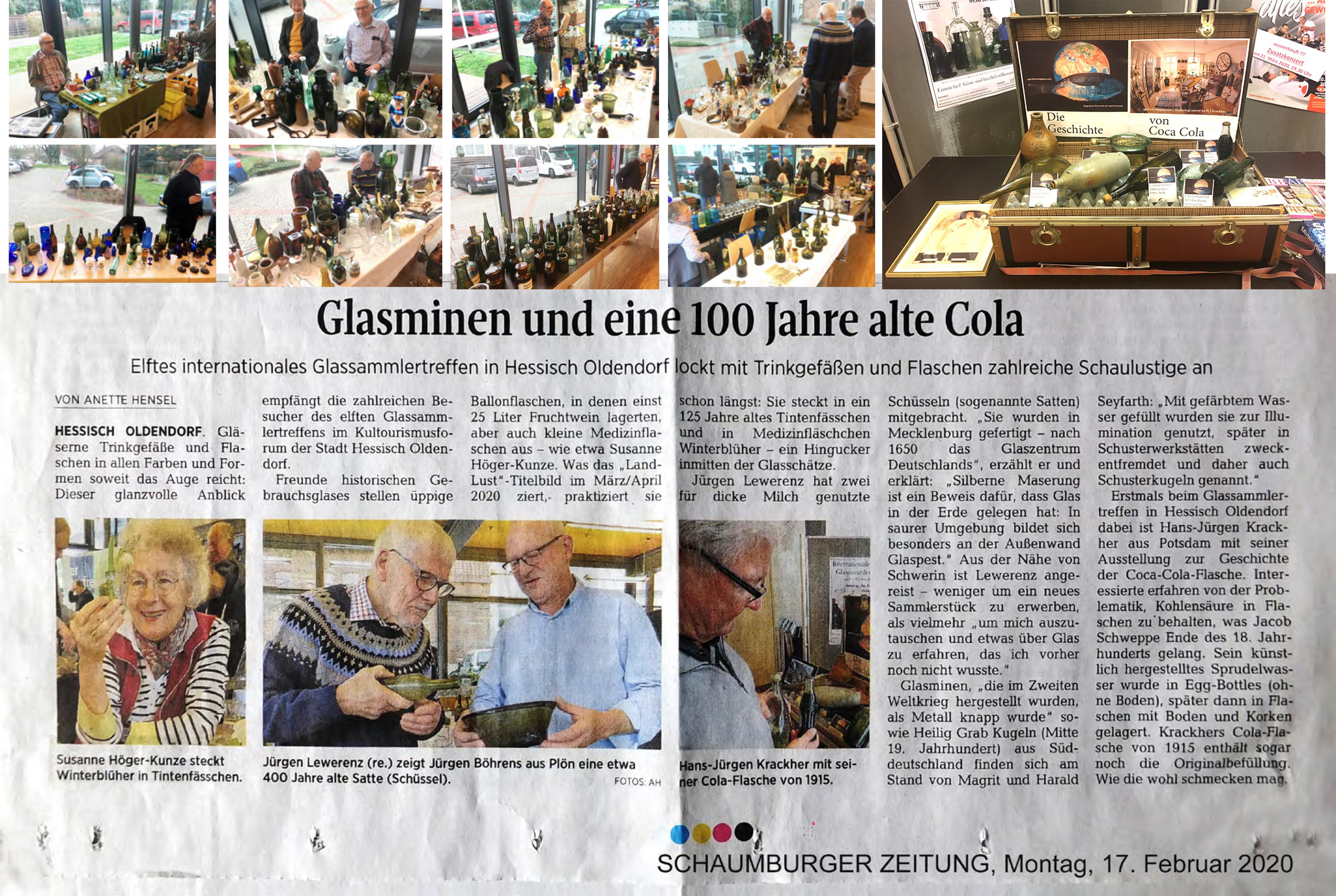
  rests of my cabinet on fleamarket


All contents © Authors archive
A “Cheers!” Let us drink to John Stith Pemberton, the excellent medical practitioner and druggist. He was the one who handed his new tincture against headaches and fatigue over the counter in Atlanta on 8th May 1886 for the first time. The rest of the story goes like this: The inventive man gave away a billion dollar deal two year s later when he sold his formula for the ridiculously small amount of 2300 USD to the smart businessman Asa Griggs Candler. He turned the mixture into a brand now 79 billion USD worth and the “it-brand” of the world for ages. Until the year 2013 when Google (93 bn) and Apple (98 bn) prepared to overtake.


However, the traces of the author and his original documents and museum artifacts seem to have disappeared. Or maybe they are not open to the public. That is why there is not any “Soda hall of fame” anywhere in the world to honor the achievement of the godfather of all soft drinks. Schweppes does not have a home where, like in Germany, the smallest beer label becomes an authentic experience: the brewery, historic buildings, local museums, a collection. Not to mention the Marketing-Mecca in Atlanta. There is no hands-on experience, just a book, at least antiquarian.
Looking at the historic context through my marketing eyes, Schweppes has opened the market for soft drinks. Schweppervescence has been making history for 230 years. Coca Cola is 100 years younger but is now far ahead in the market and a legend into the bargain. Maybe it is due to the concessions concessionaires had to make. Coca- Cola is backed up by Coca Cola and behind Schweppes are Suntory, Dr. Pepper, PepsiCo or Coca-Cola. The pioneer Schweppes in London, New York or Sidney – he is forgotten.
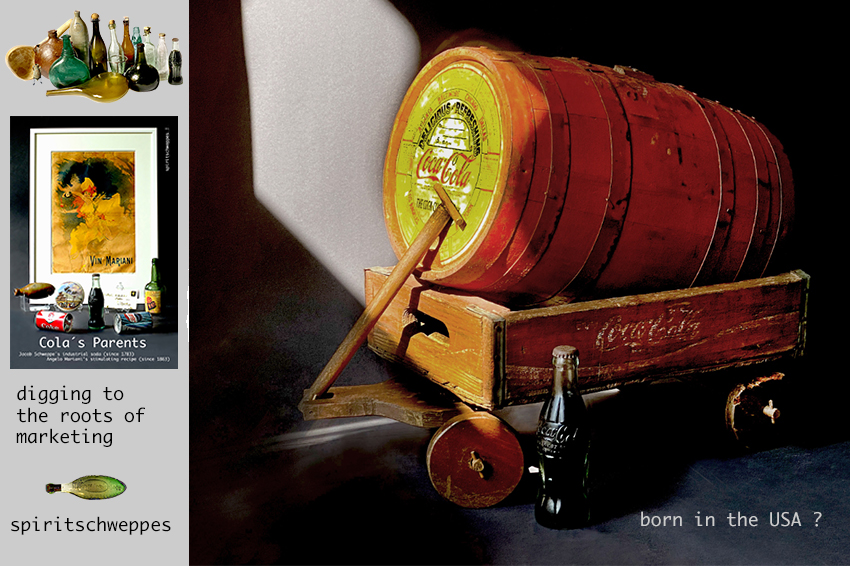
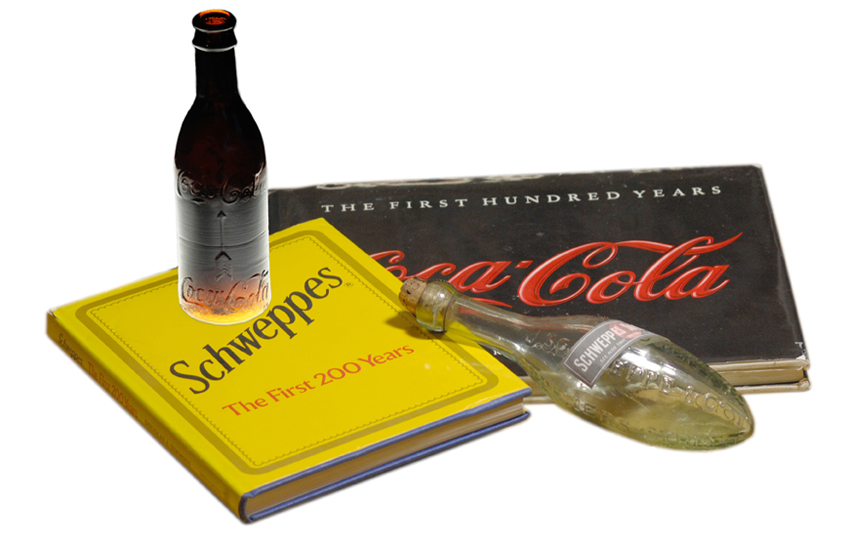
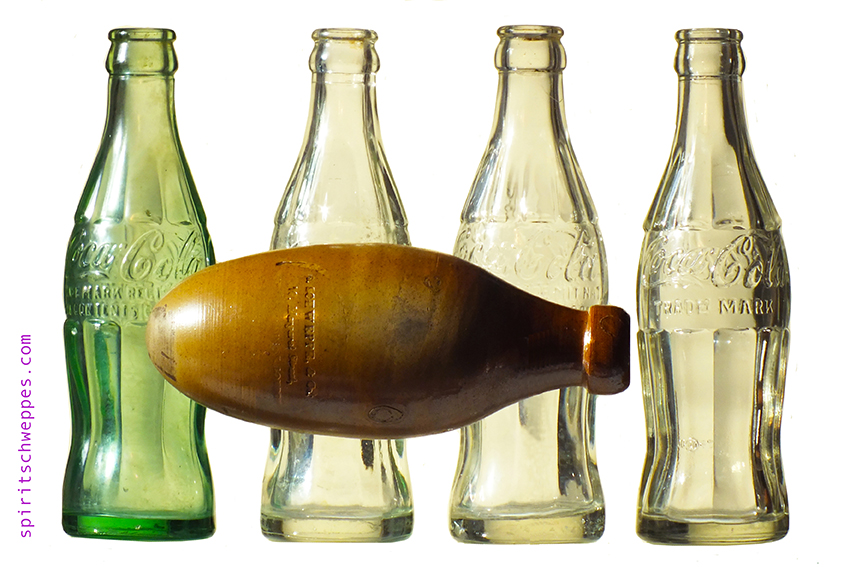
The family-tree of the modern softdrink-industry: Schweppes, the first 200 years, published 1983. Coca-Cola, the first 100 years, published 1986. With the competition-bottles of the the early 20th century.
As an ebay-bottle-digger and soda-popper „Dr. h.c.Schweppes“ I have finished my first terms. I am in touch with many collectors and communities and from the details they provide me with I learn something new every day, albeit realizing that not everything that can be found on the homepages and Wikipedia is true. Also, that there is so much more to be discovered. From all over the world I receive bottles, memorabilia and documents for my small, private Schweppes museum in the native country of Jacob Schweppe. Maybe one day this collection will adorn the lounge of a famous hotel in Berlin. Or London? So: Welcome, bienvenue, bienvenida – please enjoy the hands-on Schweppes story.
 Storytelling crates on 10 m2: first steps of my private Schweppes-Museum nearby Berlin, Germany. The World of Coca-Cola in the heart of Atlanta/Georgia contains 5500 m2 – it is the Olympic idea, that counts.
As opposed to the countries of the former British Empire, experts on bottle-digging, diving and collecting are very rare in Germany. To make up for this, “Germania” was already part of the Roman Empire of Julius Cesar since the 50s before Christ. I was born directly behind the 348 miles long Limes. When I was a child I used to dig for pieces of ‘Terra Sigillata” , the red shards of the Roman china. It can be found under www.terra-sigillata-museum.de in good condition. The fine art of „Cologne Glass“ can be marveled at under www.museenkoeln.de/roemisch-germanisches-museum/ next to the cathedral. The imperial sources of fizzy waters constituted one of the three most important parts of Roman life: baths, wine, love. However, 2000 years ago such world famous mineral waters like Appolinaris, Fachingen, Pellegrino, Pyrmont, or Selters were fed into the swimming pools of the spas.
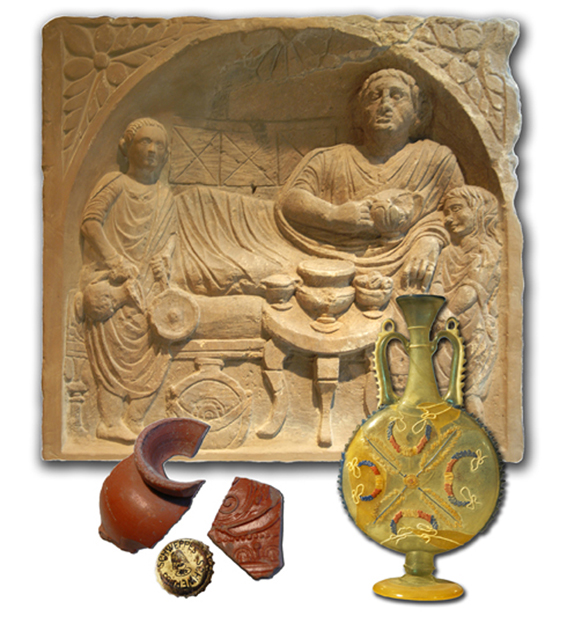
I was born directly behind the 348 miles long Limes boundary wall in Germany from the first century A.D. When I was a child I used to dig for pieces of ‘Terra Sigillata” , the red shards of the Roman china.
With the French Revolution, in the 18th century, the era of enlightenment and the industrial revolution in England started, as well as the reformation of the economy and living conditions. The United States are founded and the British Empire (red) soon covers a quarter of the land area of the world. Jacob Schweppe is a successful watch-maker and scientist in Geneva/Switzerland. According to the patent of the English scientist Joseph Priestley for the production of artificial mineral water he develops the first industrial production line for mineral water together with the engineer Paul and the druggist Gosse in 1783, known as the Geneva-System. His products are an innovation. They contain a high dose of carbonic acid. This guarantees consistently high product quality in a safe packaging. They are available to the people at reasonable prices. Also, the soda waters and lemonades in their unmistakably marked egg-bottles already fulfilled the criteria for a modern brand more than 200 years ago. From 1792 the Schweppes products make their way from London to the million markets of the new world.

In the 18th century, Schweppes eggbottles were the ambassadors of effervescence around the globe.The Britisch Empire (red), covers a quarter of the land area of the world.

This earthenware bottle, initially designed to lay on its side to keep the cork moist, has the branding SCHWEPPES & Co: 79. Margaret Street, London. It was developed according to the concept of Jacob Schweppe and produced between 1795 and 1831. The instruction read: “In order to maintain the quality of the water the bottles should be kept in a cool place and lay on their side.” Only 6 bottles of the illustrated bottle type “Schweppes No.1” are known to exist worldwide. Later on, Schweppes switched to embossed glass bottles.

Paul explained his preference for glass bottles over earthenware: “glass, though more expensive, retains the gas and can be transported more safely three or four hundred miles by land, or on a voyage to the East or West Indies. “Schweppes´” System definitely was in use before 1809, when William Hamilton described it in his patent for a continuous carbonation process.

The first launch in the market were half pint pontiled bottles in olive green glass 1795 – 1831: J. Schweppe & Co, Genuine Superior Aerated Waters, 79 Margaret Street. The glassbottle was initially blown by hand. The embossing changed later on in Oxford Street, 51 Berners Street.

The estimated manymillion bestseller, produced 1831 – 1895 in London for the rest of the world. Embossed Oxford Street, 51 Berners Street. I vitalized it for the illustration with the authentic filling: triple carbonated soda water, the highpressured fizzzz for the typical schweppervescence of these times.
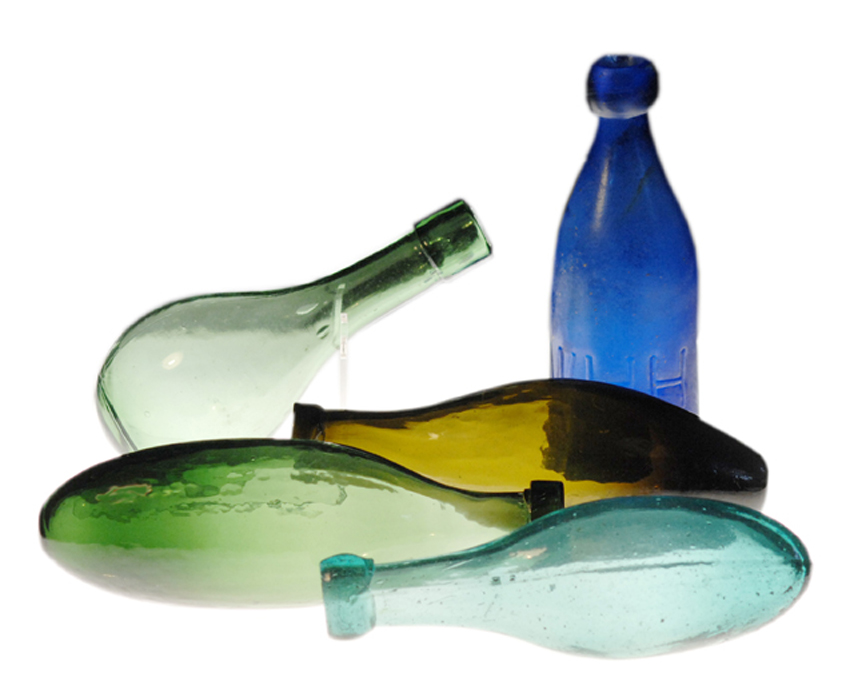
After Joseph Priestley´s patent of a practical method of making artificial mineral waters in 1772, the pharmacists and druggists in GB started to fill their homemade products into oval bottles, inspired by J.Schweppe & Co. At the beginning, these bottles were unembossed, certainly branded with papersigns, private labels or neckhangers. ref. google: Carbonated Soft Drinks: Formulation and Manufacture, Dr. David Steen,Philip R. Ashurst
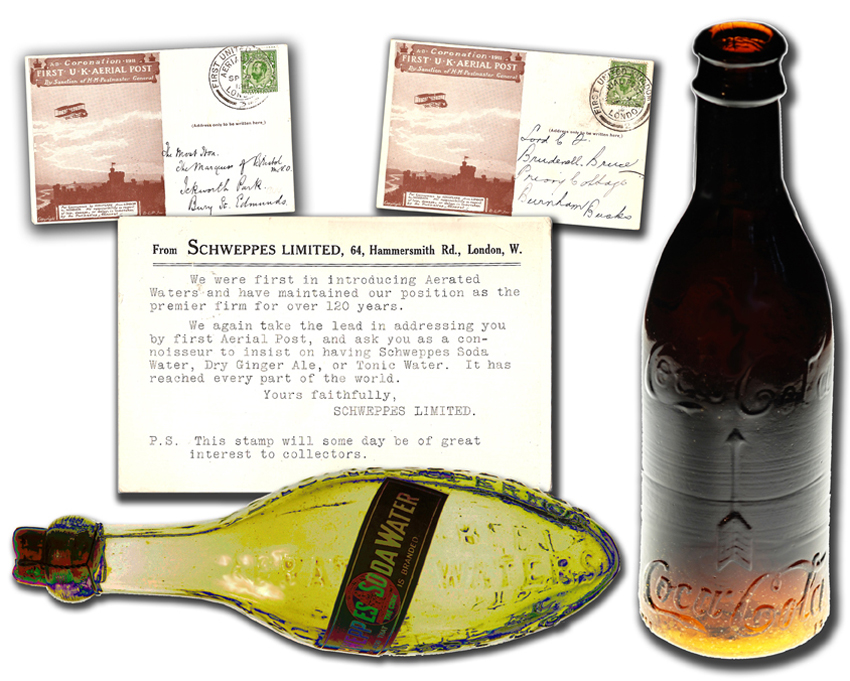
While wax and resin mixtures were used in the 15th century as a stopper, the cork is also mentioned in English literature in the early 1500s for the same purpose, in connection with bottles. And it was the stopper which permitted the development of the true champagne. This is the stopper which permitted the development of the true champagne. Schweppes relied for more than 100 years on the use of the wired-on cork. My illustrated example, still unopened original seal has survived undamaged 90 years in a cellar in Kent/UK.

The cork was not immediately “tied-on” in the early period for, in England, at least, the wired-on cork dates from 1675-1700. In the early champagne and wine days, the corked (sealed) bottle section was inverted in a wax compound or oil to coat the cork; the seal was thus improved.Wax stoppers, used in Mid-Continental Europe for alchemy and medicine, were replaced by tight corks after the latter’s discovery.Thus, corks became the common bottle stoppers during a 300 year period, from early development before 1600 to almost complete use until 1900. (Holscher 1965, Berge 1980, about the early history of cork) The Schweppes glass containers very often travelled around the globe in all climate zones for weeks and months. Despite many other developments in the 19th century, Schweppes relied for more than 100 years on the use of the wired-on cork. The illustrated, still unopened original seal has survived undamaged 90 years in a cellar in Kent/UK.


The high esteem of the products and excellent social contacts enabled the brand to gain acceptance by the Royal Family. As purveyor to the court, from 1831 J. Schweppe & Co. was allowed to use the royal coat of arms in advertising. The shield is surrounded by a garter with the motto of the Order of the Garter in French: Honi soit qui mal y pense (“shame upon him who thinks evil upon it”).

Bottle diving and bottle digging, illustrated with a pair of my Schweppes cordial bottles from the beginning of the 20th century. The right one is from Australia. The left one is from the English Channel nearby Southampton. The british harbour, where the 1912 Titanic departed to New York…

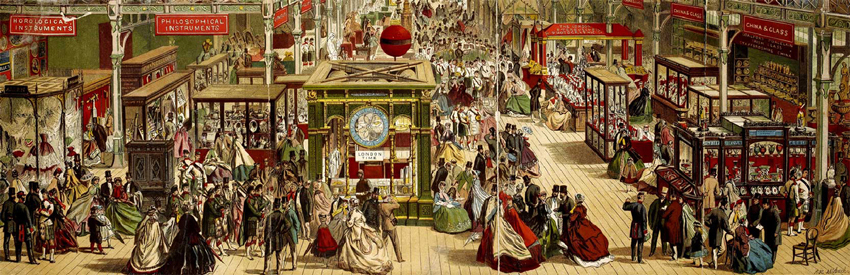
In 1850, sales were 157.366 dozen. The first world exhibition in London in 1851 was a welcome impetus to J. Schweppe & Co. The daringly conceived structure of glass and iron known as the Crystal Palace, built to house the exhibition, was erected in Hyde Park. Nearly 2000 feet long, it covered more than 18 acres, arching over several large elm trees. In the center, J. Schweppe & Co. built an 8 meter high fountain. Still today, this fountain is an integral part of the trademark.

In all, six million visitors came from all parts of the globe. For 5.500 Pounds (8.800 USD) J. Schweppe & Co. were assigned the privilege as tenders for the supply of non alcoholic refreshments. J. Schweppe & Co. supplied their soda and other mineral waters, Aerated Lemonade, German Seltzer Water and their new Malvern Soda Water. The company’s sales amounted to well over one million bottles during the six months of the exhibition. Furthermore their sales in the country rose to 175,000 dozen in 1851. In 1852 they climbed again to 192,000 dozen. A record which yet had to be broken by Coca-Cola.

During the 1870s Tonic Water and Ginger Ale had been added to the range. In 1877 J. Schweppe & Co. started their first overseas production in Sydney, further branches followed in Melbourne and Brooklyn in 1884.

At the beginning of the 20th century the brand name J. Schweppe & Co. was finally turned into “Schweppes”. The fizzy phonetics of the founder’s name is the copy platform of internationally successful campaigns, like “All the best siphons say Sss…ch…weppe…ss..-“ (1931) and “Schweppervescence lasts the whole drink through” (1946)

All over the world, the middle and upper classes could be won as premium customers. Schweppe’s Table Waters were served exclusively in royal households, leading clubs, hotels, steamship lines and spas throughout the world. Ad of 1920.

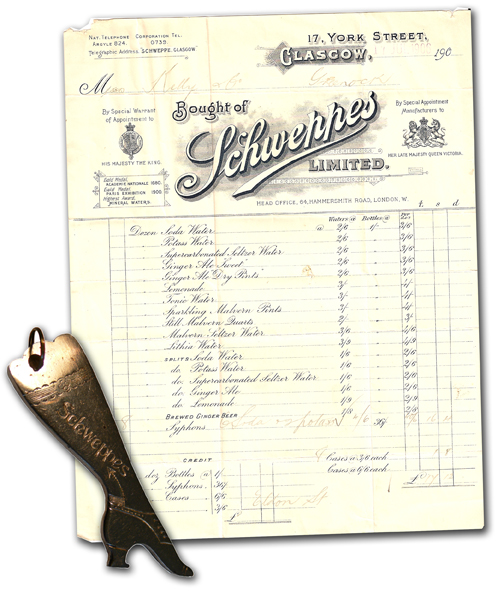
The leading fullrange-segment of softdrinks: a Schweppes portfolio 1906. The stylish cap-lifter powered a brandnew innovation: the crown-cork. Introduced by Schweppes in 1905.


In 1903, regular point-to-point flights became a possibility. In 1911, the twenty mail-carrying flights of the Coronation Aerial Post between London and Windsor were on the same basis. Schweppes sent a suitable message to their customers: “We were first in introducing Aerated Waters and have maintained our position as the premier firm for over 120 years. We again take the lead in addressing you by First Aerial Post, and ask you as a connoisseur to insist on having Schweppes Soda Water, Dry Ginger Ale or Tonic Water. It has reached every part of the world. Yours faithfully, SCHWEPPES LIMITED.“ The rest is a new story.


Christian, my friend and Schweppes collector, proudly presents “The Schweppes Globe”, purchased by auction in Australia, and his certificate for the Guinness book of records (!)

No, our country never belonged to the British Empire and there will be never a local eggbottle under the meadows. But we are hardcore explorers and collectors, digging to the roots of mental refreshment. So we found out the never ending story of our countryman Jacob Schweppe, who teached the germans fizzy sophistication as added values from Britain since 1783. Lets ring the bell for schweppervescence!
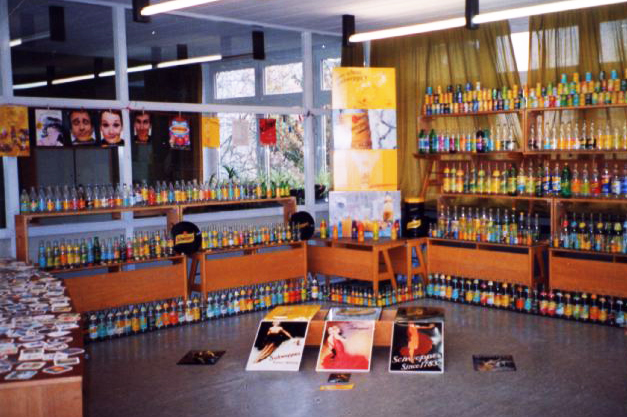
Bad news for the Schweppes-Community: there is no Schweppes hall of fame worldwide. So our project must be No 1! Parts of Christians private collection, digged in more than 20 years.
A flagship store, hot spot, eventcenter or meeting point, dedicated to inspired marketing and a fizzy community worldwide. Authentic. Open Source. Powered by schweppervescence, the spirit of Schweppes.
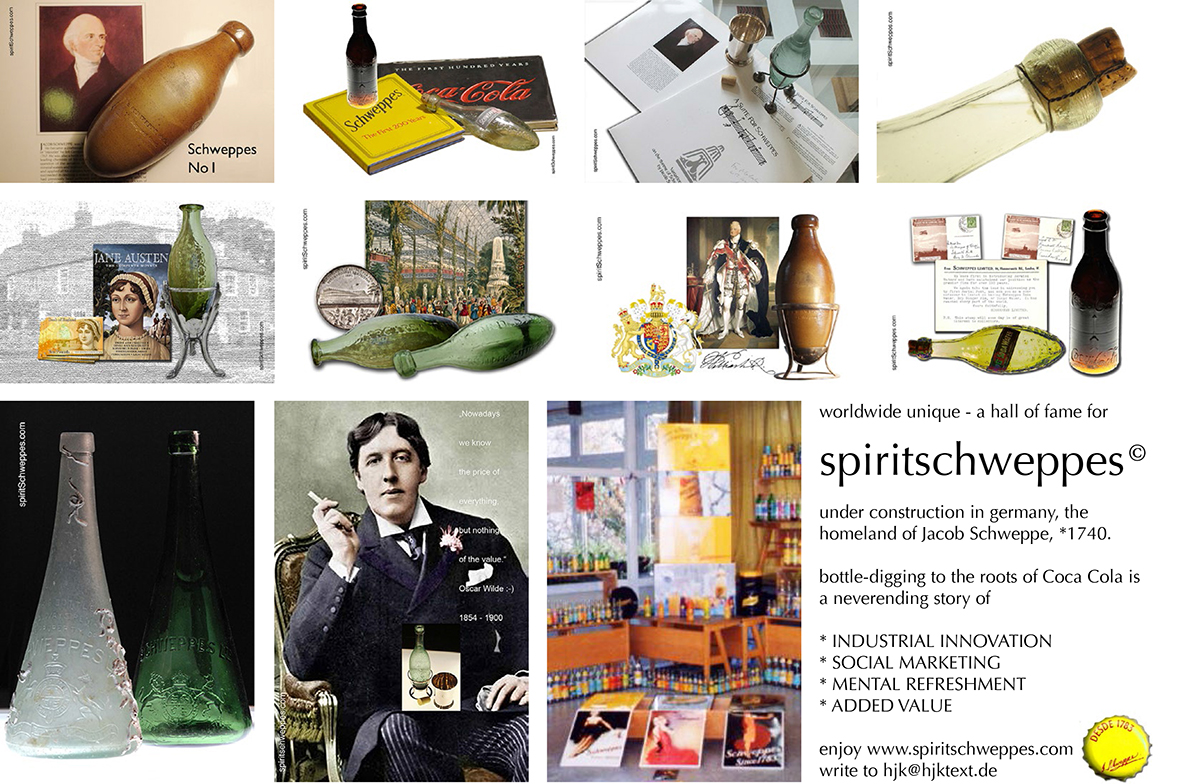
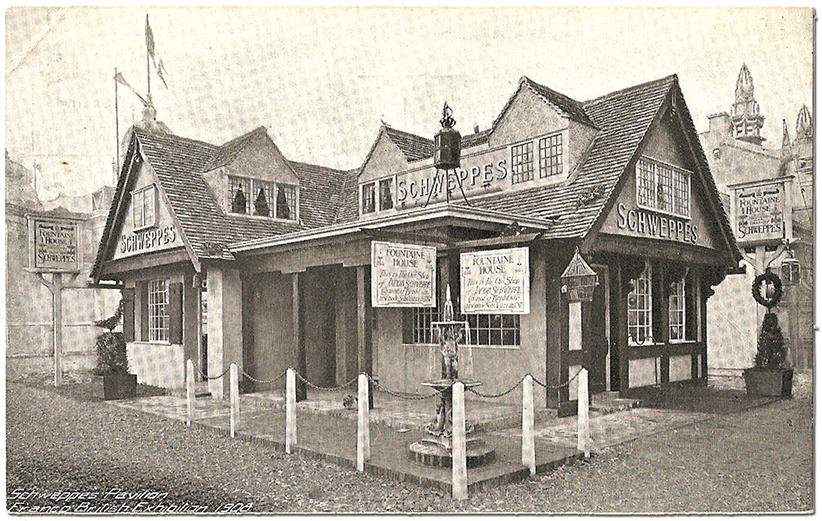




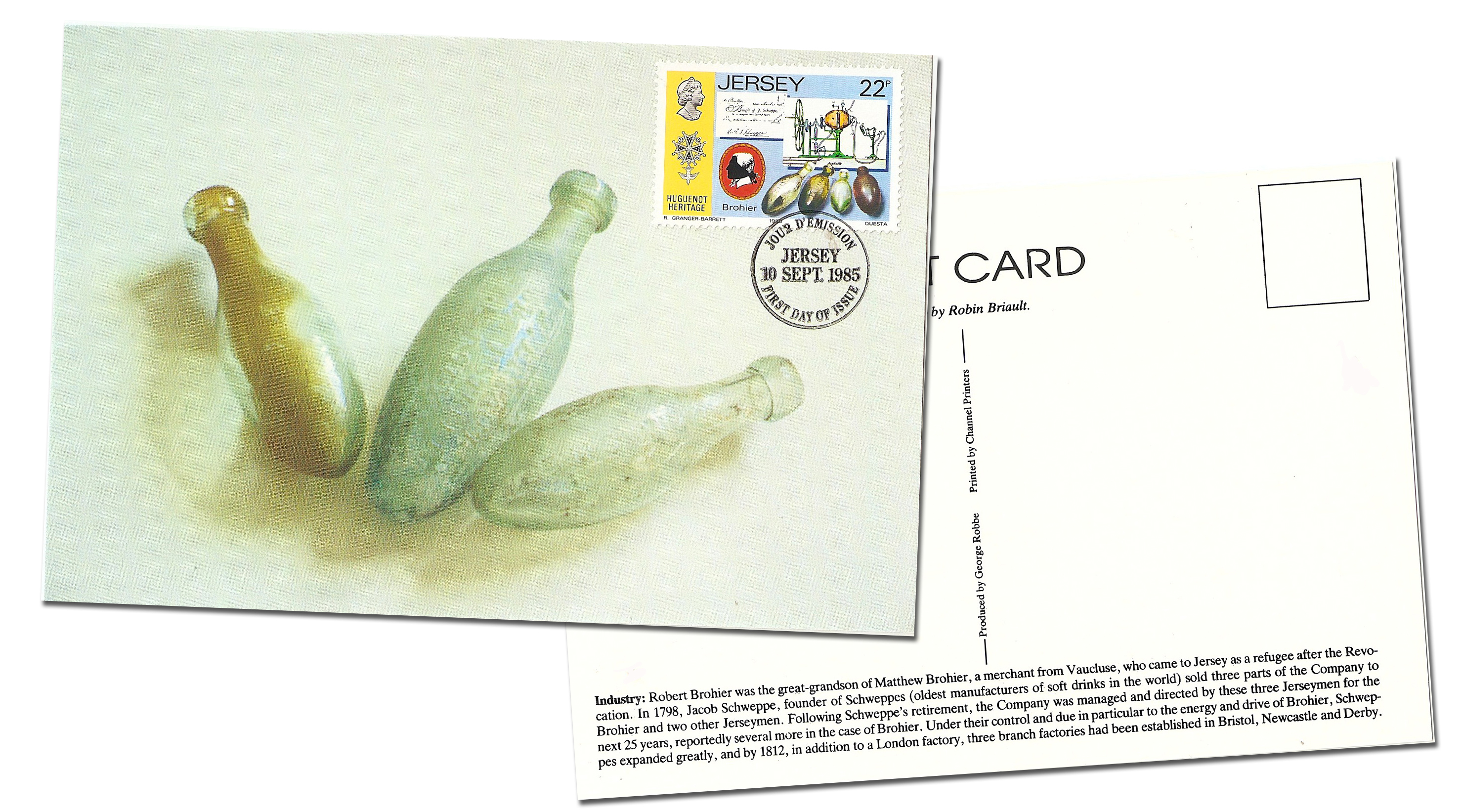

Established the first softdrink-industry worldwide: Jacob Schweppes Geneva-System from 1783. “Priestley’s studies of 1772 would however capture the eye of a young German watchmaker in Geneva, Switzerland, who would ultimately bring Priestly’s science to the masses. His name was Jacob Schweppe. After further experimentation, Schweppe was able to simplify carbonation through the application of two common compounds – sodium bicarbonate and tartaric acid. Schweppe branded this process the Geneva System and in 1783, would leave watch-making behind and set up mass production under the new Schweppes brand. These early waters were sold under the guise of medicinal remedies, needless to say the true effects only aided in hydrating patients, not healing them. After his initial success in Switzerland, Schweppe moved his company to England in 1792 where he set up his first mass production factory in London at 141 Drury Lane.” Drinking Cup

http://www.pinterest.com/spiritschweppes/spiritschweppes/

http://www.pinterest.com/spiritschweppes/schweppes/


CHAPTER I: SPA, SELTERS – LEADING SOFTDRINKS WORLDWIDE IN 18th 19th CENTURY ff
CHAPTER II: SOFTDRINK NO 1 WORLDWIDE IN 19th CENTURY


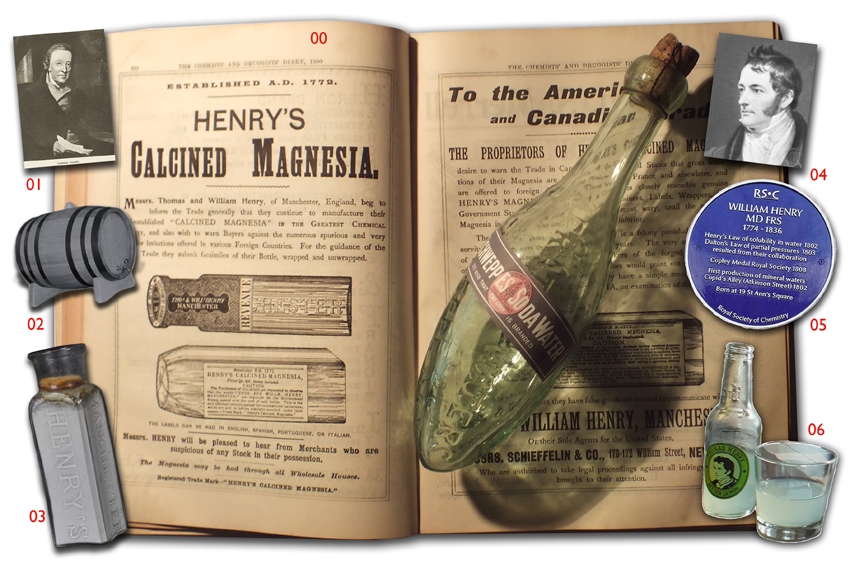
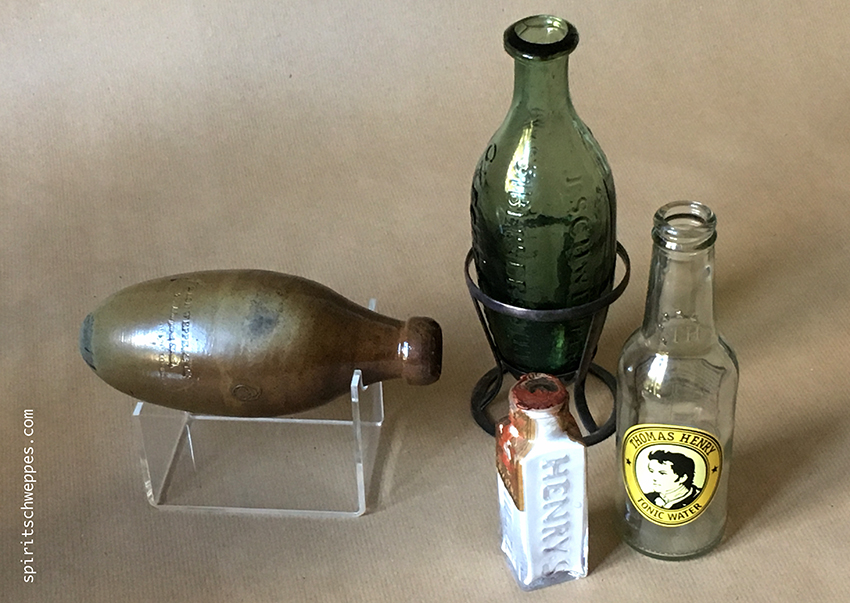
00 Advertisement in my Chemists´and Druggists´Diary of 1900, author 01 / 02 Thomas Henry, 1734 – 1816, an apothecary in Manchester, Eng., is attributed the first production of carbonated water, which he made in 12-gallon barrels using an apparatus based on Priestley’s, Encyclopaedia Britannica 03 Calcined Magnesia – last antique sample of Thomas Henry´s bottles, Odyssey´s Virtual Museum 04 / 05 Thomas´son William Henry, 1774 – 1836, Chemist, Copley-Medal. He developed what is known today as Henry’s Law. 1802 first production of Mineral Waters in Manchester; Royal Society of Chemistry 06 Range of softdrinks “Thomas Henry” with portrait of William Henry, est. 2010 in Germany.

..the german born Jacob Schweppe perfected the production and bottling of artificial carbonated water in 1783 and set into motion a beverage revolution.
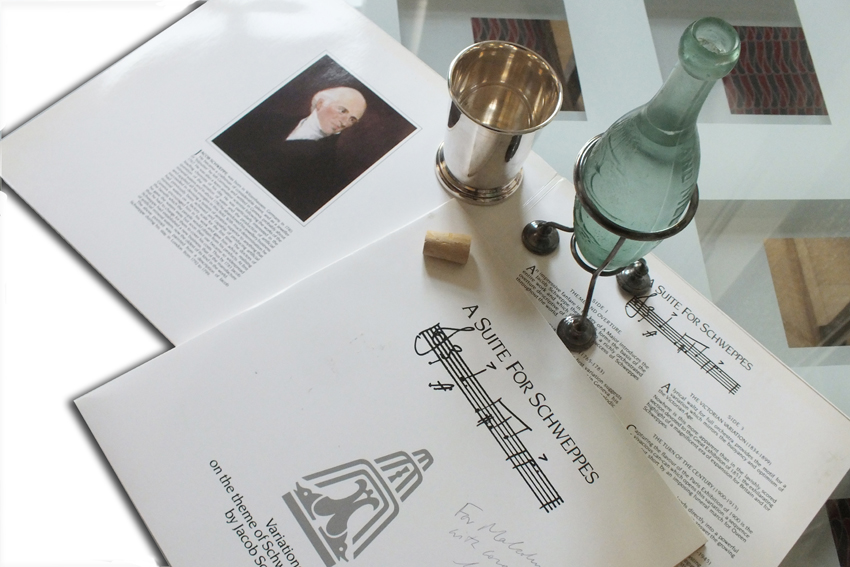
From medicinal wonder-cures and fountains of youth, through to round-bottled egg-sodas and international world fairs, the history of his brand is synonymous with style, spirit and sophisticated refreshment.
Jacob Schweppe was born in Witzenhausen, Germany in 1740 as son of an citiy councilman.

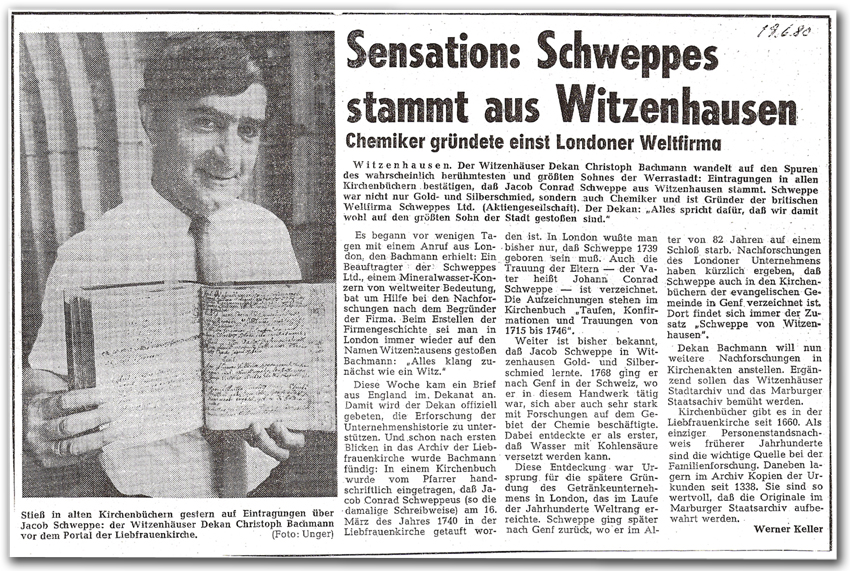
He was baptized in the Liebfrauenkirche of Witzenhausen 1740, the 16th of march. Schweppes prename is definetely “Jacob” – not Jean or Johann, as often discribed.

Jacob became a craftsman of considerable talent. As a helpmate of a wandering tinkerman he left Germany and settled in Geneva/Switzerland. Probably about 1767 he was a successful jeweller or “bijoutier”.
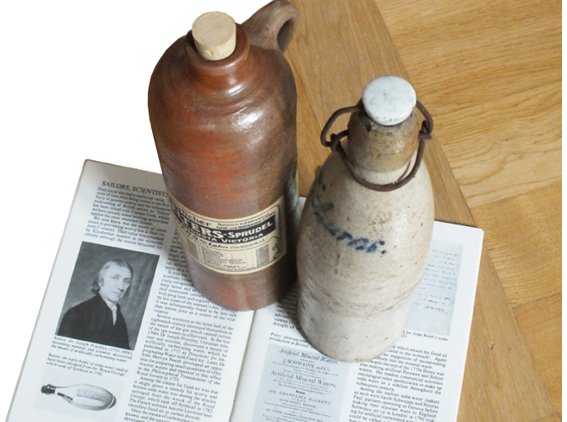
He was also a keen amateur scientist following the works of the leading chemists of this days like the englishman Dr. Joseph Priestley. Jacob Schweppe was particulary interested in the question of the aeration of water and the production of mineral waters, which Priestley published 1772 as “Directions for Impregnating Water with Fixed Air”.


The quality of drinkable water for the worldwide growing marine-fleets was one of the topics of the 18th century. Among the claims for fixed air was that it might prove a remedy for scurvy. Just as well seemed artificial spring waters to be big business: chemists and druggists delivered the exploding upper class of the european industrial age with handcrafted carbonated waters over the counter.
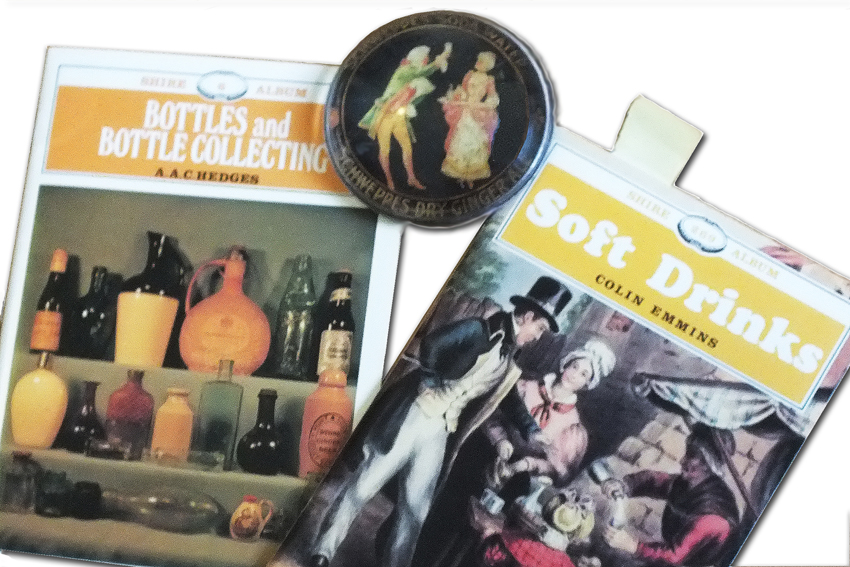
In about 1780, Jacob Schweppe abandoned his jewellery business and applied all his energies in the professional production of artificial mineral waters. With much determination he succeeded in devising a system of aeration superior to anything that had previously been achieved.
In 1783, the “Schweppes Story” begins in Geneva at the foot of the Swiss Alps. Jacob Schweppe first discovered the secret behind producing carbonated beverages on a commercial scale. So he started his “Geneva-System”. It consisted of a container which enclosed an agitator which generated carbon dioxide from a mixture of chalk and sulphuric acid. The gas was then passed through water into a gasometer. With the aid of a pump the gas was then conveyed into a closed wooden carbonating vessel where it was dissolved in water under pressure with the assistance of an agitator. This apparatus was the first to make practical use of a compressing pump as had been suggested by Priestley.

A partnership was formed in 1790 between Jacob Schweppe, his engineer Nicholas Paul and Paul’s father Jacques Paul. Henry Albert Gosse joined the partnership after being introduced by Nicolas Gosse, a pharmacist. Previously the artificial waters had been made from non-distilled water. The new firm proposed to use only distilled water and to manufacture in addition to Seltzer and Spa Water the waters of Pyrmont, Bussang, Courmayeur, Vals, Seidschutz, Balarac, Passay and other mineral waters. As well as expanding the range of waters, it was decided to expand the range of operations and a decision was taken to start a factory in London.

On 9th January 1792, Jacob Schweppe arrived in England, bringing a letter of recommendation from Professor Pictet of Geneva which he could present to the government. The first factory was at 141 Drury Lane. At the time, some mineral waters were already being sold in London by numerous apothecaries. Rudimentary mineral water machines were carted through the street for the purpose of street sales. On 20th February 1795 the partnership with Paul and Gosse was formally dissolved. Jacob Schweppe sacrificed the goodwill of the business he himself had created in Geneva in ten years of hard work. In return he kept the London business.
Jacob Schweppe did not stay long in Drury Lane and by 1794 he had moved to 8 Kings Street, Holborn. He soon moved the factory again to 11 Margaret Street, Cavendish Square, Westminster at Michaelmas in 1795. In this street, at various addresses, he remained until he retired.

http://www.pinterest.com/spiritschweppes/spiritschweppes/
http://www.pinterest.com/spiritschweppes/schweppes/

“I don´t work, I just play all day long.” 13 minutes of your live for the man, who offers the freedom of choice for sodapopbottles, people never had heard before.
https://www.youtube.com/watch?v=gPbh6Ru7VVM&app=desktop
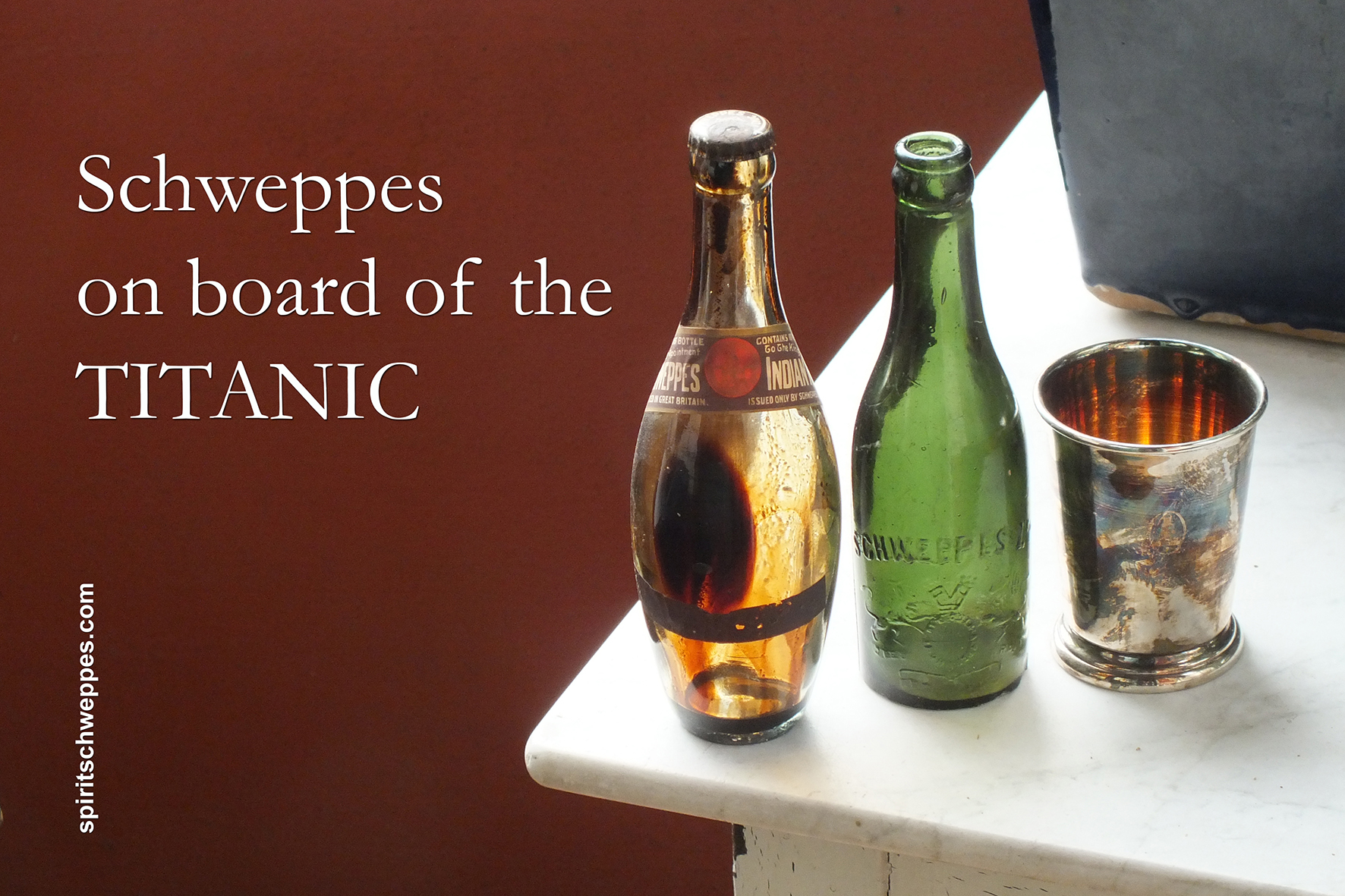
“Schweppes – the table waters of Kings – supplied to the royal households, leading clubs, hotels & steamship lines” was claimed into the beginning 20th Century. One of these steamship lines was White Star…

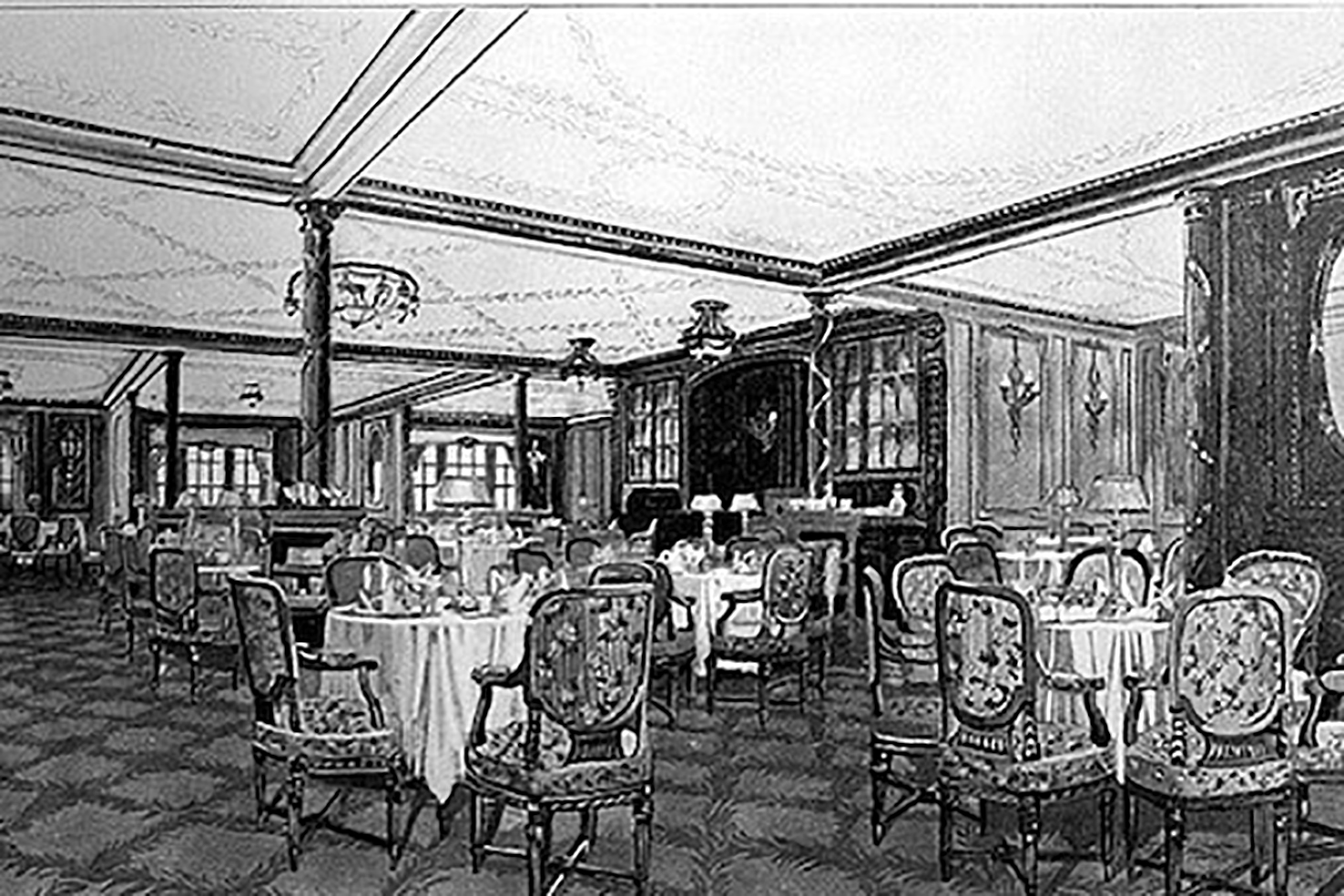
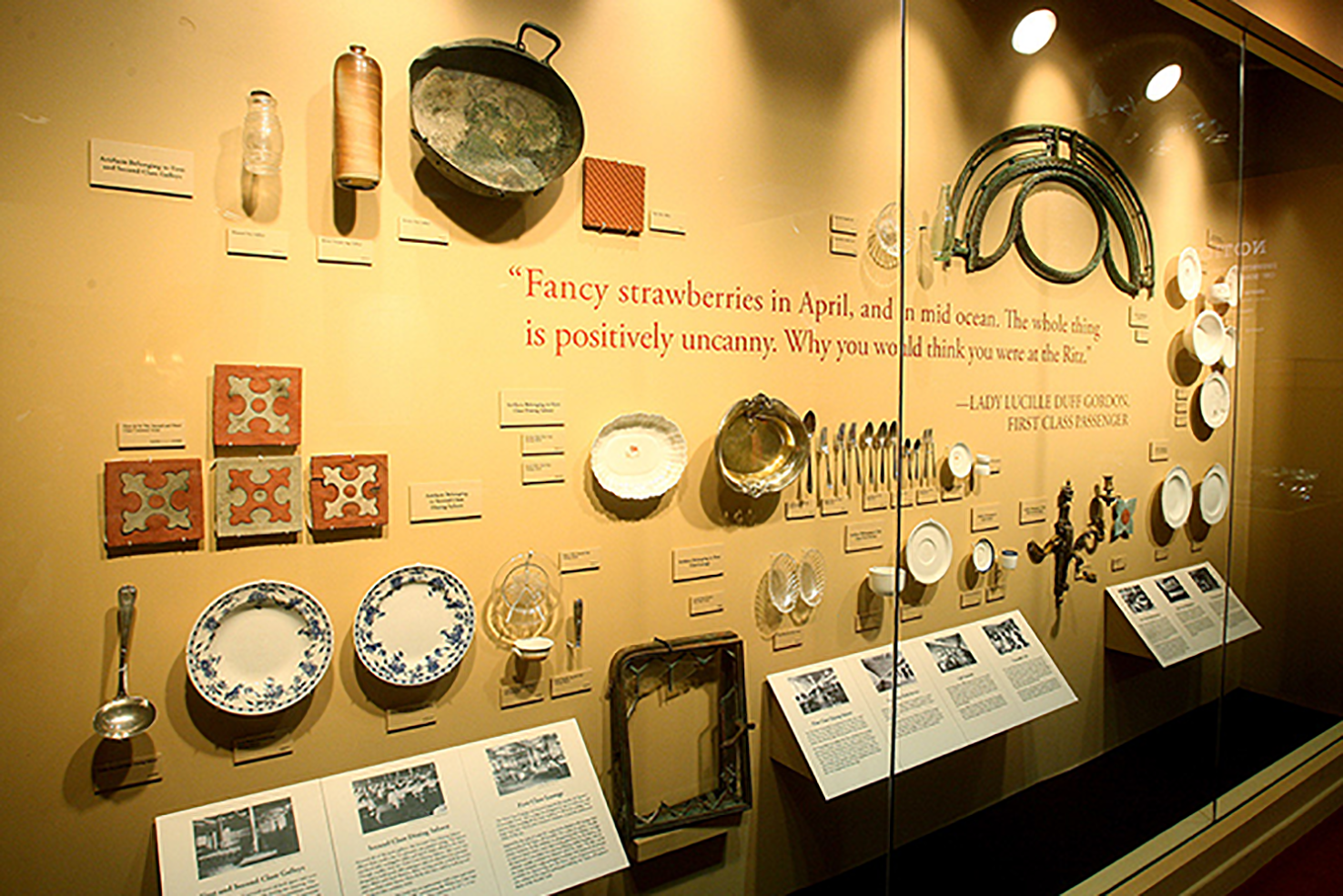
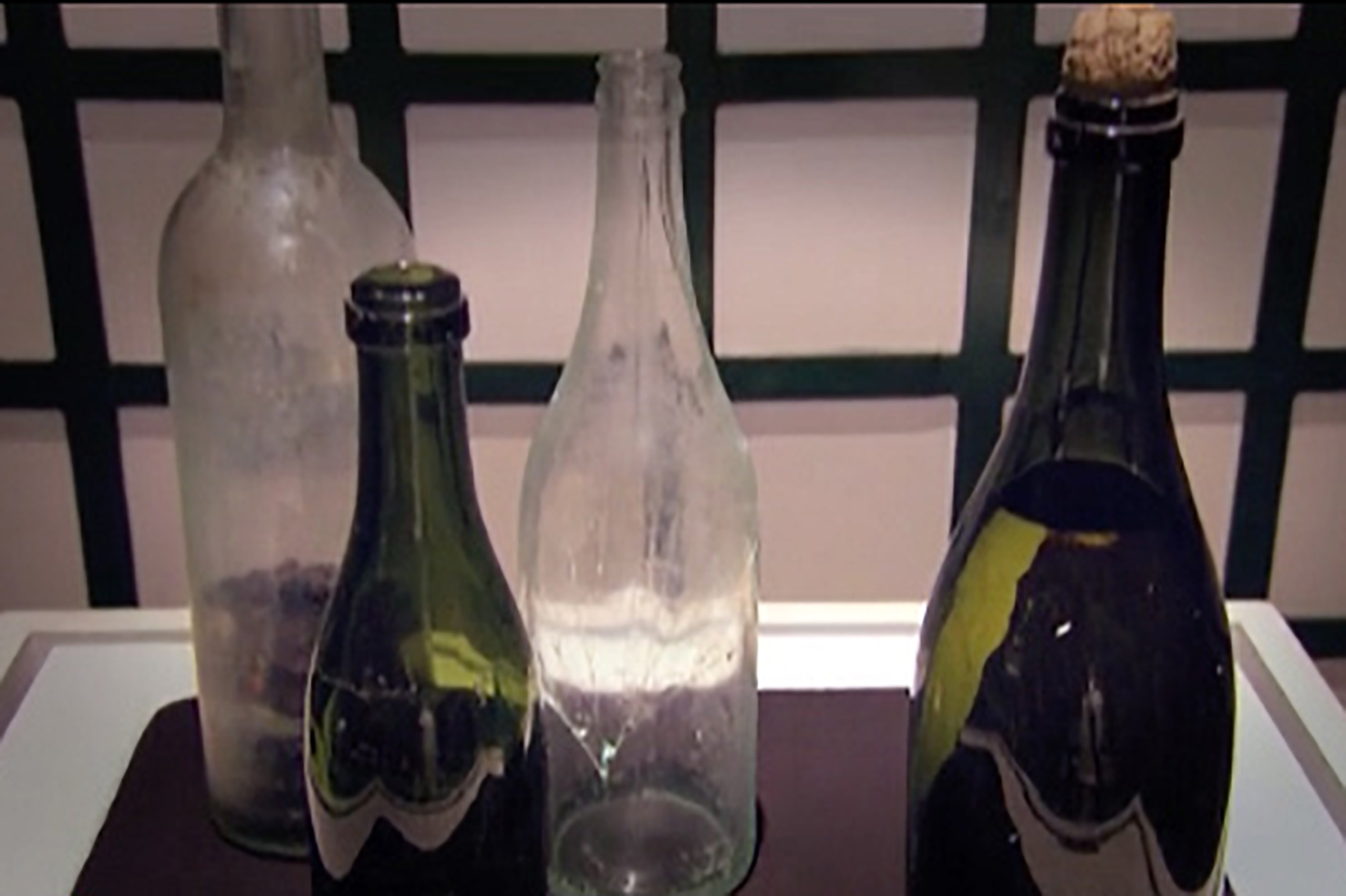
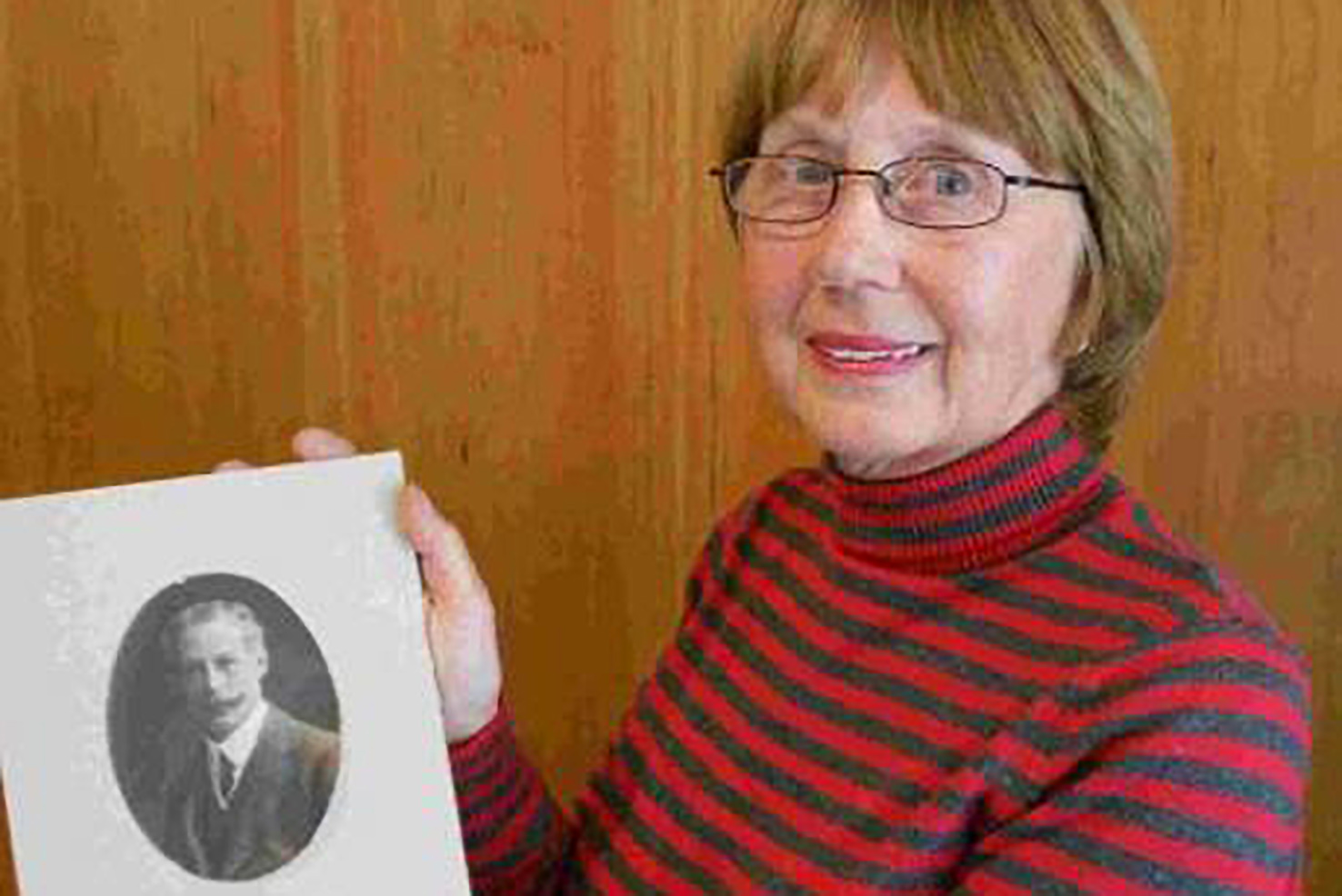
Bridget Penney with a photograph of her grandfather Walter James Hawksford. More than one hundred years since RMS Titanic sank, a Weymouth woman will be remembering a survivor of the tragedy. Bridget Penney, from Southill, will be among families gathering at Southampton today to remember all those who took the fateful voyage across the Atlantic. Her grandfather Walter James Hawksford, only survived the sinking because he was asked to row in one of the lifeboats. The passenger liner sank on April 15, 1912, after hitting an iceberg off Newfoundland.The ship had been on its maiden voyage from South-ampton to New York, her passengers included some of the wealthiest people in the world as well as people emigrating to America to start a new life. Of the 2,224 people on board only 710 survived. Mrs Penney said she had known very little of her grandfather’s story, as he never spoke of it, until the family found a letter he had written after the tragedy and she did some investigating. She said: “He was working for drinks company Schweppes and was to be their first export manager in America. They paid for a first class ticket for him and his wife Edith. Luckily she couldn’t go.” On the night of April 14-15 he was awoken to a ‘bump and a long grinding sound’. The message was soon passed to passengers that an iceberg had damaged the ship and they went on to the deck. Women and children were put into the lifeboats first. Mrs Penney said: “I just keep thinking he must have been watching people get into the boats and knowing that he wasn’t going to be saved.” By a lucky stroke of fate it was his love of rowing and time spent in Kingston Rowing Club that saved his life.She said: “He was standing near lifeboat number three and they were a rower short. First officer William Murdoch turned and said ‘Is there anyone here who can row?’ “He put his hand up. “They rowed about half a mile out. “When the boat went down they all took their hats off and bowed their heads.” The 710 survivors were picked up by the ship Carpathia and taken to New York. Mr Hawksford was then able to write to his wife to let her know he was safe. In his letter he said: “Here I am you see, still alive and kicking, we have had a pretty rough time of it. I daresay you know almost as much by now as I do from the papers, so I won’t enlarge upon the horrors of it all.” He added: “The thing that has troubled me most is the anxiety you must all have had.” Mr Hawksford returned to England and the story that passed down through the family was that his brown hair turned white soon after his return. Mrs Penney said she would be in Southampton to pay her respects to all Titanic’s passengers and to remember her grandfather.She said: “I want to go and be where the boat was as a mark of respect for him.” THE DORSET ECHO, first published Saturday 14 April 2012 in News by the author Catherine Bolado, Senior Reporter

1961 London Bus with “SSSCHWEPPESSS” advert. Headline “Elvis Presley, the full story by Hedda Hopper”. HH (May 2, 1885 – February 1, 1966) was one of America’s best-known gossip columnists. Hopper continued to write gossip to the end, her work appearing in many magazines and later on radio.
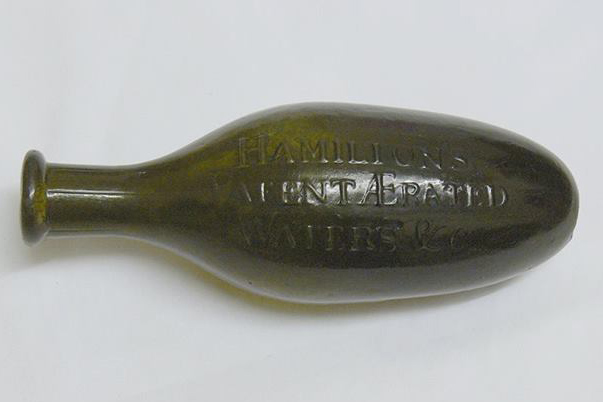
Torpedo bottles, egg bottles, pointy enders, ovates, ballast bottles or bombs are often called mistakenly HAMILTON bottles. Named after William Francis Hamiltons embossed “Patent-Bottle” 1809 ff. He lived in Lower Mount Street in the City of Dublin and granted a Patent in 1809 “for a new Method of preparing Soda and other Mineral Waters…” – but definitly not for the special type of bottles, who could not stand up on their own. It is generally accepted, that JACOB SCHWEPPE was the industrial inventor of soda water and the first mass producer of Torpedo Bottles. He moved to London in 1792 and used egg shaped bottles until the turn of the century 1910. His earliest Torpedo Bottle was a pottery or stoneware bottle, the SCHWEPPES NO 1, followed from the pointilled Glass-Bottle “Margaret Street” from 1795 – 1831. Thank you David Walker Barker, Leeds/GB, for your example of the authentic Hamilton Patent Bottle, “Hamiltons Patent Aerated Waters” circa 1825 – 1830.
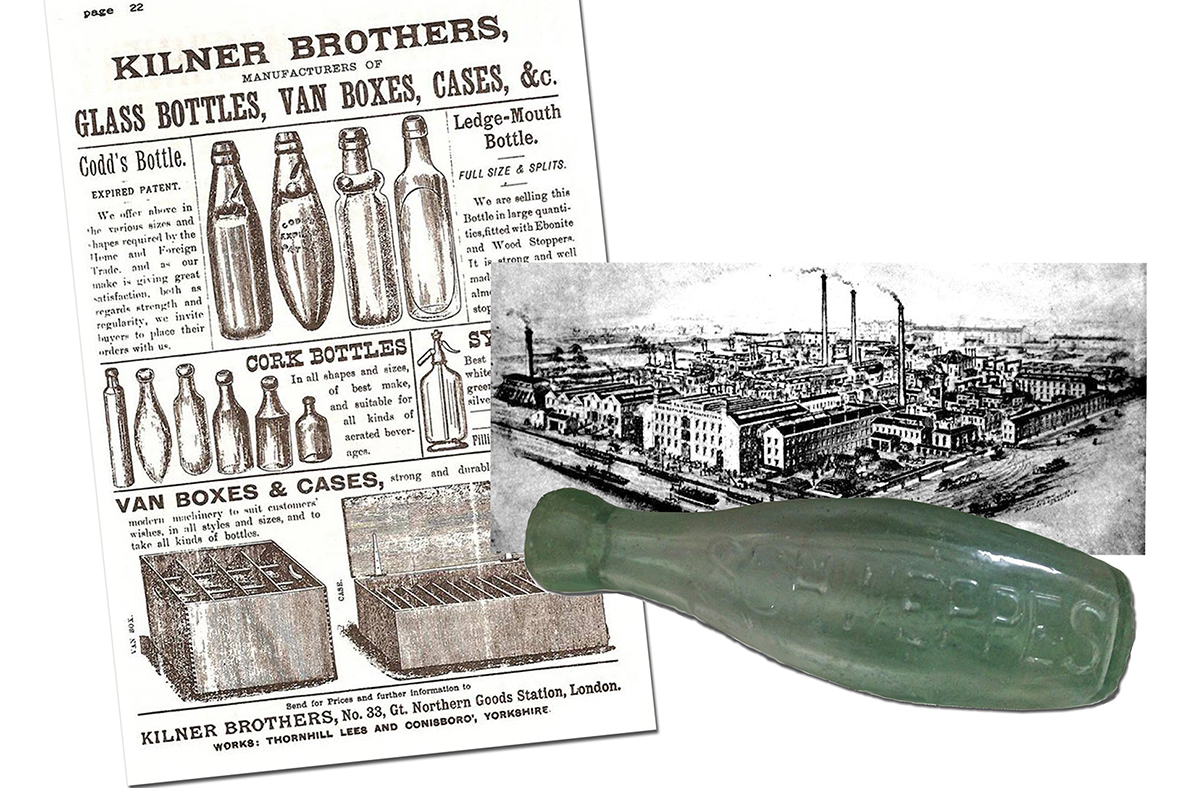
Vintage Schweppes skittle bottle 180mm tall with a base diameter of 45mm.
It has embossed on the front ‘SCHWEPPES’ and on the back the Royal Crest and underneath ‘ BY APPOINTMENT’. On the base is embossed the bottle’s manufacturer ‘K.B.LTD G 143’. This was Kilner Bros Ltd and they manufactured bottles from around 1870 until 1922, based in Thornhill Lee’s West Yorkshire.
This article was published by the Dewsbury Reporter in their Men of Science supplement: …Some idea of the magnitude of the operations carried out can be gathered from the fact that the firm employed seven commercial travelers and 600 workers. By this time the Kilners had also opened another extensive works in Conisborough which employed a further 500 workers. For many years Kilners held a leading position in the trade, and were patentees of a system for making the rims of bottles and jars one uniform size so they could be fitted with tin caps..

The R.M.S. Rhone was part of the Royal Mail Steam Packet Company which provided services between England, Caribbean and South America. It was a high-class vessel with a short career. In 1867 she was one of about 75 vessels damaged or lost in a hurricane. Hundred years later, Bert Kilbride, a diver known as “The last Priate of the Carribbean”, lifted a treasure of egg bottles, filled with genuine (Schweppes?) mineral water. Today, the wreck is one of the most popular dives in the British Virgin Islands.

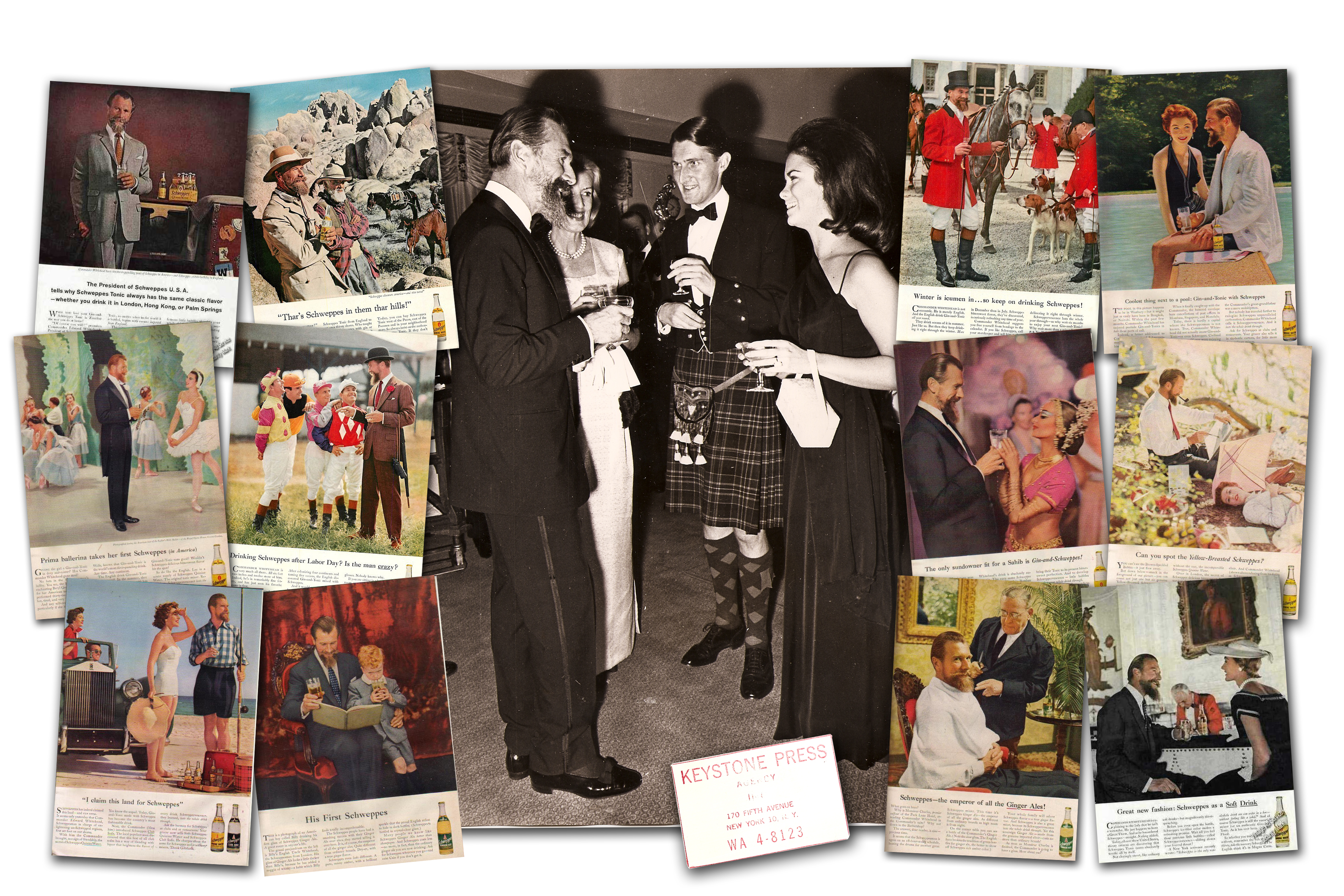

in full Oscar Fingal O’Flahertie Wills Wilde (born Oct. 16, 1854, Dublin, Ire.—died Nov. 30, 1900, Paris, France), Irish wit, poet, and dramatist whose reputation rests on his only novel, The Picture of Dorian Gray (1891), and on his comic masterpieces Lady Windermere’s Fan (1892) and The Importance of Being Earnest (1895). He was a spokesman for the late 19th-century Aesthetic movement in England, which advocated art for art’s sake, and he was the object of celebrated civil and criminal suits involving homosexuality and ending in his imprisonment (1895–97).

(born Dec. 16, 1775, Steventon, Hampshire, Eng.—died July 18, 1817, Winchester, Hampshire), English writer who first gave the novel its distinctly modern character through her treatment of ordinary people in everyday life. Austen created the comedy of manners of middle-class life in the England of her time in her novels, Sense and Sensibility (1811), Pride and Prejudice (1813), Mansfield Park (1814),Emma (1815), and Northanger Abbey and Persuasion (published posthumously, 1817)….

when water was worth. Take 12 minutes of your time for this impressive slow-beverage documentation. A man and his baby, surviving in NY. In my opinion: oscar-award 🙂
in full John Marwood Cleese (born October 27, 1939, Weston-super-Mare, Somerset,England), British comic actor best known for his television work on Monty Python’s Flying Circus and Fawlty Towers. Famous is John Cleese’s first advert for Schweppes 1988, that was shown exclusively on VHS tapes of A Fish Called Wanda. Here on youtube, he expresses his thoughts on subliminal advertising. VIDEO:
http://www.youtube.com/watch?v=W05zZm4JMGA
https://www.youtube.com/watch?v=g9TRTsAiNAE

“I have been a treasure seeker around the British Virgin Islands for over 5 decades where I resided from the 1950´s through 2005. I have charted (in my head) 138 ship wrecks. My mom taught me to swim before I could walk and I hhave been a diver for almost a century now. ” On January 8, 2008, his heart and kidneys were 94 years old and just couldn´t support him any longer.
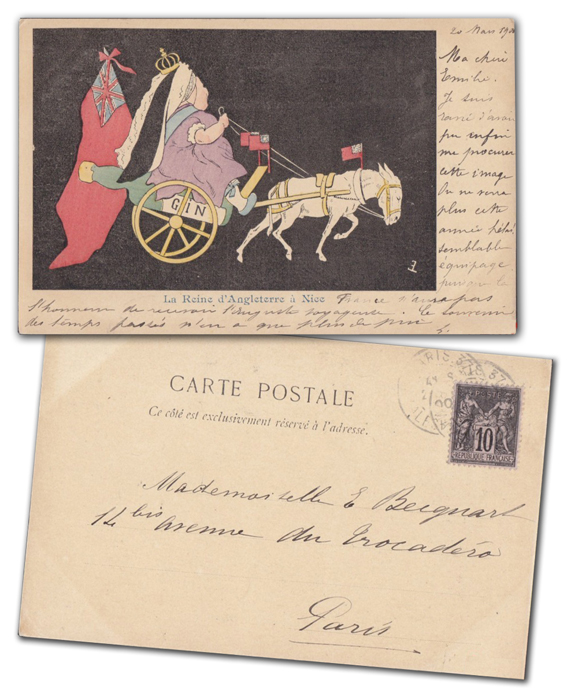
in full Alexandrina Victoria (born May 24, 1819, Kensington Palace, London,England—died January 22, 1901, Osborne, near Cowes, Isle of Wight), queen of the United Kingdom of Great Britain and Ireland (1837–1901) and empress of India (1876–1901). She was the last of the House of Hanover and gave her name to an era, theVictorian Age. During her reign the English monarchy took on its modern ceremonial character.

also called Prince William Henry, Duke Of Clarence (1789–1830), GermanWilhelm Heinrich, byname The Sailor King (born Aug. 21, 1765, London—died June 20, 1837, Windsor Castle, near London), king of Great Britain and Ireland and king of Hanover from June 26, 1830. In 1831, the Post Office Directory recorded J.Schweppe & Co. as “Soda and Mineral Water Manufacturers to Their Majesties and the Royal Family”. In the British Imperial Calendar for 1833, J.Schweppe is listed as purveyor of soda water to His Majesty´s Household.

the bottle-diver at a secret lake in a foreign language: “Bardzo ciekawe podwodne znalezisko. Butelka po wodzie sodowej z najstarszej na swiecie manufaktury Schweppe, produkujacej wodę sodowa. Zakłady te produkowały taką wode w latach 1834-1883 w Dublinie na Berner Street. Oryginalna inskrypcja na butelce brzmi: J. SCHWEPPE & Co. 51 BERNER STREET OXFORD STREET GENUINE SUPERIOR AERATED WATERS.” VIDEOS:
http://www.youtube.com/watch?v=ovztGLUwQvA
Rebirthing of an egg bottle in Valparaiso by Ramon Martinez/Recolecta Antiguedades Botteleros
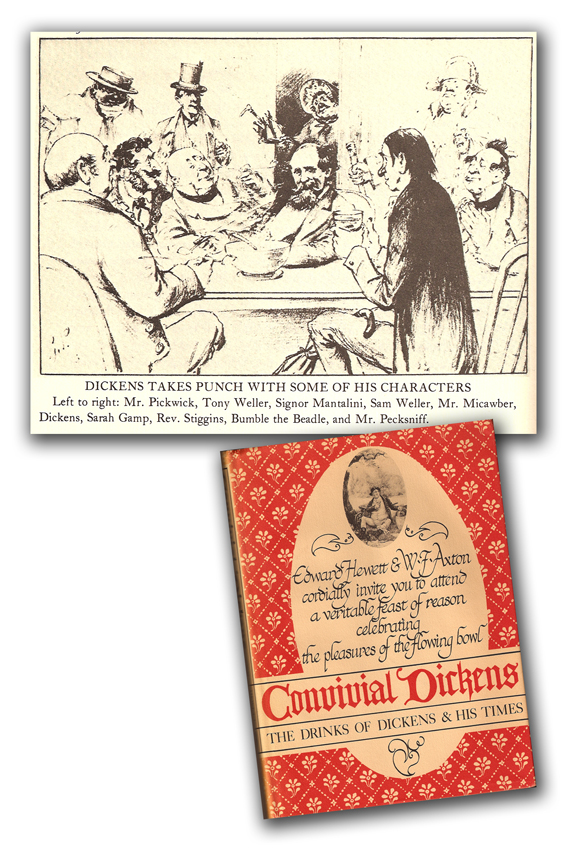
in full Charles John Huffam Dickens (born February 7, 1812, Portsmouth, Hampshire, England—died June 9, 1870, Gad’s Hill, near Chatham, Kent), English novelist, generally considered the greatest of the Victorian era. His many volumes include such works as A Christmas Carol, David Copperfield, Bleak House,A Tale of Two Cities, Great Expectations, and Our Mutual Friend.Dickens enjoyed a wider popularity than had any previous author during his lifetime. Much in his work could appeal to simple and sophisticated, to the poor and to the queen, and technological developments as well as the qualities of his work enabled his fame to spread worldwide very quickly.

byname of Alphonse Capone, also called Scarface (born Jan. 17, 1899, Brooklyn, N.Y., U.S.—died Jan. 25, 1947, Palm Island, Fla.), the most famous American gangster, who dominated organized crime in Chicago from 1925 to 1931. In the prohibition-year 1927, Capone and his gang were pulling in approximately $60 million per year- most of it from beer. Capone not only controlled the sale of liquor to over 10,000 speakeasies, but he also controlled the supply from Canada to Florida.
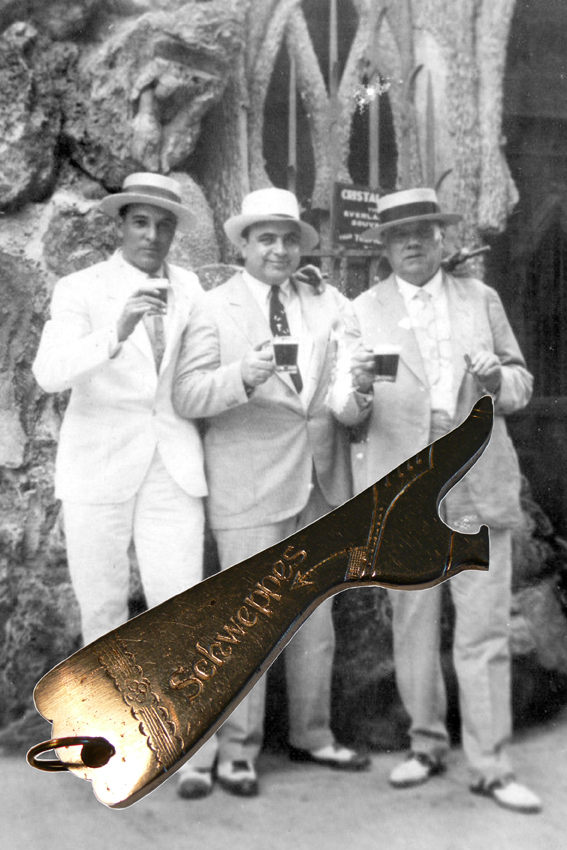
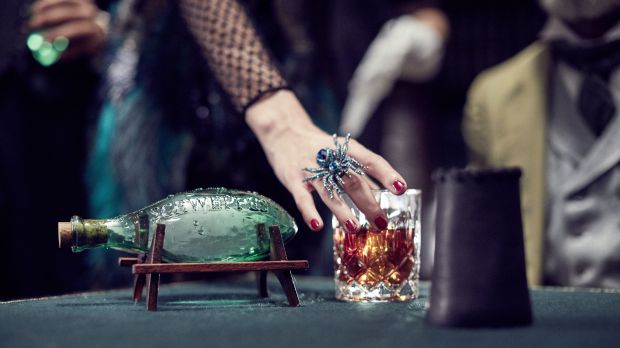
the period of the US-prohibition (1920-1933) pushed the popularity of long- and softdrinks. Coke´s arrow pointed to the refreshment of soda-fountains, Schweppes established his career as multi-talented mixer. I do not know exactly the components of Capones drinks, (his gang shown above), but for sure Schweppes was part of the Chicago lifestyle …
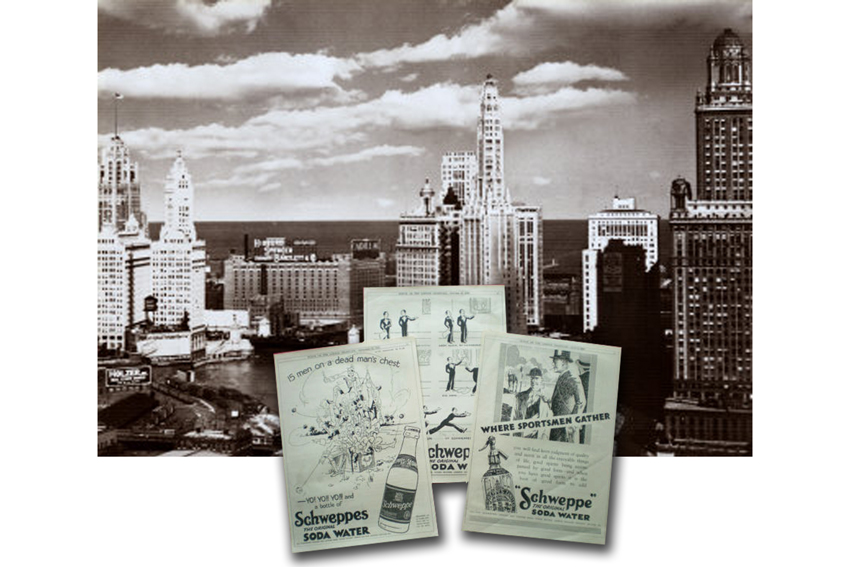

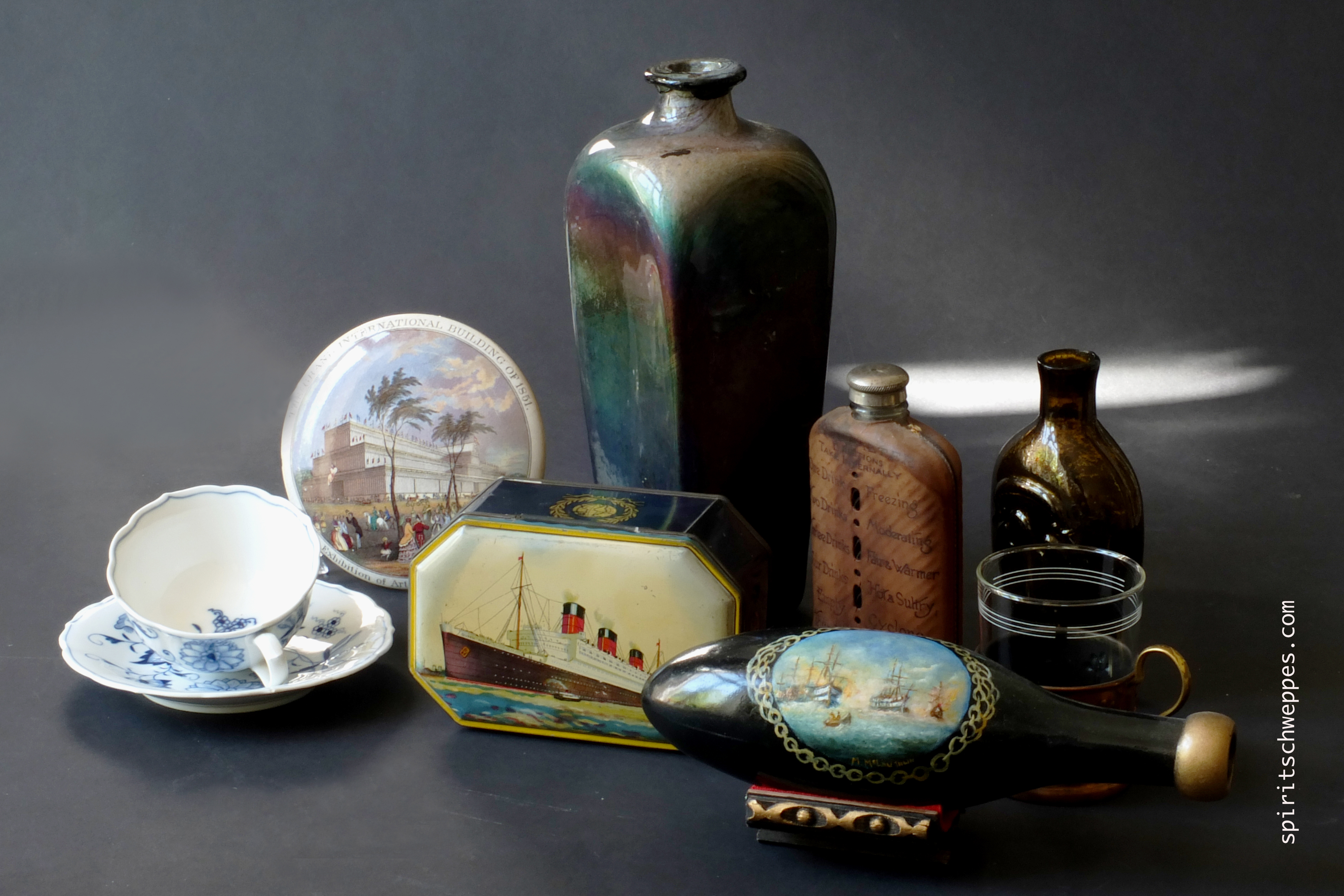
this bottle is unique and one of the most storytelling items of my collection. A rare leather and glass flask from the prohibition era. It is signed on the bottom Dr. Thy M Emery and has the date August 1929. It also has an inscription by Dr. Emery that reads: “The Shot How Big I say. How I meant it then. I know now.” The front of the flask reads: Shasta Springs, Cal./You can’t Fool Nature!/Prohibitionists have Red Noses and Will Tell you Where to fill Flask./August 1929. The other side reads: Drink Meter/Directions/Take Internally/One Drink Freezing/Two Drinks Moderating/Three Drinks Fair and Warmer/Four Drinks Hot and Sultry/Empty Cyclone/Thunder and Lightning. Measures 5 1/2″ x 1 1/2″ x 3 1/2″. A great piece of history, which has survived Dr. Emery.

dr. Emery would have used “recipes” like this. A original government issued Prohibition Prescription for Spirits Frumenti, the US pharmaceutical term for Whiskey, 2 fluid ounces every 3 times daily! From the days of Al Capone, flappers and moonshine this prescription was the only legal way to drink liquor in the US! The whiskey was prescribed for Mrs. Pilles, by Dr. Raub, on January 22, 1933, and was filled the same day by Pharmacist, Alvin H. Kern, of Easton, PA. It was issued by the Treasury Department and is printed on, beautiful pink paper. In the center is the old Treasury Seal with the Latin inscription, “Thesaur. Amer. Septent. Sigil.”. When you hold this prescription up to the light PROHIBITION is watermarked, as with the metal strips that are used in U.S. bills today. This was the pharmacist’s duplicate copy, printed on the back are the “Instructions”, one of which is: “This duplicate prescription must be retained by the druggist as permanent record, open to inspection by Federal Officers”, the top copy was sent to the government. The prescription measures 5 1/2″ x 4 1/2″. Thank you Grace from New Jersey for your great research!
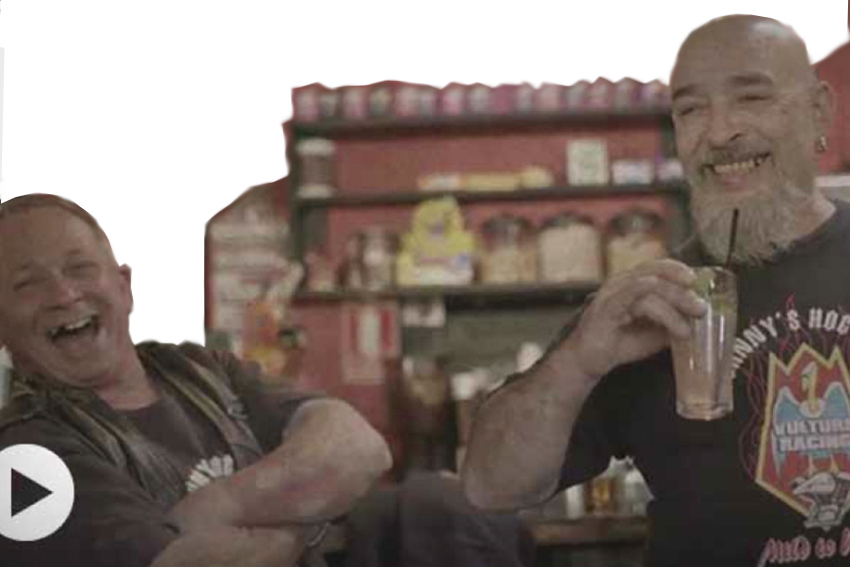
the australian pub with no beer, Episode: Old Hepburn Hotel turns the beer taps off for the first time in 100 years, and the Black Widow Bikie Gang are not too impressed… until they have their first taste of a Fluffy Duck! See more at youtube

Winds of change. In 1983, Schweppes marked his 200th bicentenary with “Schweppes – the first 200 years”. Here is one of 1130 copies worldwide, signed by the author Douglas A.Simmons and Basil E.S.Collins of Cadbury-Schweppes. Accompanied by product-milestones on australian beermats.
Chairman for 24 years was Sir George Adrian Hayhurst Cadbury (born 1929), a former British Olympic rower. He managed Cadbury/Schweppes (established 1969) as a central operated global brand. Since 2006, the brand is managed nationwide by concessionary companies.
(will continue)
http://www.pinterest.com/spiritschweppes/spiritschweppes/
http://www.pinterest.com/spiritschweppes/schweppes/
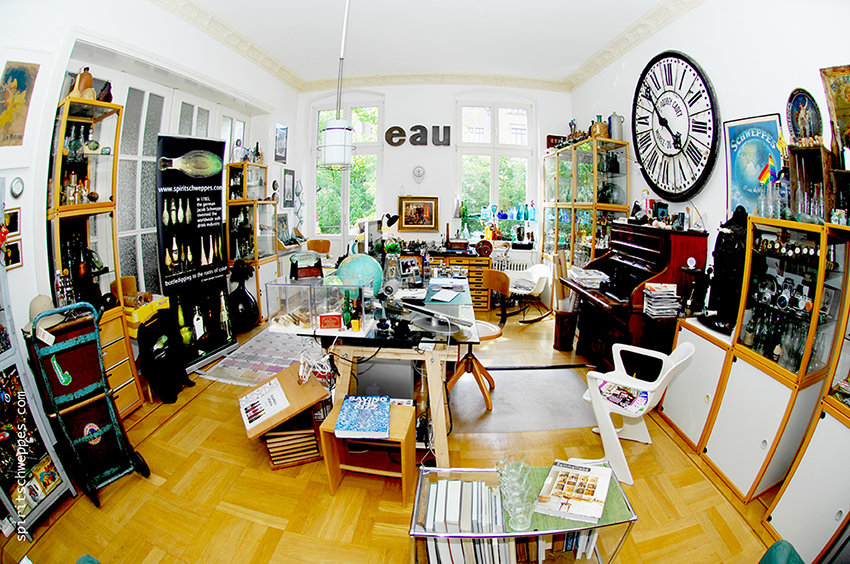





























 SPIRITSCHWEPPES MARKETING-CABINET