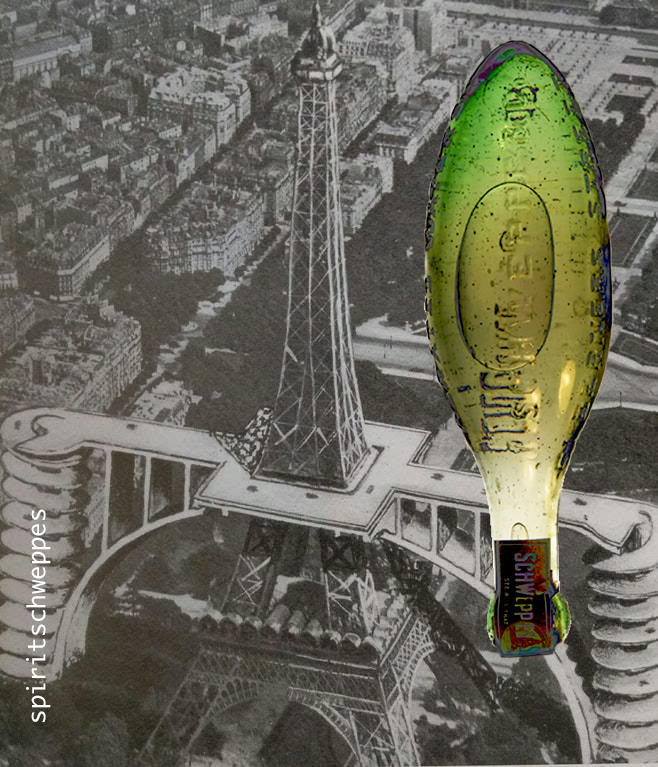
A 1936 project for making the 2nd floor of the Eiffel Tower accessible by car. thanks to https://www.facebook.com/HistoricPhotographs
…and Jacob Schweppes “drunken bottle”, the completely unrealistic invention, is also there around since 1800 here. Suddenly, bottles can no longer stand upright !!! And the beverage industry was turned upside down.
spiritschweppes is all about the joy of discovery: What problems did Gustave Eiffel face with the public regarding the Eiffel Tower? (AI-generated) He had to endure massive resistance, ridicule, and open hostility from the Parisian public—particularly from artists and intellectuals—both before and during construction.
The major issues and protests can be summarized as follows: The protest by Parisian artists (the “Protest of the Three Hundred”). Massive resistance formed as early as 1887, before construction even began. An alliance of around 300 prominent writers, painters, sculptors, and architects published an angry manifesto in the newspaper *Le Temps*. They described the planned tower as “useless and monstrous.”
They feared that the colossal structure would permanently disfigure and overshadow the historic elegance and beauty of Paris. Well-known figures, such as the writer Guy de Maupassant, joined the protest. Maupassant later reportedly made a point of dining at the Eiffel Tower’s restaurant because it was the only place in Paris where he did not have to look at the tower itself.
Aesthetic criticism and insults. Parisians perceived the bare steel structure—a completely novel sight at the time—as ugly and industrial. They mocked the structure, giving it derogatory nicknames such as: “Giant black factory chimney,” “Tragic steel-ribbed lamppost,” “Hateful shadow,” and “Tin monstrosity.”
 SPIRITSCHWEPPES MARKETING-CABINET